Zephyr Hill

A Family Blog

Header Menu

  • Home
  • Contact Me
  • Terms / Privacy
  • Homeschooling
  • Faith and Family
  • Book Reviews
  • Cloth Diapers
  • Pets

Learning Resources Educational Toys & Manipulatives

September 13, 2019 by Anne Marie 3 Comments

Learning Resources offers educational and games so that parents and teachers can enrich the educational experiences of children.

I’m going to focus today on two fun products we received from Learning Resources to review: the Beaker Creatures Alien Experiment Lab and a set of Cuisenaire rods.
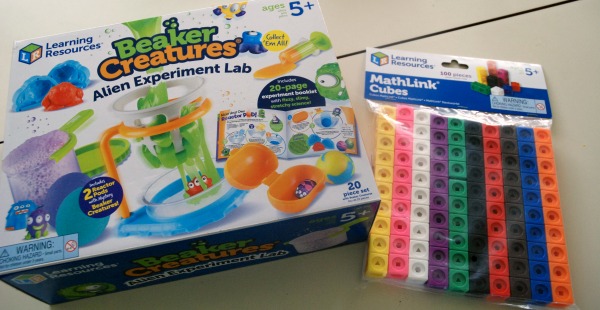
Interlocking Plastic Cuisenaire Rods Set:

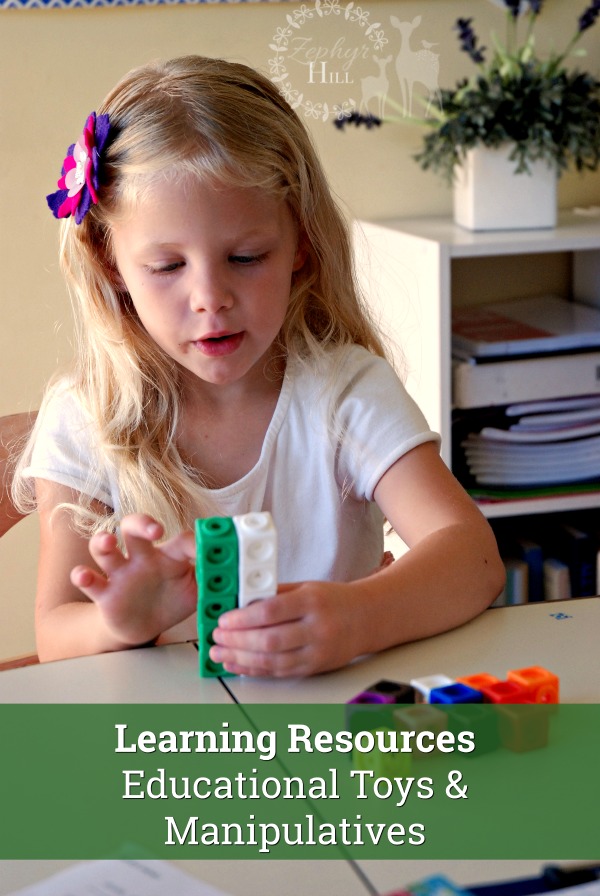
Some of the simplest tools are the best. I use these stacking cubes daily to illustrate math concepts for my elementary-school children. There are 10 of each color, so they coordinate perfectly with the base 10 system. Use the cubes to count, add, subtract and divide.
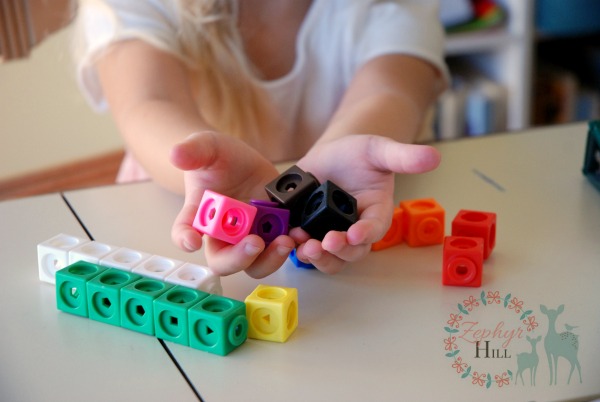
Visual learners can understand math concepts in a concrete way. For example, here’s the number 6 expressed as three different sums:
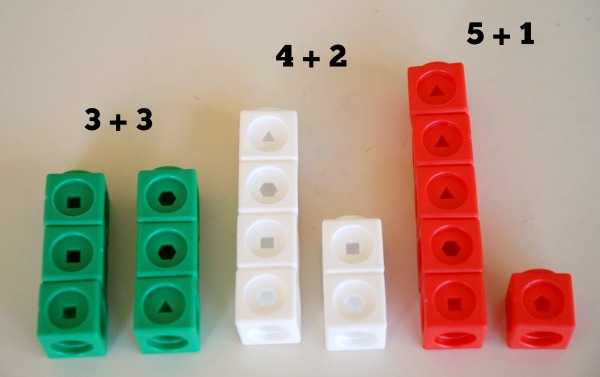
Retail Value: $12.99, ages 5 and up

Beaker Creatures Alien Experiment Lab:
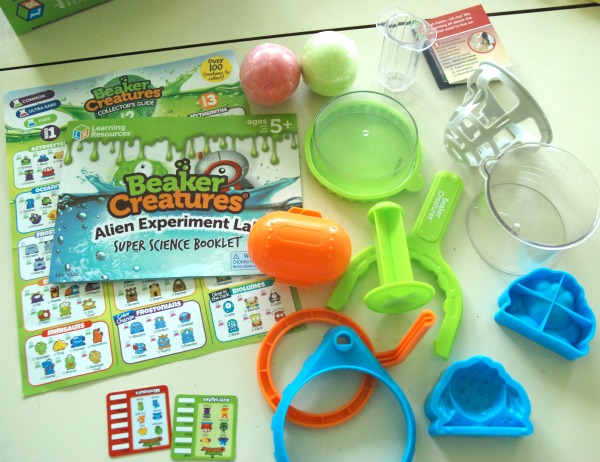
There are lab kits, and then there are alien lab kits. That’s what Beaker Creatures is all about! Children can learn to make slime and clay, mold their creations, and watch strange creatures from other planets emerge from fizzing pods. It’s a really fun spin on the traditional lab kit.

We all know children love to play with slime, but it’s even more satisfying to make it yourself. Samuel and Benjamin (9 and 11) had a bowl full of it within 10 minutes using the easy step-by-step instructions in the booklet. Ingredients are all readily available from your pantry. With food dye, you can make multiple batches in different colors.
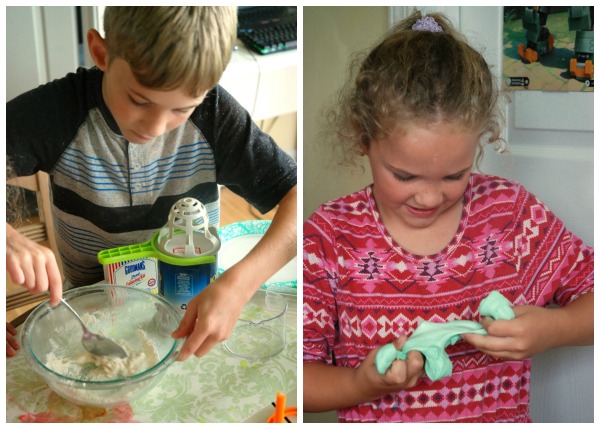
The 20-page, full color instruction booklet contains interesting science facts sprinkled throughout like “Slime is made of polymers or tiny chains of repeating molecules. You can find different kinds of polymers in everything from plastic to rubber to paper.”

Children can also make clay and compare the properties of both compounds. The addition of a Slime Extruder and mold offer more tactile activities with clay and slime.
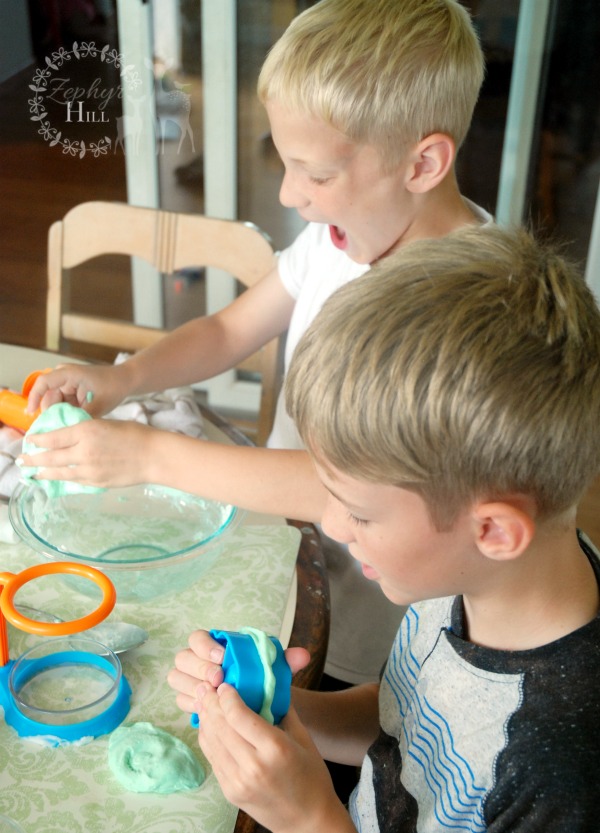
Ben and Sam’s favorite part of the Alien Experiment Lab? Reactor Pods! These round colored balls hold a mystery alien figure inside; children can use the beaker, sieve and grabbing tool to watch a weird little creature emerge from fizzing water. The tiny little aliens are fun to collect, and we’ve already purchased more Reactor Pods for the boys to “hatch.” The Alien Experiment Lab booklet also teaches children to make their own reactor pods from pantry items.

And how about combing aliens and slime together? This kit has so much entertainment value!

Retail value: $19.99, ages 5 to 10

Visit Learning Resources for more children’s
educational toys and games! Free shipping over $65

Follow Learning Resources on Social Media!
Facebook – Pinterest – Instagram

Filed Under: Home and Family Reviews, Homeschooling

TAN Books: Daily Planner and Homeschool Planner

August 30, 2019 by Anne Marie 10 Comments

Busy families appreciate tools that can multi-task. This is certainly true about what we’ve come to expect from planners and calendars. And TAN Books are definitely up to the task.

TAN’s unique and beautifully designed planners are an ideal way to remind us, as we are scheduling activities and appointments, who’s ultimately in charge of our future. To use King’s Solomon’s words: “Many are the plans in the mind of a man, but it is the purpose of the Lord that will be established.” (Proverbs 19:21) 🙂

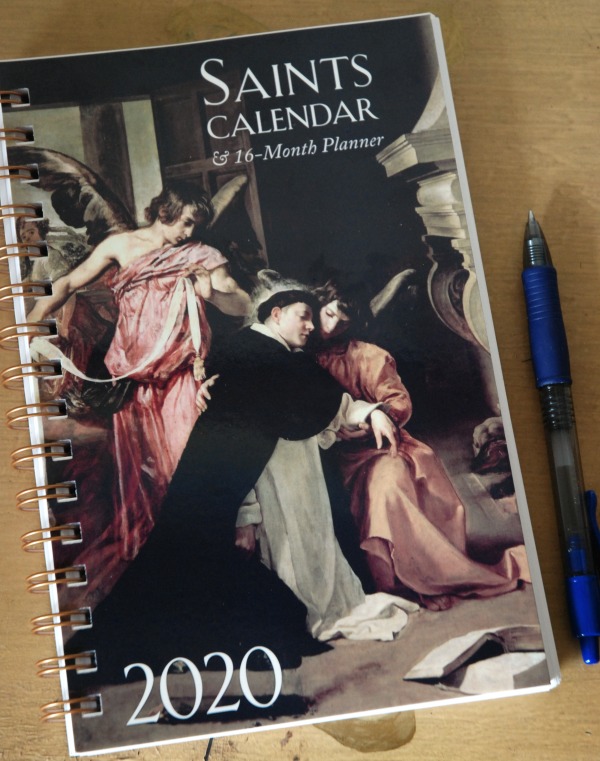
2019 Saints Calendar & 16 Month Planner

I anticipate the publication of this book every fall because it’s so much more than just a calendar or planner. In a compact, spiral bound format, TAN packs in all of these features:

  • Monthly and weekly calendars/planners for September 2019 to December 2020
  • 2020 Year at a Glance
  • A list of the 36 Doctors of the Church and 14 Holy Helpers
  • Holy days and holidays in 2019, 2020 and 2021
  • Saint resources: list of patrons, saints’ days and feasts, Saturdays of Our Lady
  • Saint quotations throughout
  • Saint biographies throughout
  • Catholic ID cards and pocket calendars
  • Extra note pages

I dislike pulling out my phone to answer questions like “whose feastday is it?” and “who is the patron saint of midwives?”  (The answer to that second question is Saint Raymond Nonnatus – his nickname in Latin means not born because he arrived by c-section due to the death of his mother). It’s a pleasure to find these things out by flipping through the TAN Saints Calendar.

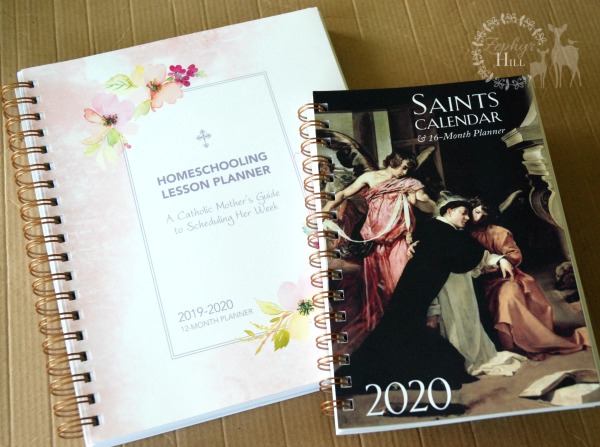
Each year, the cover image gets a refresh; featured for 2020 is The Temptation of Thomas Aquinas by Velazquez.

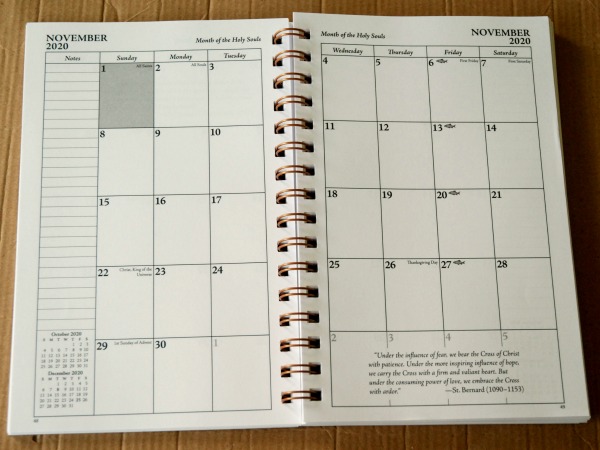
The meat of this planner, and what you’ll be using most often, is the calendar section with both monthly and weekly views. There’s ample room in both views for appointments, assignments and notes.

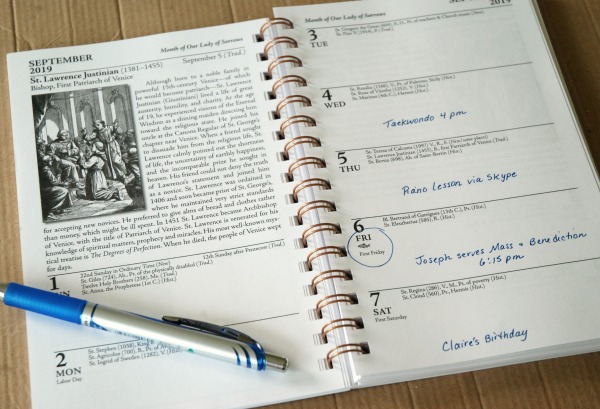
And now for my favorite part: the weekly view. I not only have lots of space for scheduling, but I can see the saint for each day (both new and traditional) and read a brief but inspiring saint bio. There are also symbols throughout to mark obligatory fasts and/or abstinence (see circled fish).

Besides functioning as a regular daily planner, you could also use the Saints Calendar as an academic planner for one person.

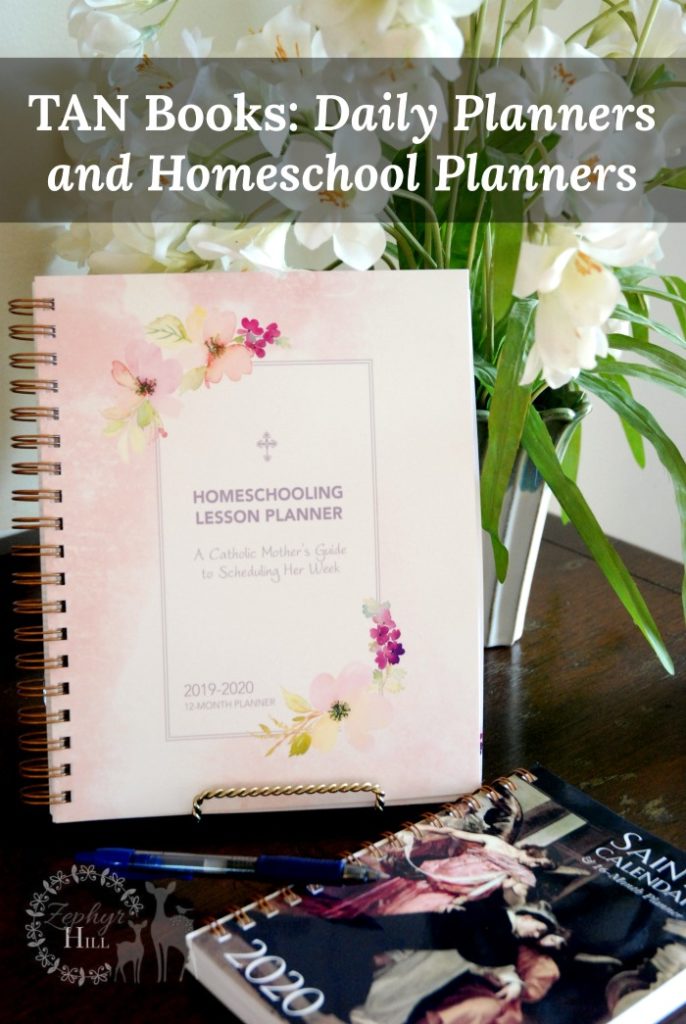
2020 Homeschooling Lesson Planner

There are a lot of planners out there for homeschooling mothers, but they fail to address two very common problems in the daily grind: burnout and discouragement. Written goals are great, but what happens when you get behind or hit a roadblock? The brunt of homeschooling tends to fall on the mother. Whether it’s a steaming cup of coffee and a devotional book early in the morning, or daily words of encouragement, being recharged and refreshed are crucial.

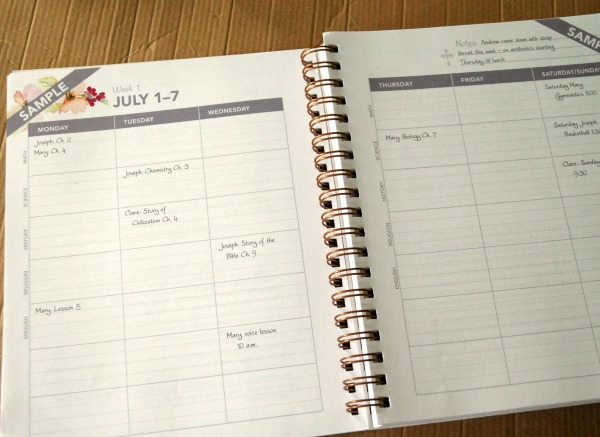
A recent addition to the TAN lineup, this lovely homeschooling planner is designed with the busy Catholic mother in mind. Author Amanda Evinger teaches four children in a “little house on the prairie” in rural North Dakota, and her book manages to find a happy balance between organization and inspiration. The meaty spiritual quotes combined with sage observations from the author (“The only person we need to impress is God”) are well curated for those in the homeschooling trenches. And the planner pages themselves have practical features like large, lined boxes to write in, and extra lines for notes and prayers intentions.

Looking at the sample pages gives you an idea of how much room you have to work with in the weekly agenda. Five subjects are listed along the left side (English, Religion, History, Science and Math) and there’s room to fill in two more of your choice. I would estimate that you could squeeze in lesson plans for 2 or perhaps 3 children, which translates to a real money-saver.

My older homeschoolers have their own planners, and this helps foster self-reliance, so I think TAN’s planner is ideal for the mother of elementary students.

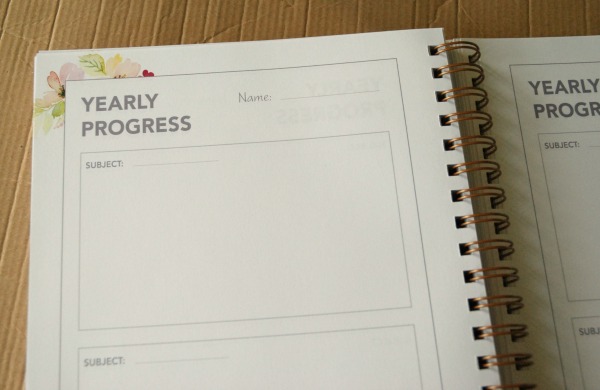
There are other bonus features like “Looking Ahead” and “Yearly Progress,” that allow you to track goals and make plans for the next year or school term.

The planner runs from July 2019 to July 2020 and is sturdily constructed with double wire binding. There’s a delicate pink floral watercolor motif throughout. Any room for improvement? With daily use, I would suggest a poly cover rather than the current cardstock. Also, the gray print within the planner could use some darkening. It’s not difficult to see, but it doesn’t really stand out.

Here’s Susanna (my 2nd grader) to give some perspective on the size of each planner:

Shop TAN Books
with $5 flat rate shipping

Saints Calendar & 16 Month Planner $16.95
Homeschooling Lesson Planner: $19.95

If you into digital planners, and would rather schedule your school year using a program, I highly recommend Homeschool Tracker! We’ve used it for many years – it keeps track of school days, lesson plans, grades and more!
Filed Under: Book Reviews, Homeschooling Tagged With: academic planners, Catholic homeschooling, homeschool planner, TAN book review, TAN calendar, TAN Planner, TAN saints planner

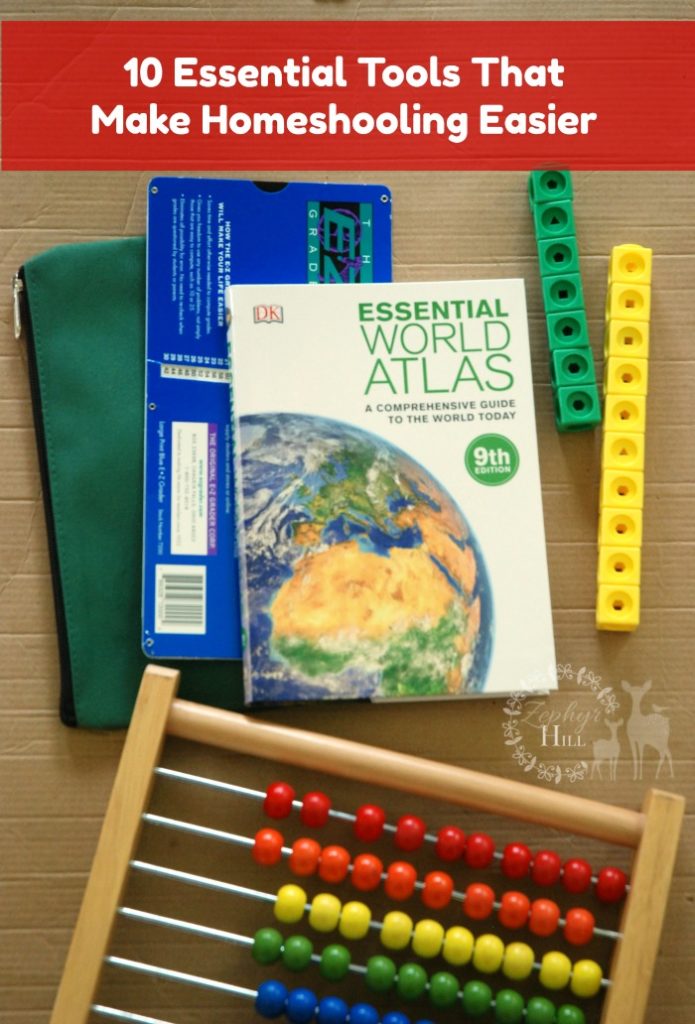
10 Essential Tools That Make Homeshooling Easier

August 26, 2019 by Anne Marie 10 Comments

There are the books and the school supplies, of course. But beyond that, what are some helpful tools to keep handy for your homeschool? Here’s my list of the items that have kept our homeschooling running more smoothly over the years. And don’t forget that every successful homeschool needs a PLAN, so a program like Homeschool Tracker makes everything easier!


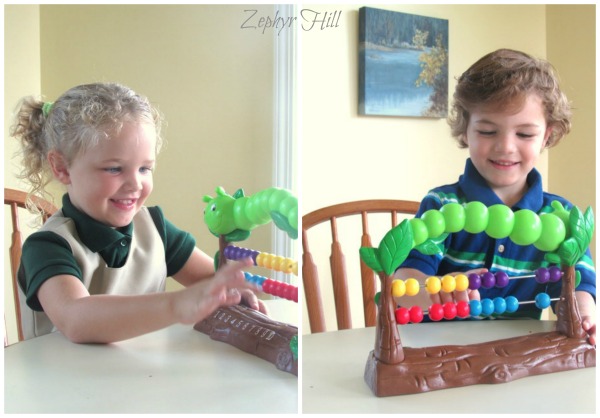
Abacus: This simple counting tool is your child’s first and most easy-to-use math manipulative. Use the beads to do simple tasks like counting to ten, or to explain more difficult concepts like multiplication and division. The wooden Melissa & Doug version is a sturdy classic; you can also opt for something like the Counterpillar (below) for pre-K and Kindergarten.

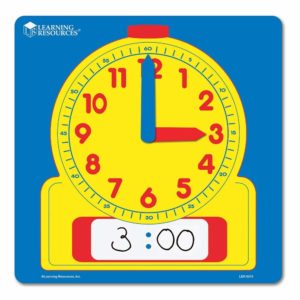
Teaching Clock A simple, colorful clock face will make teaching and understanding time so much easier. Our Learning Resources Teaching Clock has moveable hands so you can illustrate the difference between minutes and hours. Set the clock and have your child write the time in the area at bottom with a dry erase marker. It’s also fun to have your child choose the time and quiz you!

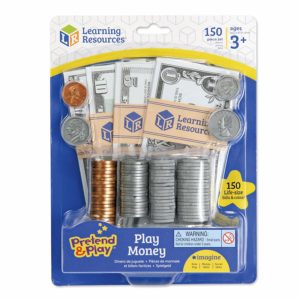
Pretend Money: Most children want to learn about money from the get go. After all, that’s how you buy candy and toys!  The Learning Resources set pictured below has all the basics: pennies, nickels, dimes and quarters, plus bills in denominations of one, five, ten and twenty. It’s also less than $10.00!

Math Fact Charts – There’s only so much wall space in a homeschool, and a lot of families don’t even have a dedicated “school room.” So it’s nice to have reference charts of a compact size that you can fit in small spaces or even store in folders or binders. Math facts will come in handy while your child is memorizing (grades 1-3) and later on when they need a quick refresher while working on more complex problems. Carson Dellosa has a fantastic selection, and you can get free shipping by joining their Spark Rewards program at no cost!

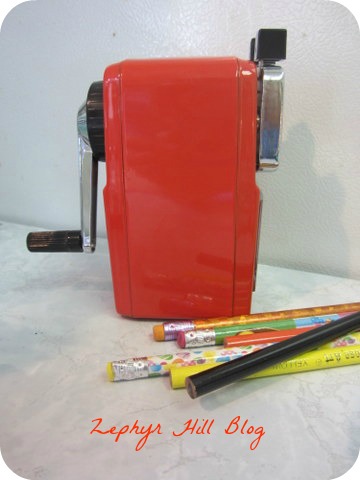
A Sturdy Pencil Sharpener: Once you install a table or wall-mounted sharpener, you’ll wonder how you ever did without it. Classroom Friendly Supplies carries a durable, reliable sharpener in lots of bright colors. You can read my full review here.

Mini White Boards: Tired of working sums on paper? Need to draw something to reinforce a lesson? Mini whiteboards are very hands-on and eliminate paper waste. It’s kind of like the modern version of a slate, which was the staple of one-room schoolhouses.

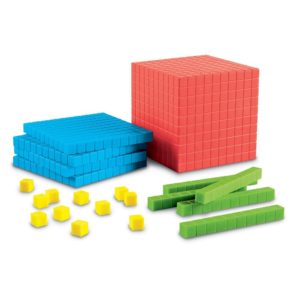
Base Ten Blocks – Understanding place value is a crucial math concept which will reappear year after year in different disciplines. Base Ten Blocks are the gold standard for visualizing this key concept.  I like this set because the ones, tens, hundreds and thousands are different colors.

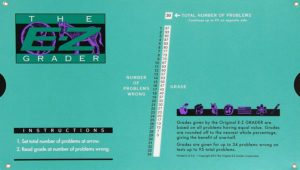
EZ Grader – I’ve already worn out two of these over 11 years of homeschooling! The EZ Grader takes the guesswork (and the math) out of figuring grades. Set the total number of problems in the window at the top, and then look below to find the number of problems missed, and you’ve instantly got your number grade. Measuring 4×8 inches, the EZ Grader stows easily in a drawer or binder. It’s only $10 and ships free from Amazon.

Globe – I love a globe that’s both useful and beautiful. Juvale sells a classic one on Amazon that’s less than $20 and ships for free with Prime.

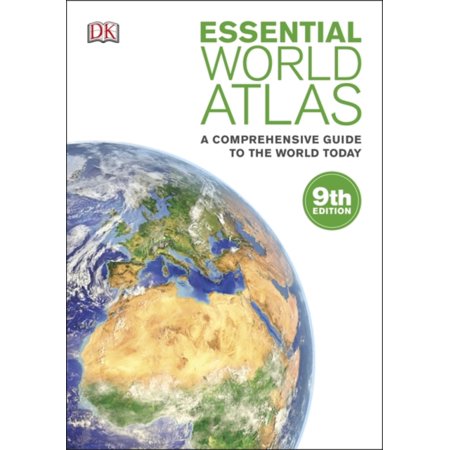
Reference Books – The three reference books we use the most? Atlas, dictionary and thesaurus. If you have multiple homeschoolers, it’s helpful to get each one of them a cheap paperback dictionary. Otherwise, Webster’s classic hardback version is the gold standard.

I purchased DK’s Essential World Atlas this year because it’s a more compact size, has a sturdy “flexibound” cover and contains more detailed information beyond the maps (political, social, etc.).

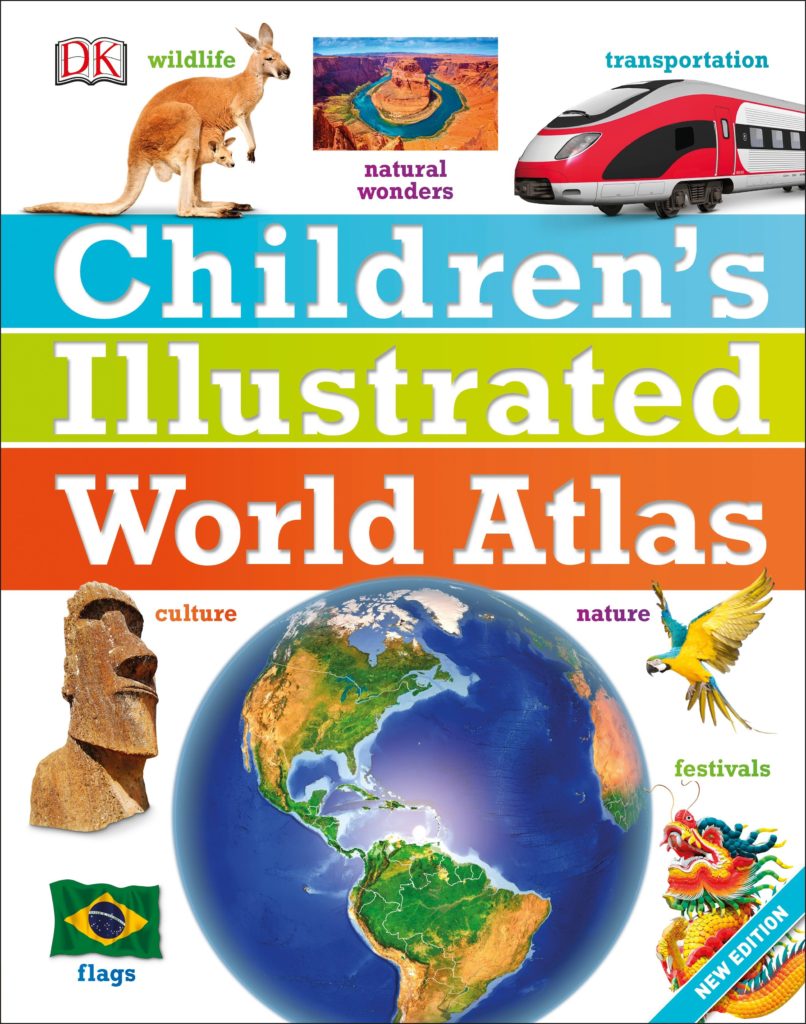
 For 12 and under, DK’s junior version is easy to understand, and has large colorful pages.

Now I’d love to know which tools and resources YOU value most as a homeschooling family! Let me know in a comment below.


Filed Under: Homeschooling

Piper Computer Kit Review

July 5, 2019 by Anne Marie 18 Comments

Computers drive our digital age, so it’s natural for today’s child to ask “how do you build them?” That’s what Piper’s Computer Kit is all about: bringing hands-on STEAM learning to children who are curious about computers and coding. They can actually build their own computer and then launch an exciting Minecraft mission to save Earth from destruction.

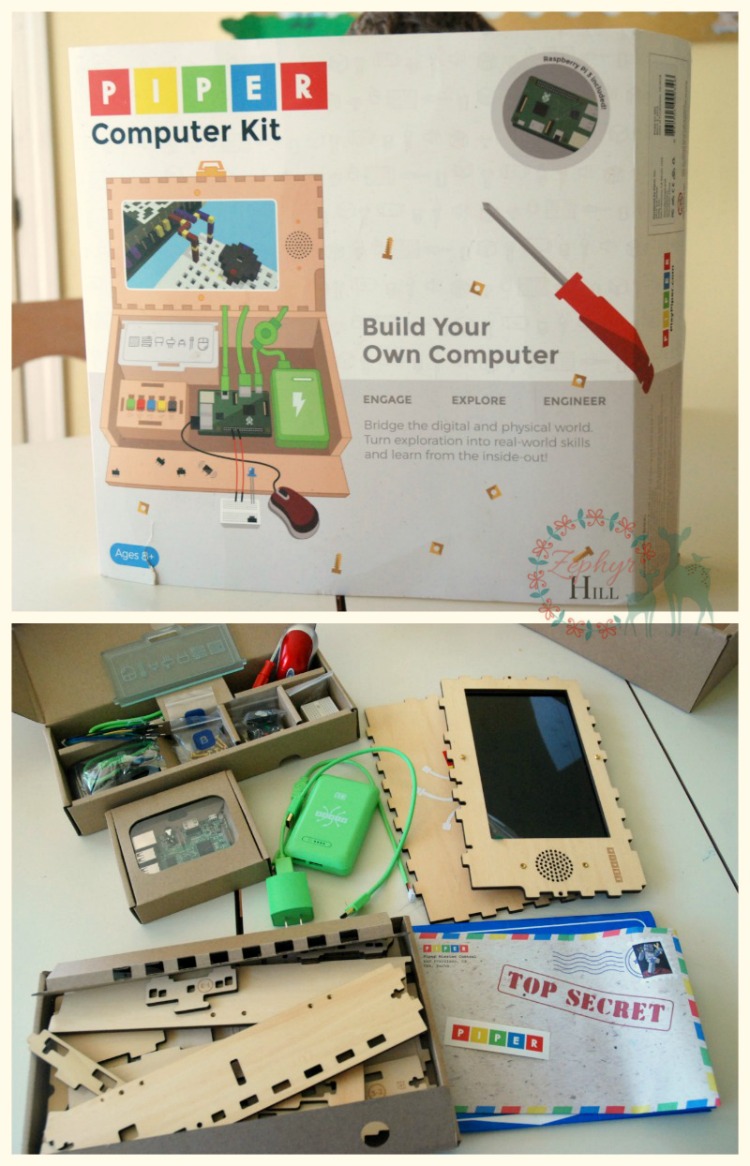
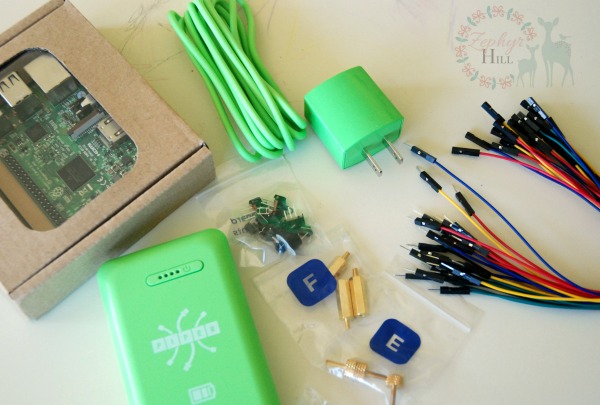
The Piper Computer Kit kit comes with everything you’ll need for the project from start to end; it’s all housed in a sturdy, protective wooden box.

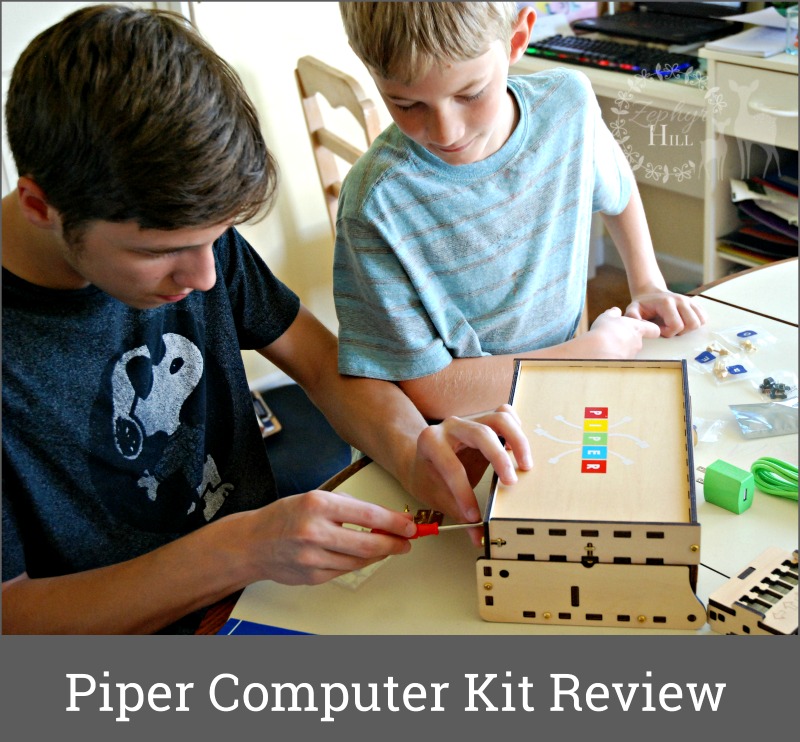
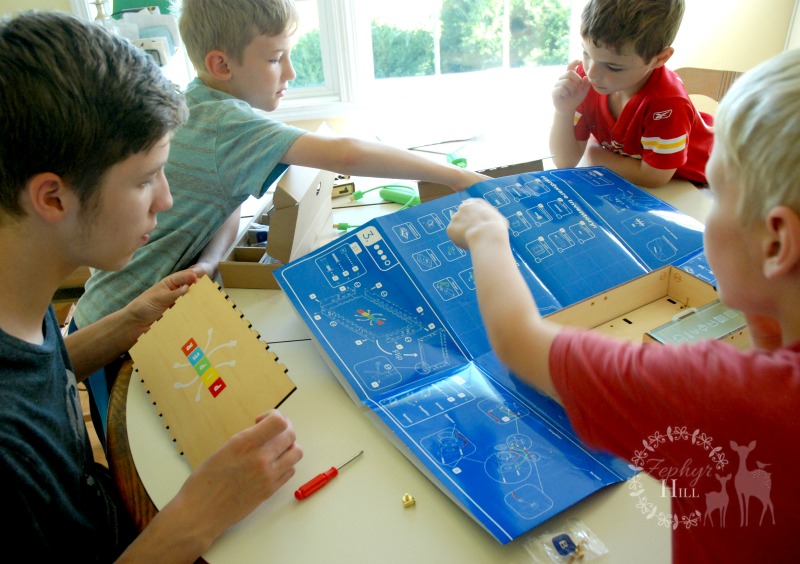
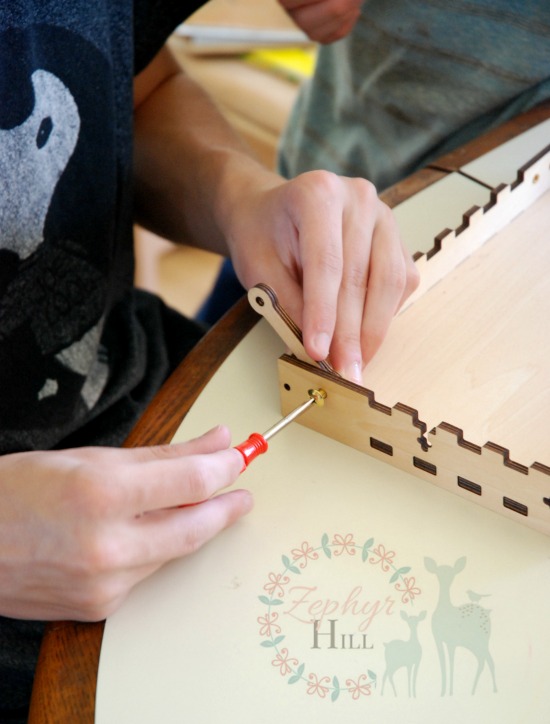
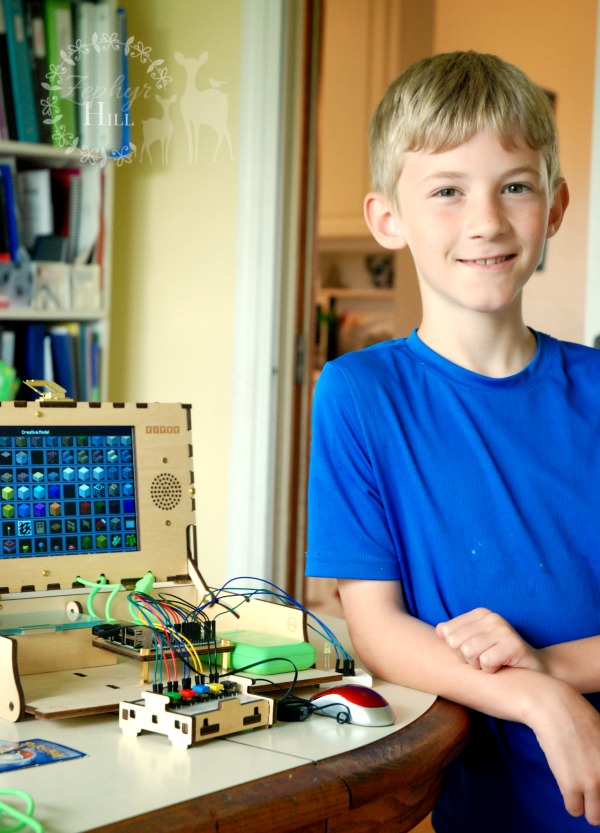
Working as as team, with 16-year-old Joseph supervising, the boys got started using the blueprint as a guide.

What’s in the box?

  • 50+ hardware pieces
  • 20+ electronic components
  • 9″ LCD display with HDMI cable
  • 7800 mAh rechargeable battery
  • Integrated speaker
  • 16GB MicroSD card
  • Raspberry Pi 3 Model B with quad-core 1.2Ghz processor
  • Phillips-head screwdriver
  • Wi-Fi Software Updates
  • 8 square foot laminated blueprint
  • USB Mouse

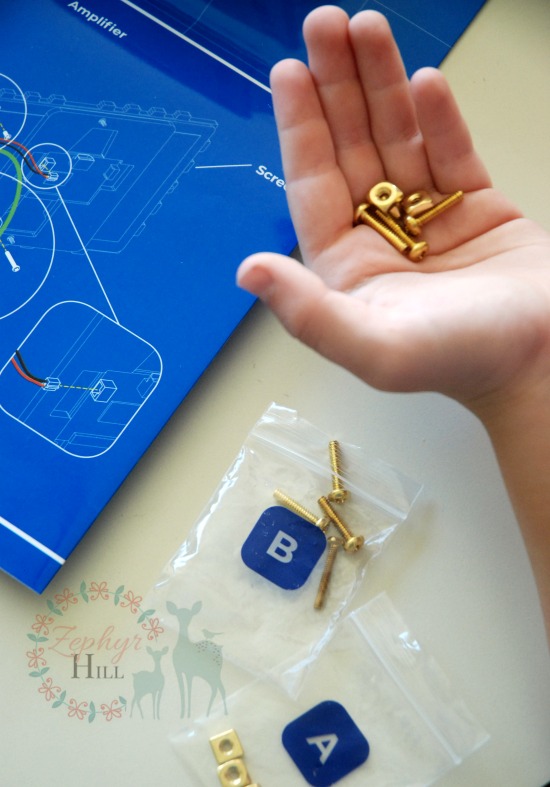
Everything is clearly labeled and separated:

The majority of the assembly work involves putting together laser-etched wooden pieces. (Oh, and before you even get started with that, go ahead and charge up the battery!)

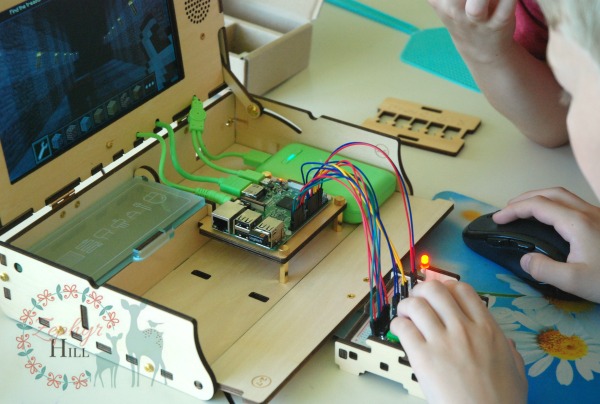
And then come the electrical components. Some of the wires and pins are very intricate, so younger children might need some assistance getting the circuits plugged into the correct holes.

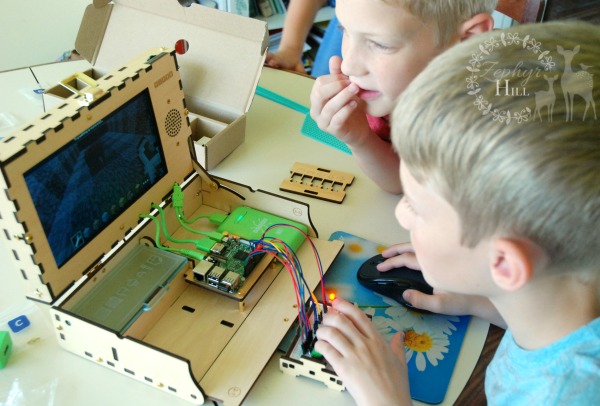
And finally, the moment of truth arrives! With the core completed, it’s time to launch the mission. Minecraft provides the backdrop, and will walk your engineer through a series of tasks like creating functioning buttons, controls and switches.

The 9″ LCD screen pairs well with Minecraft visuals and adds a lot of value to the finished product.

All the tasks are geared towards preventing an asteroid from making contact with Earth. And once the mission is complete, children have the freedom to explore and create in the world of Minecraft. Melding a fixed blueprint with limitless creative possibilities makes the Piper Computer Kit really stand out as a tool that teaches and inspires.

There’s a lot of building involved to get the Piper computer humming, and my boys loved that. Hitting a few roadbumps in the assembly and programming process taught them valuable lessons. Within the program itself, your child can visually see when connections are successfully made; a blinking line shows the electrical pathway is live and functioning. And everything is color-coded to further reinforce the connections.

There’s a balance that has to be reached with educational toys; you don’t want to give everything away, or children won’t learning anything new. You also want to encouraging independent thinking and problem-solving. Piper’s Computer Kit certainly reaches that balance. My boys told me “We didn’t know it took so many different parts to make a computer run!” They even figured out some workarounds, like plugging in our (larger and easier to use) wireless mouse using the USB ports.

We didn’t encounter any bugs or technical problems with the kit, but one drawback is that once it’s built the software is limited and you won’t be able to use this for other typical PC functions. Some of the controls are not ideal either: the mouse is tiny (which is fine for an 8 year old, but not so much for a preteen) and the buttons are not as smooth as those on a standard keyboard.

The Piper Computer Kit is an ISTE 2019 Best of Show Award winner. Ideal for ages 8 and up, it retails for $299.00.

Shop online at PlayPiper.com!
Follow Piper on Social Media
Facebook ♥ Instagram ♠ Twitter
Do you have a child that’s interested in electronics, engineering or coding? Let me know what you think of Piper’s Computer Kit in a comment!


Filed Under: Home and Family Reviews, Homeschooling Tagged With: build your own computer, coding for kids, educational products, engineering, Piper Computer Kit, STEM kits, STEM learning

My Favorite Homeschool Memes, Volume 1

March 26, 2019 by Anne Marie 19 Comments

darth

Life’s no fun if you can’t laugh at yourself, so here goes.

morpheus

I learned at home from grades 9 through 12. I don’t want you to choke on your coffee, but I actually did have a social life. So do our children, who are also homeschooled. Still, the stereotype persists.

inigo

We don’t just make friends with each other. We actually circulate. In society, no less!

buzz

But behind a lot of joking is usually a kernel of truth. Homeschoolers can be notoriously laid back. After all, we invented the term un-schooling.

Jim

The truth is, most homeschooling families are constantly in flux. Just when you think you’ve got it all figured out…

Image courtesy Homeschool Super Freak

And without giving away too many dirty secrets, I know for a fact this type of thing DOES go on out there.

office

It’s a different world, learning at home, and watching the other children go by.

homeschoolday

But besides the school bus, homeschoolers do miss out on a lot of the typical rites of passage.

boromir

But then again, we get to steer clear of a lot of controversy.

Ava Gardner having a laugh with test pilot Chuck Yeager.

And other unpleasantries.

lunch

Speaking of food, it’s open season on the fridge and pantry when you’re learning at home.

homeschoolhobbits

Image courtesy The Libertarian Homeschooler

There are other perks, too. Like the way you feel when your parents give you an EXTRA week of Spring Break, just ’cause they can!

carlton

And getting ahead of the game since you’re not stuck at a desk all day long:

Sometimes it’s easy to pick out the homeschooler in a group of children.

vadar

Since he’s not learning in a traditional school setting, the homeschooler may ponder his identity in the world at large.

neo

But you invariably get those nosy questions.

samuel

And skepticism from your peers.

teacher

They even try to box you into stereotypes.

beverly

The truth is, homeschooling can really broaden your horizons. Everything becomes an educational opportunity.

score

Much to your children’s dismay.

groceries

Sometimes you’re literally learning all year long…

drevil

And we can be such cheerleaders for homeschooling that it becomes obnoxious.

picard

Speaking of cheerleaders, it’s really a blessing when your better half is completely on board and supportive of homeschooling.

cary

You find that the best time to do progress reports its at night.

conference

People often ask me, “How do you do it? I’d go crazy!” I’m not going to lie and say it isn’t a challenge.

And no meme roundup would be complete without Willy Wonka, so here you go.

wonka

Got any homeschool humor or jokes to share? Leave me a comment!

Filed Under: Homeschooling Tagged With: funniest homeschool memes, homeschool humor, homeschool memes, homeschool stereotypes

  • « Previous Page
  • 1
  • …
  • 4
  • 5
  • 6
  • 7
  • 8
  • …
  • 11
  • Next Page »

SOCIAL MEDIA

Newly Published

  • The Coop Upgrade Nobody Talks About Until It’s Too Late
  • Ignore the Radio Ads About Life Insurance, But Please Read This Post
  • Do Catholic Parents Have to Choose a Saint Name for Their Baby?
  • The BEST and Most Comprehensive Baby Name Books for Parents
  • Educational Games to Enjoy With Your Children

Popular Posts

  • Tiny Love Bouncer Review
  • Sweet Pea AI3 One-Size Diaper Review & Giveaway
  • 6 Common Homeschooling Mistakes to Avoid
  • Sweet Pea Bamboo AIO and Pail Liner Review & Giveaway
  • How to Study (and Teach) at Home With Less Distraction

Copyright © 2026 · Zephyr Hill Blog · Design by Albemarle PR

Copyright © 2026 · Albemarle PR - Hannah Template on Genesis Framework · WordPress · Log in