Zephyr Hill

A Family Blog

Header Menu

  • Home
  • Contact Me
  • Terms / Privacy
  • Homeschooling
  • Faith and Family
  • Book Reviews
  • Cloth Diapers
  • Pets

How to Study (and Teach) at Home With Less Distraction

July 18, 2020 by Anne Marie 14 Comments

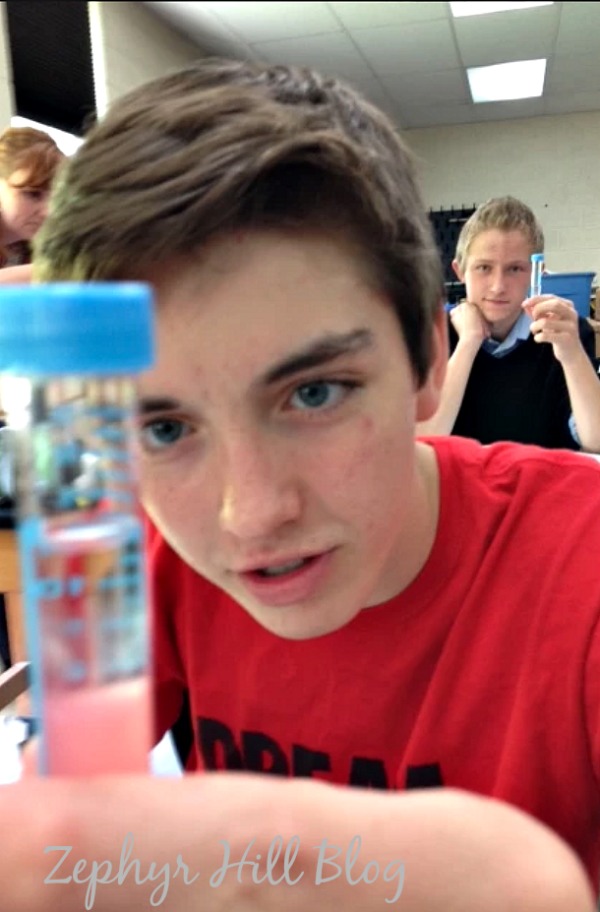
One big hurdle that homeschoolers often run into is trying to get work completed amid daily distractions. In a traditional school, you aren’t interrupted by phone calls, sibling squabbles or visits from the package man! But with many parents choosing to opt out of public school this fall due to Covid restrictions, studying at home effectively is a must.

Here are some ways you can teach and learn with less distraction in a home setting.

Have a Written Plan

When it’s on paper, you’re a lot more likely to follow it. Distractions don’t just come from without; sometimes school itself can be the culprit! Try not to stray from assigned work and lessons plans. Don’t get distracted with random “school stuff” that doesn’t really have to be done. Check out Study.com’s easy sample homeschool schedule to follow (and customize).

Eliminate the Big Offenders

What are the deadliest distractions during homeschooling?

  • Cell phone – Turn off or switch to silent mode.
  • Home Phone – Do not answer. There’s this wonderful thing called voice mail!
  • Radio – Keep it off during school time.
  • The TV – Keep it off during school time. Do not use it as a babysitter.
  • The doorbell – Have a designated family member to answer the door so everyone isn’t tempted to jump up.

Find a Private Place

Avoid common, high-traffic areas like the dining room table, living room or kitchen. Try a bedroom, the basement, the park or a local library. Alternately, you can send other siblings outside for recess, or to their rooms to play quietly, while you work individually with a student.

Try Concentration Boosters

There are actually things you can do to improve concentration and performance.

  • Play classical music or chant quietly in the background
  • Have a snack or drink while you work to ward off a growling stomach.
  • Take periodic breaks. Stretch your legs, pop outside for 5 minutes, play with your pets, etc.
  • Set small goals for yourself and your students, and tackle them one at a time.
  • Make sure assignments are age appropriate.

Have Everything Nearby

Before you sit down, make sure you have everything you need. There’s nothing more distracting than constantly having to get up to fetch a book, a pencil, a drink of water, etc.

Learn Their Learning Style

Homeschooling is very flexible compared to traditional learning, and that means finding your child’s style can lead to less distraction and wheel-spinning. Determine whether he or she is visual, auditory, or kinesthetic, and gear lessons appropriately. When everything clicks, your student is a lot less likely to get bored and distracted.

Use Technology Wisely

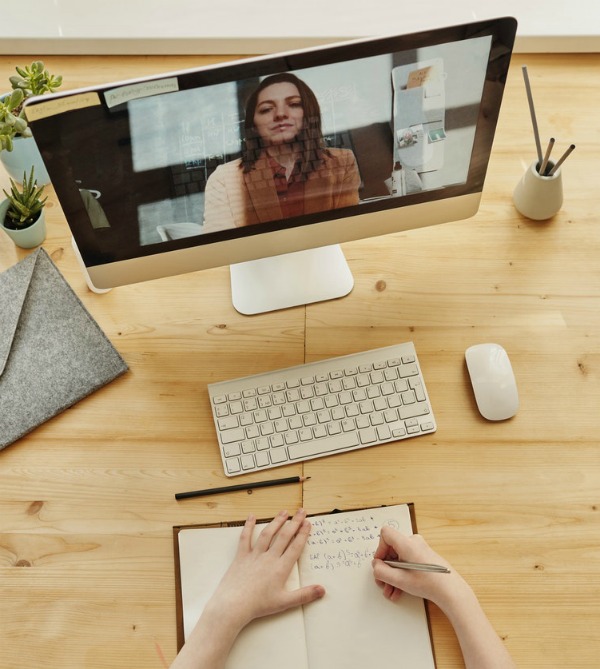
What do you do when your student is stuck, and sits there staring at the page? If you’ve hit a wall trying to get a concept across using books and paper, use technology in a targeted way with video lectures, tutorials and virtual whiteboards. Just make sure you monitor screen time and turn it off as soon as the lesson is done. Using Study.com’s videos can be a good way to keep attention focused on a concept, and after each short lesson you can test for retention with a short 5-question quiz.

What if technology itself is the distraction, though (see #2 above)? You might want to reconsider 100% online learning and opt for traditional, hands-on methods. Many parents (and teachers) reported frustration with the virtual programs that were used when school was suspended this spring. It’s not a one-size-fits-all-approach. If your child isn’t doing well with virtual school, then choose something better; his education is in your hands!


This post is sponsored by Study.com. Check them out for more tips on learning without distraction!
Filed Under: Homeschooling

Homeschooling is Not a Privilege, It’s a Right

June 25, 2020 by Anne Marie 15 Comments


Is homeschooling a privilege, something that’s only really possible for those with extra time, extra income and a certain level of education? Is it only for the elite? Fortunately, the answer is no. Homeschooling is a right. And it’s a right more and more parents are interested in right now.

A recent poll showed 40 percent of parents are more likely to pursue it after the coronavirus lock downs end. It’s really not surprising, given that some schools are going to look and feel more restricted this fall. Additionally, many parents who unexpectedly found themselves homeschooling this year discovered that home learning (despite it’s challenges) can be safer, more personalized, and promote shared values.

There’s a popular misunderstanding that government “grants” us the right to teach our own children, and this leads to the mistaken notion that it’s a privilege which is only bestowed upon a few. This is patently false. The right to homeschool is yours to claim as soon as you become a parent. In fact, we all homeschool because our children start learning from us from the moment they are born. However, the authorities do regulate homeschooling to varying degrees.

That’s all very well, you might say, but being able to homeschool requires access and advantages, so it’s only available to a select few. Homeschooling is something a marginalized or poor family can only dream about. This argument may tug on our heartstrings, but thankfully it has little evidence to back it up.

If you are contending that there will be some challenges and barriers, well then we agree! But as one mother told me “Almost anything is doable, if you want it badly enough.” I love her spirit!

So let’s look at the typical barriers that naysayers say makes homeschooling impossible.

Economics

Money turns out not to be a major brick wall after all. So you can breathe a big sigh of relief!

Interestingly, when faced with failing public schools, many families end up choosing homeschooling because the other choices turn out to be too costly. Marginalized families don’t have the luxury of moving to where the better schools are. Nor can they afford private schooling. Homeschooling becomes “the most inclusive of economic diversity and the most accessible to families who are economically in the middle and less than middle,” to use Paula Fitzgibbon’s words.

For these children, learning at home may be just the thing that helps to “break the shackles of oppression,” to quote Idzie Desmarais.

There’s an educational truism you should never forget. Some of the most important things you teach your children as a homeschool parent have very little to do with money or social status.

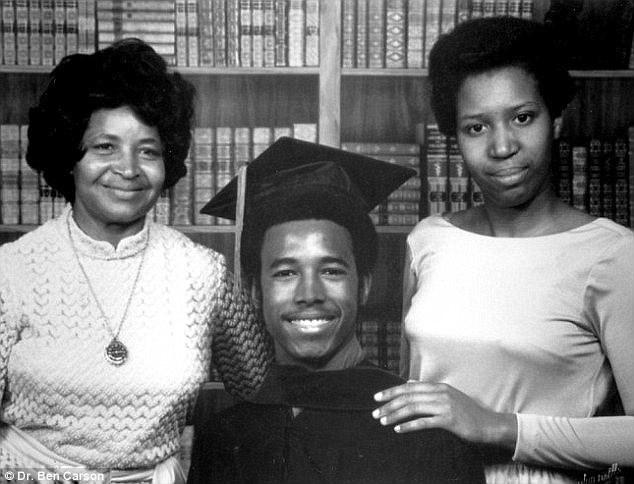
An example that springs to mind is Ben Carson, our current Secretary of Housing and Urban Development, and a renowned neurosurgeon. Despite being a single working mother in Detroit, and unable to read or write, Sonya Carson inserted a life-changing kind of homeschooling into young Ben’s world. She started requiring him to read more and turn in book reports to her. Regular reading and writing were the little seeds that jump-started the beginning of a fruitful academic career that led him to Yale University, and beyond.

Even small changes and sacrifices can have a major effect on your child’s academic future.

In summary, it does not cost a lot to homeschool. Many families do it for free, or next to nothing.

  • If you have a library card, you can homeschool
  • If you have access to the internet, you can homeschool
  • If you don’t have access to the internet, you can homeschool
  • If one or both parents work, you can homeschool
  • If you have access to used books, you can homeschool

Arthur Ashe puts it very simply: “Start where you are. Use what you have. Do what you can.”

Demographics

Only a certain type of family homeschools, right? WRONG.

Many homeschool families don’t fit into the typical demographic. They are poor. They work outside the home. They are single mothers. Their children are disabled, special needs or face a learning disorder. Some don’t even have internet access.. They may have chosen homeschooling not for religious reasons, but for protection against bullies and violence.

Whatever the reason, homeschooling rates have consistently been on the rise over the past few decades, and this is true across different demographics. According to the National Home Education Research Institute, there are 2.5 million homeschoolers in America, and “the home school population is continuing to grow (at an estimated 2 percent to 8 percent per annum over the past few years).”

So if you’re thinking about this proposition in terms of color, creed or ethnicity, you’re thinking about it all wrong. Education is a door that we can all open. Mark Twain once wrote “Keep away from people who try to belittle your ambitions. Small people always do that, but the really great make you feel that you, too, can become great.”

Making good life decisions like staying in school, getting a job, and starting a family are statistically proven paths to success, regardless of demographics. The consequences of derailing from this track are harmful and costly in terms of future outcomes. As an anonymous person once quipped, “If you think education is expensive, try ignorance.”

Educational Background

You can teach your child without a degree. You can teach your child even if you didn’t finish high school. But if either of those propositions still gives you cold shivers, there are other options available like online schooling and local co-ops. You don’t have to do this alone. Here are some real-life support scenarios shared with me by other homeschoolers:

  • “My husband and I share teaching duties, depending on our work schedules.”
  • “My mom came twice a week to help tutor my oldest in math.”
  • “We have used video curriculum, online classes and a co-op. My husband is a science guy and he does the experiments and labs.”
  • “We have used free pre-recorded classes to learn things like sign language.”
  • “My sister is doing a correspondence course for religion.”
  • “We use ALEKS, which is a personalized online learning program, and it’s only $20 a month.”
  • “We discovered free classes through our local community colleges, and they even earned some credits early.”
  • “The older kids help out the younger ones, and my husband takes a subject when he comes home. Every little bit helps!”
  • “We use online programs for Spanish, typing, math and coding.”
  • “As a single mother, I worked at places that allowed me to bring my daughter with me. She did school while I did my job.”
  • “The free virtual public school option was a lifesaver for us. The local school was failing my daughter. She stays with her grandmother while I’m at work, but in the evenings I go over what she’s learning.”

Frequently remind yourself that the majority of homeschool parents are not highly educated. Yet homeschoolers consistently outperform their peers by nearly every measurable academic standard.

David Burns wrote “Aim for success, not perfection. Never give up your right to be wrong, because then you will lose the ability to learn new things and move forward with your life. Remember that fear always lurks behind perfectionism.”

Change Starts with You

We should all be advocating for better choices and greater access when it comes to education. That means encouraging people to homeschool, if they want, and working to make it easier for them. Far too many Americans limit their educational advocacy to throwing more money at public schools. This one-size-fits-all approach is just not working.

Homeschooling is the chance to make a radical change in your child’s life for the better. I say we should be applauding those who take the plunge. Crying “privilege” shuts down important conversations about expanding access and opportunity. It has been rightly been called the soft bigotry of lowered expectations. It ignores the accomplishments of the “underprivileged” who are homeschooling right now and those who are working to expand access.

Remember who it was that made the phrase “be the change you seek” famous? It was Barack Obama who said “Change will not come if we wait for some other person or some other time. We are the ones we’ve been waiting for. We are the change that we seek.” While I disagree with how the President applied this vision, the sentiment remains true and is highly inspirational, especially when you think about advocating for educational opportunity.

Guess what? Some of this is happening already, with schools allowing homeschooled kids to take part in sports and certain activities. And people are forming local groups to support one another in the adventure that is homeschooling.

Here are some more practical solutions:

  • Join or start a homeschool co-op in your area
  • Advocate for free access to public school resources for all types of students
  • Support school choice initiatives in your area
  • Contact your representatives and senators and ask them to expand educational options for all types of students
  • Join the HSLDA; they passionately advocate for the freedom to homeschool and offer support all the way

Before I close, there is one privilege I will grant in terms of homeschooling. It’s the privilege that every parent has in receiving the gift of a child from God to teach and nurture.

Now, as enthusiastic as I am about homeschooling / unschooling, I realize we’re not ready for everyone to do it yet. It is my hope that today’s post will wake people up to their rights, and spur them to make these rights more accessible to all.

“Your attitude, not your aptitude, will determine your altitude.”
– Zig Ziglar

Filed Under: Homeschooling

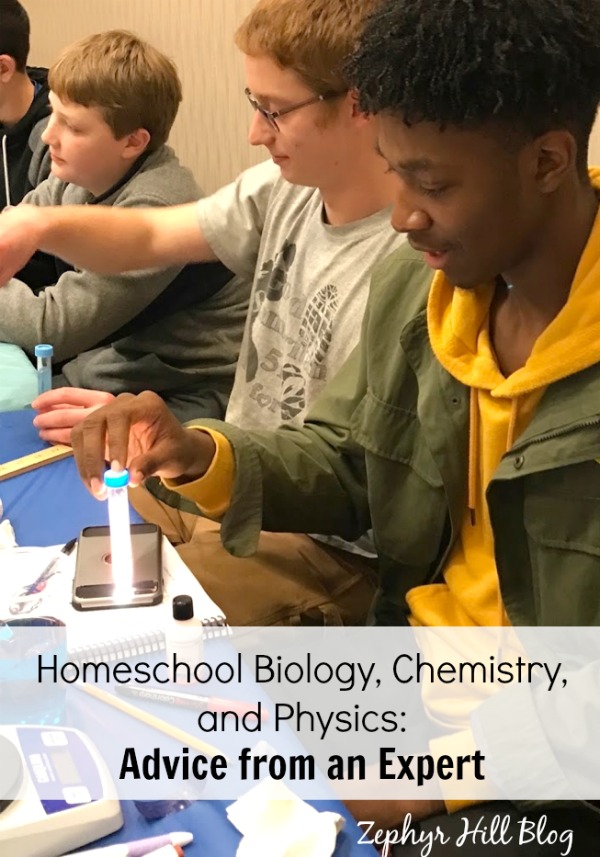
Homeschool Biology, Chemistry, and Physics: Advice from an Expert

April 1, 2020 by Anne Marie 19 Comments

Has your experience with homeschool science been positive or negative? It can certainly be challenging when it’s not a subject that you’re fluent in. And it may get more difficult as your students grow and the curriculum becomes more complicated. Earlier this year, I shared some tips from science professor, Greg Landry. Here’s his latest advice about doing science right!


This guest post is sponsored by College Prep Science, copyright 2020 

I recently talked with a homeschool mom of four children who echoed the sentiments of many homeschooling parents when she said, “my children had a bad experience with a science class.” The good news is that it doesn’t have to be that way.

Homeschool biology, chemistry, and physics curriculum, labs, and classes are the core of high school science and the thrust of middle school science as it prepares homeschooled students for high school level science. As a former college professor who has also taught thousands of homeschooled high school students, I believe that we should be careful at both of those levels to avoid two common mistakes.

Mistake No. 1

High school level homeschooled students who are likely to be college science majors should be taught very differently than students who will likely not be science majors and students who may not be attending college.

We created two separate types of classes to best address the biology, chemistry, and physics needs of each group – “college prep” and “life prep.” The depth, breadth, and pedagogy of many college-prep biology, chemistry, and physics classes leaves many non-science students frustrated, uninterested, and ultimately learning very little. I find that students in this situation often miss the big picture and they don’t have an overall understanding of the subject matter that is so critical in these sciences. They can’t see the forest because they’re lost in the trees. Our “life prep” classes are basic high school level classes, enable students to see the forest, and will allow them to learn science through the lens of their God-given interests and talents.”

Mistake No. 2

Ten years ago I originated the “pre” classes (Pre-Biology, Pre-Anatomy & Physiology, Pre-Chemistry, and Pre-Physics) as a means of minimizing the intimidation of high school level science and preparing middle school age students for specific high school level classes – rather than generalities such as “physical science” etc. This is a significant factor as they prepare for high school level science.

The thrust of our Christian / creationist worldview homeschool biology, chemistry, and physics online classes (and lab curriculum) is to give homeschooled students access to science that is focused on scientific inquiry, critical thinking, process reasoning, data collection, and the graphical and written representation of research. We want to prepare competent, confident students for their remaining high school years, their college years, and life.

Classes Offered

“College prep” online classes for students who will likely be college science majors
“Life prep” online classes for students who likely won’t be college science majors or likely won’t attend college

– Homeschool Biology – College Prep (9th-12th) – Two Semester Class
– Life Prep Homeschool Biology (8th-12th) – Two Semester Class
– Homeschool Chemistry – College Prep (10th-12th) – Two Semester Class
– Life Prep Homeschool Chemistry (9th-12th) – Two Semester Class
– Life Prep Homeschool Physics (9th-12th) – Two Semester Class
– Homeschool Human Anatomy & Physiology (9th-12th) – Two Semester Class

– Homeschool Pre-Anatomy & Physiology (6th-9th) – One Semester Class
– Homeschool Pre-Chemistry (6th-9th) – – One Semester Class
– Homeschool Pre-Biology (6th-9th) – One Semester Class
– Homeschool Pre-Physics (6th-9th) – One Semester Class
– Homeschool ACT Prep Bootcamp (8th-12th)
– Self-Paced Young Scientist Classes (3rd-6th)

In the words of a homeschool parent: “Greg, …what you did for our daughter will have far-reaching effects. You showed her that learning can be enjoyable…”  Thankful in Indiana, Jim H.

Note: These online homeschool science classes also include lab experiments and graded lab reports in Professor Landry’s virtual homeschool science laboratory. Students attend class weekly (either live or by recording), turn-in homework, and are tested on a regular basis. These classes are all-inclusive and provide students with an enjoyable, comprehensive science experience.


​Homeschool dad, scientist, and former college professor, Greg Landry, offers live, online homeschool science classes, Homeschool ACT Prep Bootcamp, the Homeschool Mom’s Science Podcast, in-person two-day science lab intensives nationwide, freebies for homeschool moms, and student-produced homeschool print publications.

Filed Under: Homeschooling

FREE and Cheap Resources for Teaching Children at Home

March 19, 2020 by Anne Marie 19 Comments

School closures and job uncertainty have American parents not only seeking out home learning resources, but ones that are free or inexpensive. This list is for you!

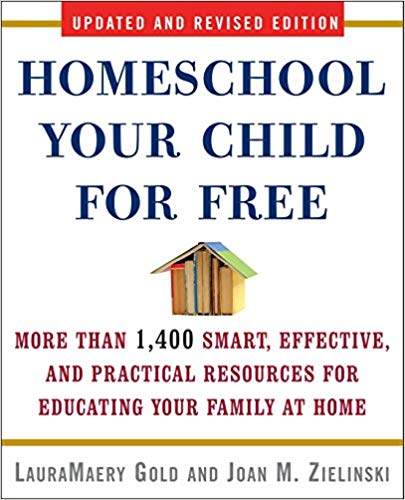
But first, this book is a must-have for any parent who’s homeschooling on a budget. Homeschool Your Child for Free has been a consistent best-seller since its release in 2000, and has been newly revised and updated:

Free Worksheets

I’ve been using these sites for years to print supplemental worksheets for my homeschoolers.

Twisty Noodle has free printables for every age and every season.

Clever Learner offers science worksheets, arts, crafts, coloring, math and handwriting practice for preschool, kindergarten and 1st graders.

Amazing Handwriting Worksheet Maker  – Create stunning handwriting worksheets saving you hours of time! Choose from all common printing styles including Block Print, D’Nealian Style, Zaner Bloser, etc.

Worksheet Fun is packed with free math enrichment worksheets for grades K through 2.

Raising Our Kids is a wonderful resource for classic and vintage coloring and activity pages for children. They are organized by topic and/or holiday.

Printable Learning pages can be downloaded for free from Inkjets.com on topics ranging from holidays to history.

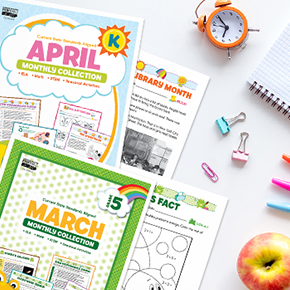
Carson Dellosa Education is making their March and April lessons available for FREE! You can directly download here.

Free Supplies

Angie’s Angel Help Network helps low income families obtain free or discounted computers.

School Closure was set up when the COVID-19 outbreak led to schools closing across the country. It helps parents and teachers get access to free tutoring, lessons plans, meals and supplies.

Kids in Need partners with 43 locations across the country to help distribute much needed school supplies to kids who would otherwise go without. Check their site to see if there’s a chapter in your area. These organizations support challenged communities where 70% or more of the kids are on a federal nutrition program

The Salvation Army is another place that provides free back-to-school supplies to families across the country, including free backpacks stuffed with school supplies. Find your closest Salvation Army center via ZIP code search.

If you’re low on certain supplies right now and are looking for bargains, check out the clearance sale right now at Discount School Supply:

Free Videos and Curriculum 

Stossel in the Classroom will send your family free DVD’s in the mail which spark great discussions with middle and high schoolers. John Stossel’s short and engaging videos cover topics like sociology, ethics, politics and more.

A2Z Homeschooling – Offers completely free lessons plans for grades K-12. Available digitally or as printables.

Kahn Academy– A non-profit site started by educator Salman Khan to provide free educational resources for all. Organized by topic, you can access video lectures on K-12 math, science, technology, economics, art, history, and test prep. Students can use the site on their own, or through a parent account, and track progress.

Easy Peasy Homeschool – a free online resource created by homeschooling parents for homeschooling parents. It contains a complete homeschool curriculum from a Christian worldview for grades K-12.

Freedom Homeschooling offers a complete Christian-based history, geography and social studies curriculum.

Ambleside Online offers a free, user-friendly curriculum for families facing disaster and hardship. What could be more perfect during this year’s COVID-19 outbreak?

Virtual Tours – A list of ten children’s museum’s that you can “visit” for free online.

Duolingo Most of us would love to learn a second language, but feel there’s no time. Well, now’s our chance! This free language app is available for iPhone, Android, and the web and offers fun and engaging lessons for a variety of languages, including Spanish, French, German, Portuguese, Italian, and English.

The Wild West – Virtually travel to the great American West and learn about cowboys, lawmen, outlaws and the American Indian. The site also offers cowboy poetry, cowboy songs, recipes, and more.

5 Pencil Method gives five free drawing classes. This is a step-by-step approach to mastering the skill of drawing. Each new lesson builds on the previous lessons.

Kinderart makes it fun and easy to teach art to young children. They have free downloads and a paid membership club.

Progressive Phonics is an all-in-one reading program that is fun and totally free. Teach your children to read and write with a few minutes of instruction each day.

Free Books

Online Book Club allows you to receive and review books for free. Some of the gigs even pay you!

Goodreads has a forum where authors can request reviews for their books. If you’re chosen, the book will sent to you for free. Click here and make sure you find the newest post (page numbers are at the bottom).

Ray’s Arithmetic was published in the 1880’s and is still a solid text that’s popular for homeschoolers wanting to teach early math for free. You can download it through Google books.

Gutenberg Project – thousands of free books to read!

US Government Bookstore – You can request free publications (digitally or shipped to your home) from the government’s Pueblo distribution center on topics ranging from food and health to money and travel.

And now here’s a special discount I can offer you from one of my partners, Books-a-Million:

Free Educational Games

Xtra Math – a free math fact fluency program for parents and teachers. Use it online or download the app. XtraMath features free math videos, lessons, and activities as well as progress reports and resources for teachers and parents. The site is a valuable resource both for homework help and more in-depth lessons.

Funbrain – free educational games, comics, books, and videos for children in grades Pre-K through 8th. Their fun-filled activities focus on developing skills in math, reading, problem-solving, and literacy. Content is organized by grade level and the site does not require you to enter logins, passwords

Trivia Madness – Use Sporcle to host a family game night and battle it out using these online quiz sites. Everything from history to science to pop culture is on the table!

Tinkergarten – Parents can sign up for free and receive weekly outdoor activity guides that are fun and easy to pull off. You can also view live online sessions and access parent insights.

Arts and Crafts

Michael’s Craft Stores offers a free family activity every Wednesday on Facebook.

Homeschool.com offers a large collection of printable freebies like bookmarks, calendars, activity pages and journals.

The Crafty Classroom blog is loaded with fun printables and craft projects. Here’s her Spring freebies page.

Picturing America allows you to virtually explore the artistic masterpieces of the United States from the comfort of home.

Free Science Resources

National Science Foundation – Use their seven NSF-supported STEM resources that are perfect for at-home learning.

Exploratorium – The website for this popular San Francisco children’s science center features an impressive selection of free activities, videos, printables, and interactive online resources on a variety of math and science topic

Ranger Rick – This popular children’s animal magazine, which I grew up collecting, is offering their digital edition completely free to families until the end of June.

Classic Science with Mr. Q is available as a free 36-week downloadable course for all ages. Each weekly lesson contains vocabulary words, entertaining yet informative text, worksheet pages and and at least one experiment.

NASA for Students  The NASA website’s For Students section includes a great free catalog of articles, activities, videos, and games for students in grades K–12 on topics related to STEM, aeronautics, and space exploration.

Share your favorite free home learning resources in a comment below!


Filed Under: Homeschooling

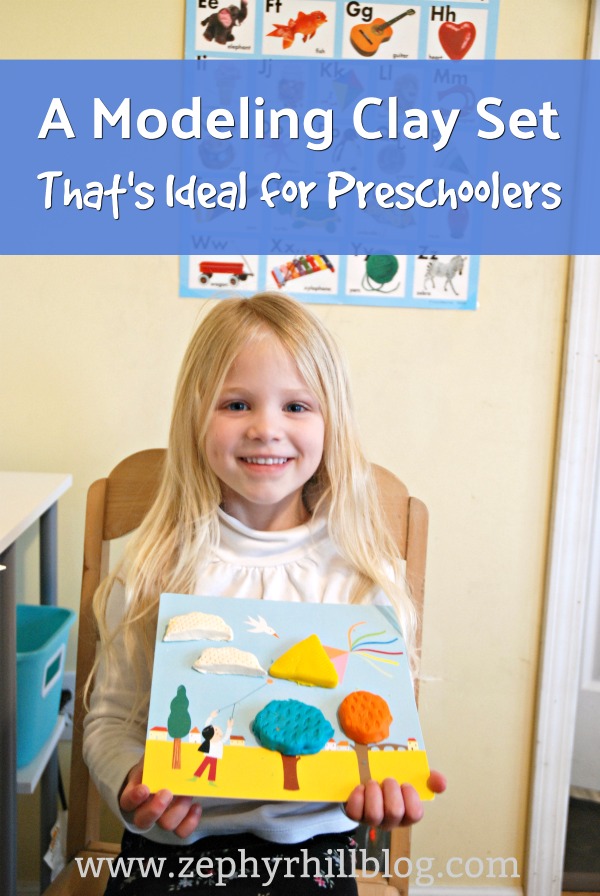
A Modeling Clay Set That’s Ideal for Preschoolers

February 21, 2020 by Anne Marie 9 Comments

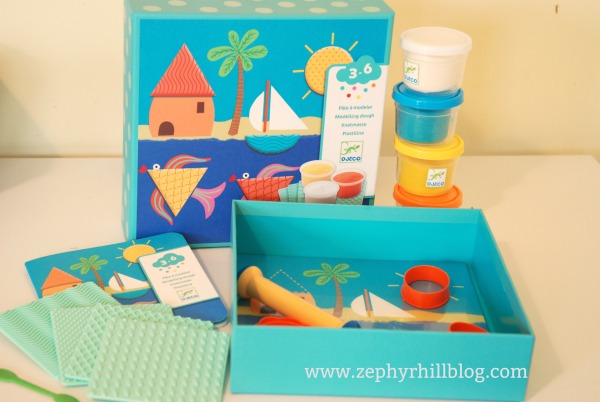
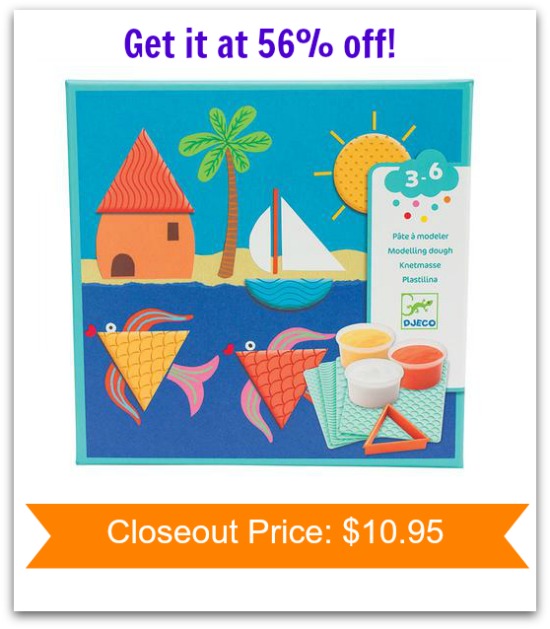
Children have plenty of imagination to spare when it comes to building and creating, but if you’d like a modeling set that provides more guidance and inspiration for young children, take a look at Timberdoodle’s Djeco Modeling Dough Prints & Shapes. We received this set in exchange for a review, and have found it to be a great addition to our homeschooling.

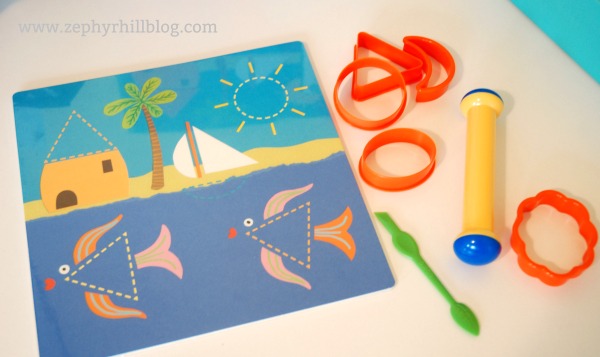
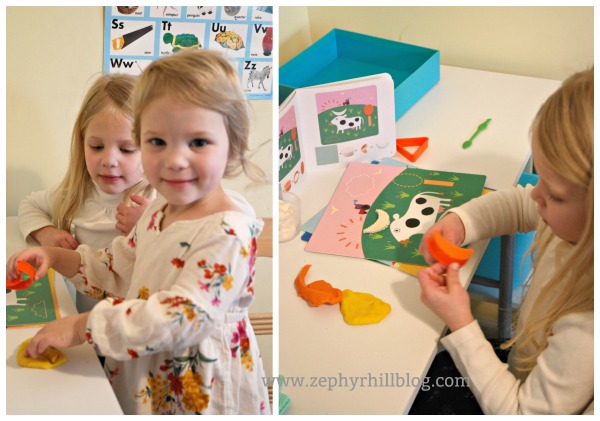
The focus here is on shapes, colors and textures, with an easy-to-follow booklet and four reusable picture boards to create on. Using the cookie cutters, roller, and texture boards, youngsters can fill in each picture with the correct shapes.

On each scene, the shapes are clearly marked out with dotted lines. Your child can choose whatever color or texture she likes.

The dough comes in four colors: white, orange, blue and yellow. While we all know children love to get their hands on dough, it’s even more fun with the addition of textures! My children love the soft, pliable feel of the dough, and I’m happy that it’s non-staining.

Timberdoodle’s Djeco Modeling Dough Prints & Shapes is recommended for ages 3 to 6 and is marked down 53% to just $10.95. Grab this wonderful little set before they’re all gone!

Did you know that Timberdoodle offers a full homeschool curriculum as well? In fact, the Djeco modeling dough set I reviewed today is included in the Kindergarten Curriculum Kit.


Filed Under: Homeschooling

  • « Previous Page
  • 1
  • 2
  • 3
  • 4
  • 5
  • 6
  • …
  • 11
  • Next Page »

SOCIAL MEDIA

Newly Published

  • The Coop Upgrade Nobody Talks About Until It’s Too Late
  • Ignore the Radio Ads About Life Insurance, But Please Read This Post
  • Do Catholic Parents Have to Choose a Saint Name for Their Baby?
  • The BEST and Most Comprehensive Baby Name Books for Parents
  • Educational Games to Enjoy With Your Children

Popular Posts

  • Tiny Love Bouncer Review
  • Sweet Pea AI3 One-Size Diaper Review & Giveaway
  • 6 Common Homeschooling Mistakes to Avoid
  • Sweet Pea Bamboo AIO and Pail Liner Review & Giveaway
  • How to Study (and Teach) at Home With Less Distraction

Copyright © 2026 · Zephyr Hill Blog · Design by Albemarle PR

Copyright © 2026 · Albemarle PR - Hannah Template on Genesis Framework · WordPress · Log in