Zephyr Hill

A Family Blog

Header Menu

  • Home
  • Contact Me
  • Terms / Privacy
  • Homeschooling
  • Faith and Family
  • Book Reviews
  • Cloth Diapers
  • Pets

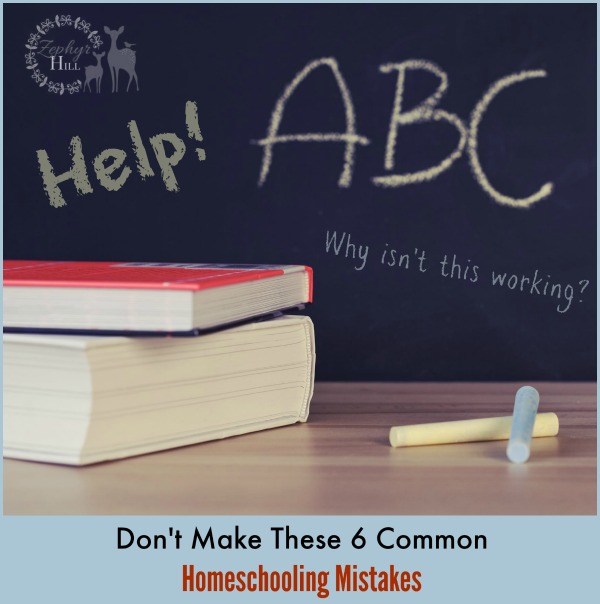
6 Common Homeschooling Mistakes to Avoid

October 30, 2018 by Anne Marie 9 Comments

Every homeschooling family will make mistakes and have regrets along the way. Here are some of ours, and the changes we made.

#1 Doing it all yourself. After many years of homeschooling primarily on my own, it was a humbling experience to admit I couldn’t do everything myself. When I tried to, the results were sub-par. Ouch. Please get help if you need it! This comes in all sorts of forms:

  • Hire a tutor for one or more subjects.
  • Ask if another homeschooling family can help out. For instance, if math is a breeze for a friend and her teenage son, ask if YOUR son can do his lessons with them. Then think of a way you can help your friend out.
  • Consider video lessons (there are free and paid options online). Get recommendations from a homeschool support group and check out online reviews.
  • Ask your spouse for help. In many families, mama naturally does most of the teaching, but many fathers can and SHOULD be involved in some way. Even if it’s just one class they are responsible for, it’s one less thing on your shoulders. Plus, it teaches children that both parents are invested in homeschooling, and will back each other up.
  • Ask a sibling for help. My teenagers can help their younger siblings with some subjects when I’m very busy. Catherine even likes making little worksheets for her little sister and brother. Even a younger child can some of the load off of you. Eight-year-old Samuel can easily drill Kindergartener Susanna on her alphabet and math flash cards.

#2 Thinking a new book will solve everything. “If we just had a different curriculum…..” It’s tempting but if you don’t get to the root of the problem, you’ll just be running away from it. Things we often mistake as “curriculum problems” are:

  • Bad attitude / lack of discipline. It’s quite possible that the problem isn’t your curriculum; it’s you and your child! No new book will magically fix a discipline problem, or banish common issues like apathy and laziness. Before switching programs, always ask yourself, is this a behavioral issue? If you have to tell your child three times to make up his bed, or argue/yell to get things done, then it’s not a shocker that trouble will arise during home learning. More tips on dealing with bad attitude here!
  • Lack of interest. Catherine has little aptitude or interest in math. Over the years, we tried 3 different programs before realizing we couldn’t blame it on the math programs anymore! She’s never going to like math, and may not advance that far in it. So we just picked a reliable program and let her work through it at her own pace. We can get occasional tutoring as a backup, if needed.
  • Improper grade level placement. Not all children are going to be on the same grade level in every single subject, and that’s why homeschooling is so great. You can customize their learning. It’s ok if your child is doing everything at 5th grade level except for math. Don’t push him into the next book or you will regret it later. Every once in a while we will take 2 years to finish a book. That’s ok. They will know the material thoroughly, and at traditional schools they rarely ever finish books anyway!

#3 Planning too much.  I am the world’s worst about this! It’s so satisfying to make plans at the beginning of the year. My head is full of all the fun and interesting things we’ll do in the new school year. Not to mention that we will finish every book and every project, and dot every I and T! But you realize as the year commences that you have to be realistic and deal with what comes. When someone needs extra help, you slow down and re-group. When someone moves ahead faster than expected, you have to scramble to provide new material. Maybe you just find that there’s not much time for a lot of field trips (bummer).

Yes, you should make plans! But be prepared to tweak them, as needed, and you won’t be disappointed when something has to change.

#4 Neglecting your school room. We’ve all read about how you need to be organized for a successful homeschool, and of course that’s true. No one wants to work in a cluttered, messy space, and it’s frustrating when things are constantly getting lost or destroyed.

A lot of homeschoolers do their work on the dining room or kitchen table. The drawback is that these spaces are trashed and pretty much unusable most of the day. If you can, carve out a place somewhere else in the house for learning.

Try going a step further. Create a space you’ll actually LIKE to work in. If that means spending $20 to paint your school room a fresh, appealing color, do it. Maybe it means sacrificing a non-essential room (like a toy room or “movie” room) to turn it into a real school room. This reinforces just how committed you are to home learning.

Keep a vase of pretty flowers on your school table. Buy yourself a beautiful monthly planner and a set of colored pens to go with it. Hang something beautiful, fun or educational on the walls. Put up a bulletin board that everyone can help decorate according to the seasons. Whatever makes the teacher and students happy!

#5 Being a taskmaster. Don’t become obsessed with simply getting things done so you can check them off a list. That’s not always the best measure of success. Let’s say your second grader is struggling to read. If that’s the case, maybe you shouldn’t insist on a weekly spelling test, even though it’s part of your curriculum. It might be too overwhelming and lead to tears and burnout. You’ll have a happier and more productive child if you simply focus on the reading. And he will naturally move onto spelling mastery after that. Note: Remember this if enrolling your child in a program; make sure it allows for flexibility!

Nothing should be mandatory when it comes to homeschooling. Tailor the learning to your child’s skill level and be willing to remove a task from your list if he’s not ready for it.

#6 Forgetting to take breaks. A common complaint of both parents and teachers in traditional schools is that recess and lunchtime keep getting shorter. Children and educators both need time to relax and recharge their batteries, so don’t try to squeeze everything into the morning hours just so you can take the afternoon off. Burnout invariably follows this intense approach.

Over the years, I’ve found that school in the morning (most challenging subjects first), with a break for lunch and recess, plus a little more school in the afternoon, works really well.

Do you have any homeschooling tips to share? Any mistakes that you made along the way?

 

Filed Under: Homeschooling Tagged With: homeschool, homeschool mistakes, Homeschooling, Homeschooling Troubleshooting

A Review of LIFEPAC’s Kindergarten Math Curriculum

July 25, 2018 by Anne Marie 16 Comments

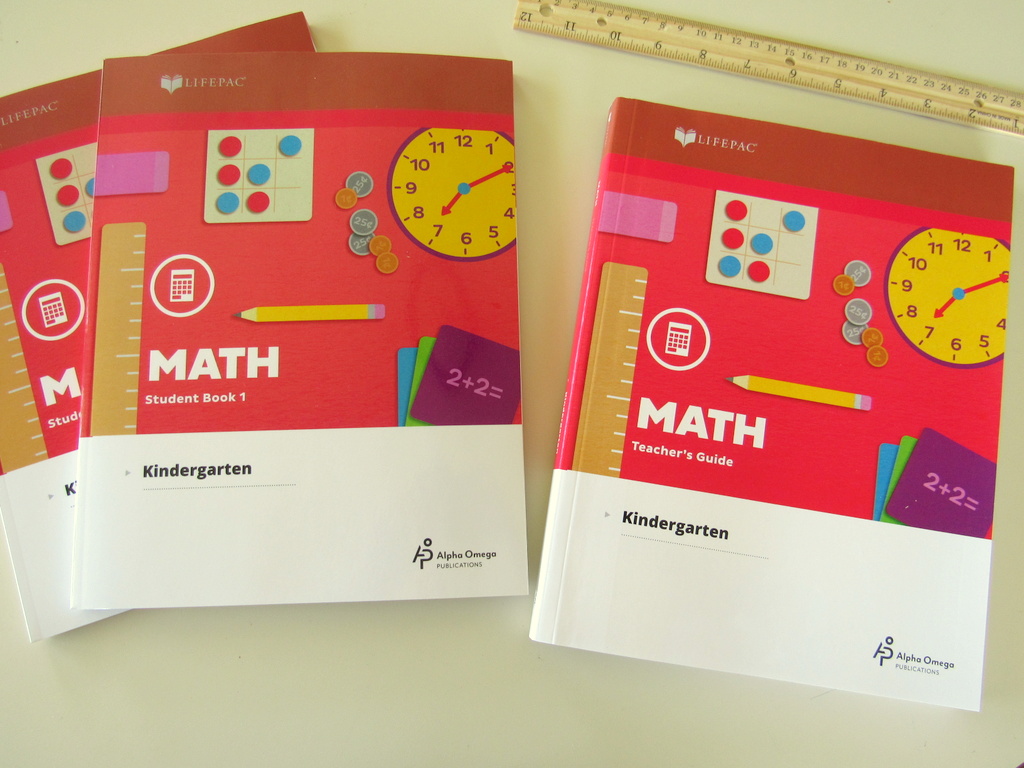
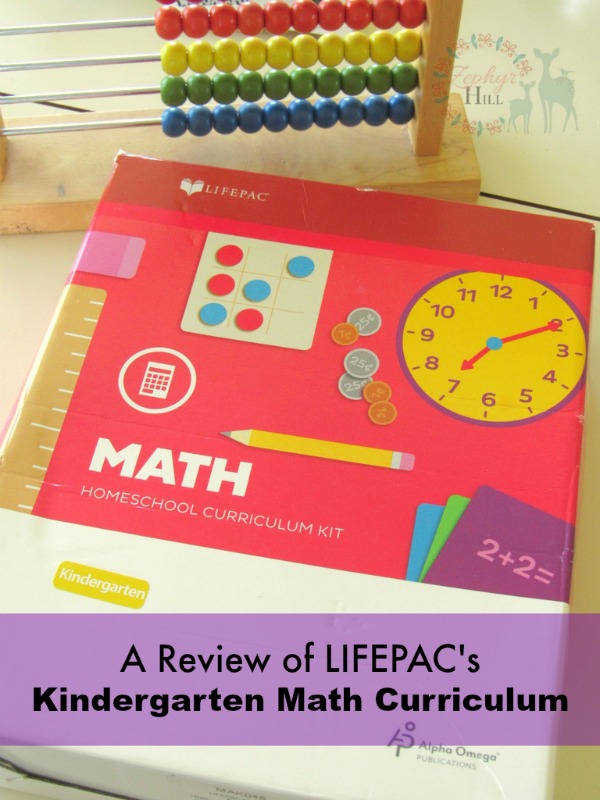
Erik is five and enters Kindergarten this year, so choosing a homeschool math program was on my to do list.  Alpha Omega Publications gave us the chance to try their LIFEPAC Kindergarten Math Kit in exchange for a review, so that relieved me of having to shop around!

LIFEPAC’s full-color, worktext curriculum is based on the principle of mastery learning, in which students truly grasp the context and skills of one unit before progressing to the next. LIFEPAC’s math curriculum uses repetition, drill and application to encourage mastery of basic arithmetic skills.

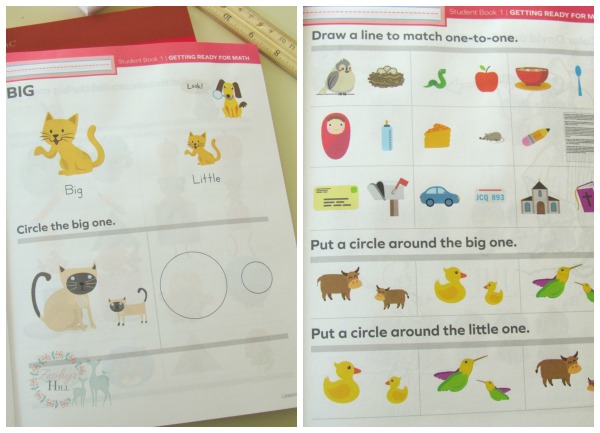
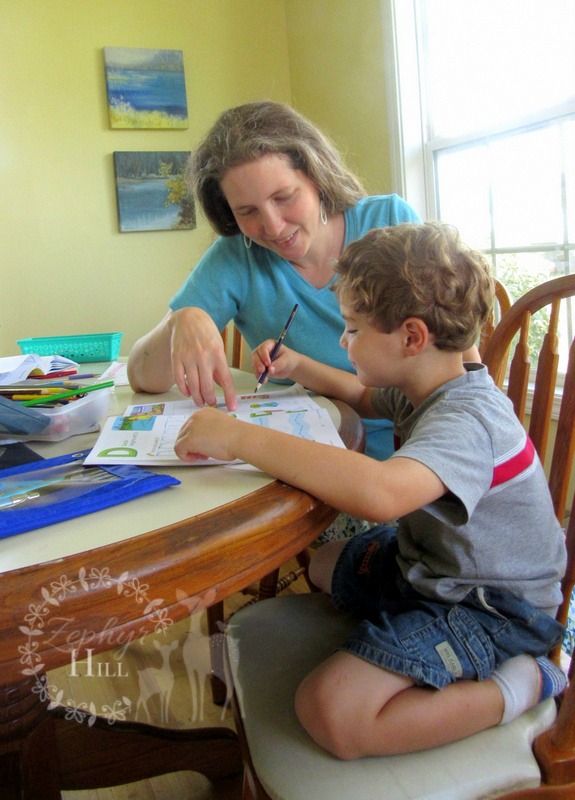
Erik was immediately drawn to the full-color workbook pages and cute illustrations; he wanted to sit down right away and work on some lessons (even though it was only July!).

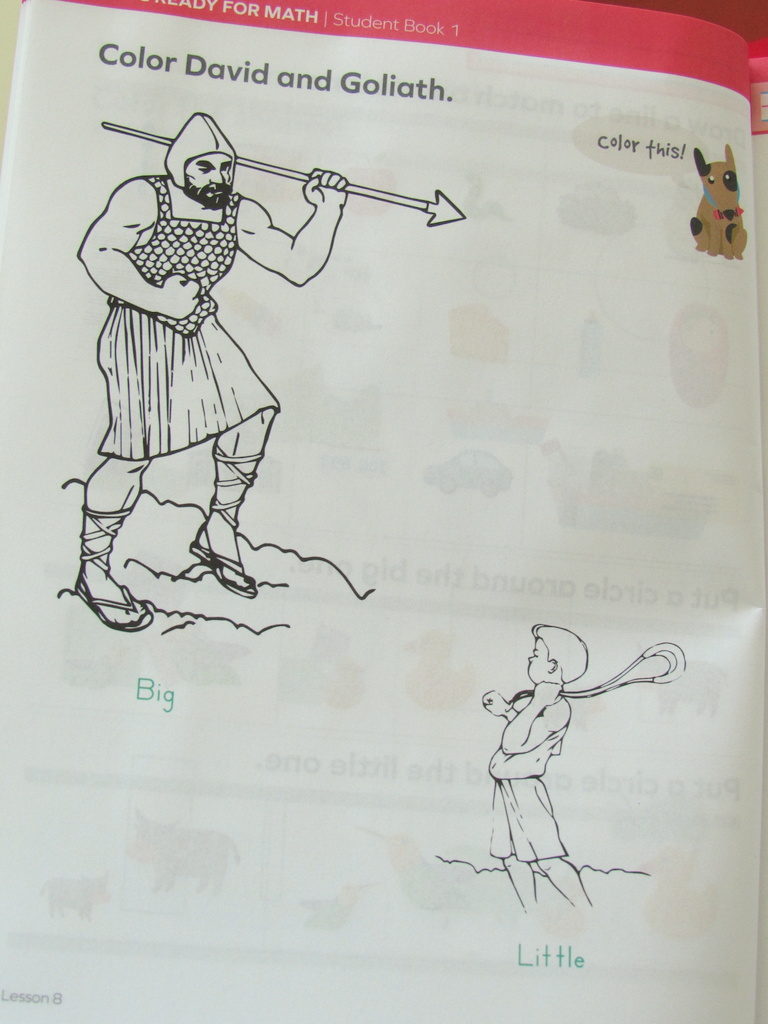
LIFEPAC level K starts out with very simple concepts like big vs. little and counting 1, 2 and 3, so Erik jumped right in with no problem.

The Kindergarten Math Curriculum Set includes a teachers manual and student workbooks 1 and 2 packed in a sturdy box. The kit retails for $56.95, or you can buy each of the three books separately $17.95 each. The kit price is very reasonable and comparable to other similar programs which include the worktext and teacher’s guide.

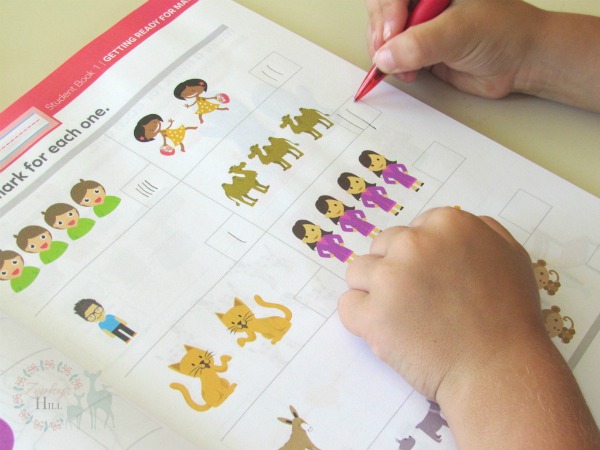
There are 160 lessons in total. If you do math 5 days a week, then this gives you 32 weeks to finish the program completely. For my young students, we’ve always followed a 4-day school week, and I can easily work the LIFEPAC into our system by having Erik do two lessons instead of one on some days. Many of the lessons, especially in book one, are very simple and involve coloring a picture or circling the right answer. If you have a child who isn’t into coloring, just skip those pages.

The work pages aren’t time consuming or overwhelming, so it’s been enjoyable going through the program with Erik. Sometimes, he even asks to do extra pages.

The LIFEPAC curriculum introduces one concept at a time, and encourages mastery of each topic. Since most children in Kindergarten are just learning to read, they will need guidance with the workbook directions.

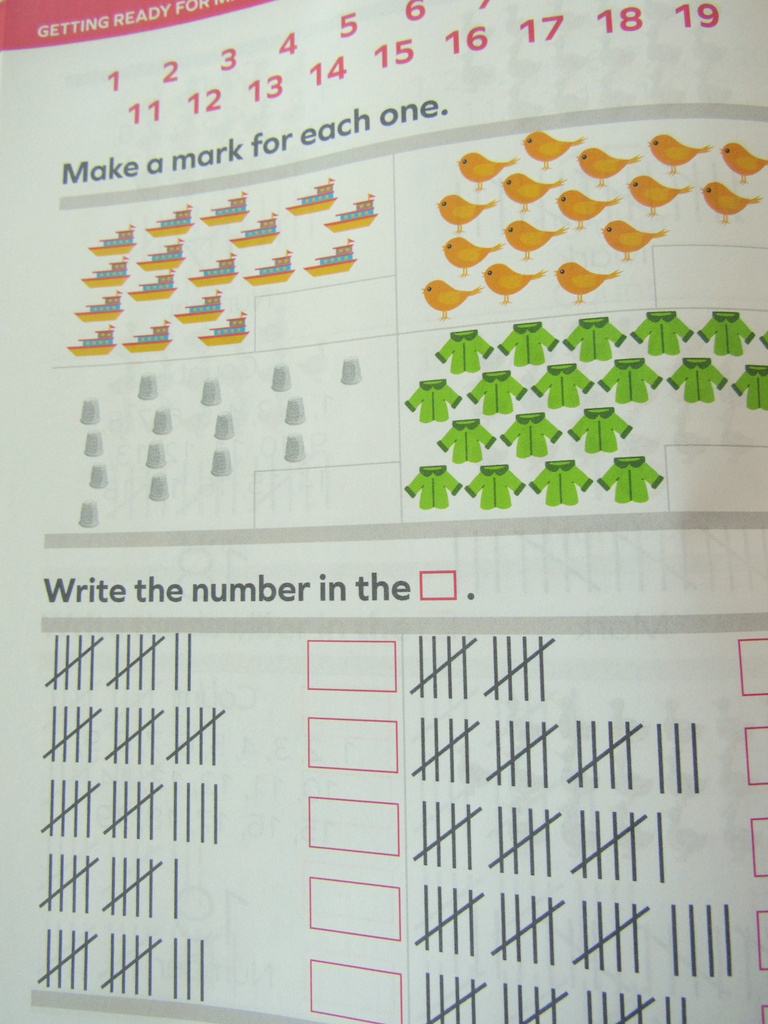
You’ll find many typical beginning math exercises in the worktext, plus a few that are a little bit different. I like the variety, such as using tally marks to count, instead of having to write numbers all the time.

The concepts covered in Alpha Omega’s Kindergarten math program include:

  • Shapes and size comparison
  • Counting (in Book 2, your student reaches 100)
  • Writing numbers
  • Sets
  • Addition facts up to 10
  • Subtraction facts up to 10
  • Telling time (hour and half hour)
  • Number sequences (before and after)
  • Money (pennies, nickels and dimes)

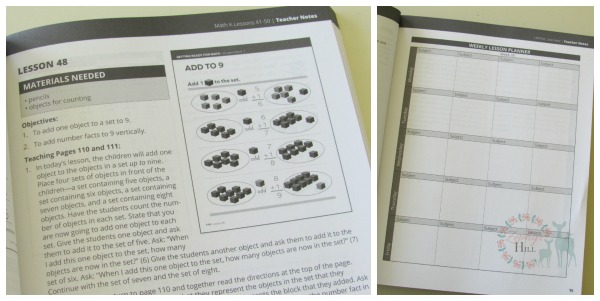
The teacher’s guide provides step-by-step teaching instructions for all 160 lessons, an answer key, and lots of ideas for additional activities designed to reinforce important math concepts. There’s also a weekly lesson planner page that you can photocopy.

The suggested materials in the teacher’s guide are easy to obtain:

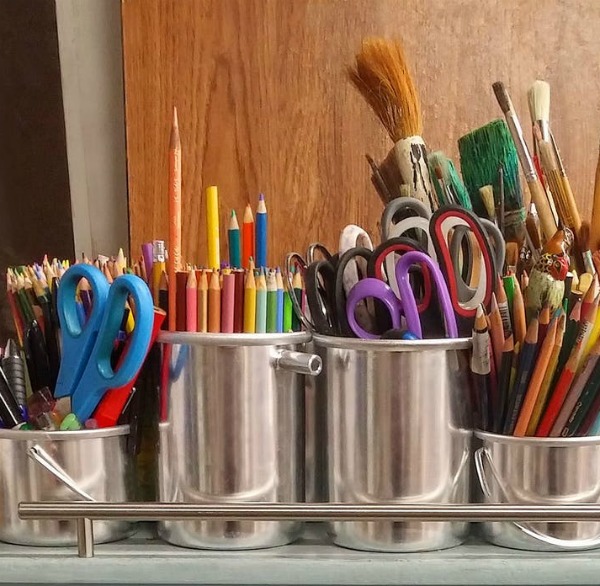
  • Crayons
  • Pencils
  • Objects for counting
  • Flash cards (you will need to purchase these elsewhere – dollar stores have them for a buck or two)

You can see the scope and sequence of the Kindergarten program, plus more sample pages here.

Alpha Omega is a Christian publisher, and there are what I would describe as “non-denominational” themes throughout the workbooks. For instance, in the math workbooks there might be a coloring page featuring a biblical character, or a dot-to-dot with a short message about Jesus.

Alpha Omega offers a full homeschool curriculum for grades 1-12, including Bible and electives. The full accredited learning program has print-based, computer-based and online components.

My only suggestions for improvement would be: (a) For Alpha Omega to offer additional resources and/or manipulatives to enrich their math program for hands-on and visual learners, and (b) For the workbooks to be spiral-bound. That way, they lie flat and are easier for young children to work with.

Overall, Erik and I both really like this math program and look forward to completing it in the spring!

You can shop Alpha Omega Publication’s LIFEPAC curriculum materials directly at their website. You can also follow on social media:

  • Facebook
  • Twitter
  • Pinterest
  • Instagram

Are you in the market for a new math program? What features do you like to see?

Filed Under: Homeschooling Tagged With: Alpha Omega Publications, homeschool review, Homeschooling, LIFEPAC kindergarten math, LIFEPAC Math Curriculum, LIFEPAC math review

6 Money-Saving Tips for Homeschoolers

October 8, 2017 by Anne Marie 8 Comments

Thanks to The Toddle for sponsoring this post!

One of the nicest things about homeschooling is its flexibility. Parents get to choose what – and how much – to buy. But that same flexibility can lead to unnecessary expenses if you’re not careful. Here are some ways to help minimize your spending without sacrificing the quality of your child’s education.

Love Your Local Library

The library can be a huge help for homeschooling parents on a budget. Get a library card and use it to supplement the core textbooks in your family’s curriculum. Borrow reading materials that you do not expect to use for a long time. For example, you can check out books on different kinds of animals to enrich your family’s study of the animal kingdom. Read them together with your child and then return them. It makes more sense to borrow books you will read only once than pay extra money only for them to gather dust on the shelf.

Want to buy a book or DVD but not sure if it’s worth the money or not? See if your library has it and get it on loan. If you find yourself borrowing it a lot, then a purchase may be justified.

Your local library can be useful in other ways too. Check its digital services for features like online magazines (must be kid-friendly, of course), streaming videos, electronic books, language courses and for older students, software training. Also, look up the library’s calendar for events and activities that your family may enjoy.

Shop Wisely

While grade-school textbooks might not be as expensive as college books, the costs do add up. Buying used materials can make a big difference in your expenditures. Shop for used, reusable books at sites like Amazon or eBay. Many second-hand titles are sold on Amazon for a few cents plus a standard shipping fee. Usually, the cheaper the book, the poorer its condition. Read the ads or descriptions carefully so you know what you are getting, and check the seller’s reputation, too.

You can also drop by a local thrift store, dollar store or used bookstore for books and school supplies like crayons and paper.

Beware of buying some educational materials in used condition, such as consumable workbooks. A consumable workbook or other item may have restrictions on the number of times they may be used or reused. Reproduction, including photocopying, may also be prohibited. Look up the copyright information in each book or item (ideally, before you buy it). Check if reproduction and/or reuse is allowed. When in doubt, contact the publisher.

Make the Internet Your Friend

The web rivals your local library as a source of free educational materials. You will be amazed at the sheer amount of free stuff that other homeschooling folks have put out there: printable worksheets, lesson plans, games, videos, journals, activities and many more. There are so many good homeschooling websites and blogs to name, so just head over to your favorite search engine and look up “homeschooling free resources” to start, or type in “printable math worksheets,” or whatever you need.

Bear in mind that the quality of free stuff online varies greatly! Also, you will need to print most of them, so don’t forget to consider the cost of printer paper and ink if you want to print a lot.

Ask Others for What They No Longer Need

Many households have stacks of books waiting to be disposed of. You’ll find a lot of that on eBay, but why not ask people you know first? Turn to family and friends who have children of their own. They may have school textbooks and other materials that their kids have outgrown yet are still usable. If you ask them, they might just give them to you for nothing. You get free goods, and they free up space in their homes without having to drive to the nearest donation center. Other places to check are local schools and your local library.

Don’t Buy Into Everything

Homeschooling is an exciting adventure. It is easy to get carried away by the desire to give your child the best home-based education possible. Watch yourself! You don’t necessarily have to buy the complete packages or bundles. Expensive supplemental materials like DVD’s and book sets aren’t absolutely required. Invest in the core materials – the “backbone” of your curriculum – and be picky about the rest.

Start off slowly. It may turn out that a particular author or publisher’s books do not suit your family’s needs as you may have first thought, or a curriculum might not be as appealing or effective as you had hoped. If you had bought lots of books right away, you would have wasted a great deal of money. Sample a book or two and see how your family likes it before getting any more.

Design Your Own Curriculum

Depending on how you do it, you can save money by designing your own homeschool curriculum. That means you choose and buy items individually and plan lessons for each school year. If you are smart and know not to overspend, your savings could be considerable. Naturally, this would take more time and commitment than buying a prepackaged, complete course. If you have enough confidence in yourself as a teacher, and you have the time, this could be a viable option.

Tip: If you decide to customize your homeschool curriculum, find recommendations from sources you trust. Whether it is a favorite author, a homeschooling blog or your best friend, it could save you a lot of research.

The Takeaway 

A good education does not have to be expensive. Be smart with your choices. You probably need much less to homeschool than you think. And the money you save can be put aside for other important and enjoyable things. Besides, spending money wisely is a valuable lesson that you can teach your child.


About the Guest Author: Liz Sparks is a parenting writer and owner of thetoddle.com, a website dedicated to helping parents make empowered decisions when it comes to raising their children. As the mom of an only child, Liz has a unique perspective on parenting. She loves to share her experiences of being a high-strung, “Type A” mother in an imperfect world!

Filed Under: Homeschooling Tagged With: home education, homeschool on a budget, Homeschooling, money saving tips, used textbooks

What Are the Most Homeschool-Friendly States?

September 10, 2017 by Anne Marie 16 Comments


After moving from Mississippi to Kansas, and not being required to do much more in terms of homeschooling compliance, I was surprised to learn that some US states make you jump through a lot of hoops. Each state is given the power to regulate as it sees fit, and this means there’s a really wide variance. For example:

Alaska is one of the freest states, requiring only that children start school at the minimum age of 7. Beyond that, no notice is needed from parents; nor must they get approval, submit records or do testing.

Vermont law, on the other hand, is more invasive. Parents must first give official notice, and then provide a written “narrative,” which outlines the course of study for every subject. Then you have to wait on a decision from the commissioner, who may call you in for a hearing (fun!). As if that wasn’t enough, you then have to teach more than 10 required subjects over the course of your child’s educational journey. There are also required tests/assessments every year. Note:  A reader informed me that for this required assessment, you can have a certified teacher look at samples of your student’s work and fill out a form, or you can provide a parent-led portfolio containing 2-6 samples of work for each subject.

In Pennsylvania, requirements are very similar to Vermont, but there’s an affidavit you have to sign and have notarized every year. Besides the usual personal information and outline of your lessons, you must provide evidence of immunization and other “required” health and medical services.

Washington state is very choosy when it comes to parent qualifications. You have to (1) be supervised by a certified teacher, or (2) have 45 or more college credits, or (3) complete an approved course in home education, or (4) be deemed qualified by the superintendent (not really sure how that plays out).

Now I realize that if you’re transitioning children from an institutional setting to a homeschool setting, some of these statues might not seem burdensome to you. It may very well be a lot less paperwork and red tape than you are used to dealing with each school year.

But homeschool laws, if any, should still be as “hands off” as possible. Why?

Many Americans believe that states are responsible for educating children. It is more accurate to say that states may provide educational options. Public schooling is the government’s offering; if I choose the homeschool option for my family, then I should not be burdened by unnecessary government rules.

Our rights to educate at home are protected by the 1st and 14th Amendments.

If something in you still cringes at the thought of those 1.8 million unregulated children learning at home, consider this. Ian Slatter, of the Home School Legal Defense Association, says “Homeschool performance doesn’t change between students in the easy states and those in the difficult ones. There’s a lot of regulation and work placed on parents in the difficult states with no benefit.”

To see what’s required in your state, click here.

If you’re curious, though, here’s the HSLDA’s list of the least and most restrictive. It’s based upon things like age and instructor requirements, notice, records and testing.

Some of the least restrictive:

  • Alaska
  • Idaho
  • Illinois
  • Indiana
  • Michigan
  • Missouri
  • New Jersey
  • Oklahoma
  • Texas

Some of the most restrictive:

  • Massachusetts
  • New York
  • Pennsylvania
  • Rhode Island
  • Vermont

My state of Kansas is not on either of these lists, because I suppose it falls somewhere in the middle. We are asked to register our homeschool, but that only takes 2 minutes online. Parents are also required to teach “about” the same number of days as the public school, and plan/schedule their instruction. But there seems to be no real enforcement, as far as I can tell.

In all our years of homeschooling in Kansas, we have never had any contact with the government about our homeschool, with the exception of the registration we initially filed 9 years ago. I do keep records, though, just in case.

Are you familiar with the homeschooling laws in your state? Have regulations ever made it more difficult for your family to homeschool? I keep this post up to date so if you see anything here that needs to be changed for your state, let me know!

Filed Under: Homeschooling Tagged With: best place to homeschool, Homeschool laws, Homeschooling, homeschooling friendly states

50 Words That Americans Aren’t Spelling Correctly

July 10, 2017 by Anne Marie 15 Comments

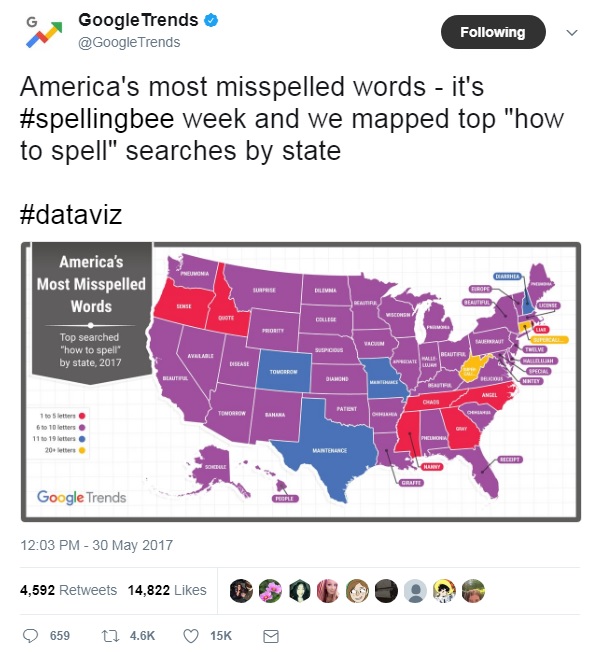
Can you spell America’s most misspelled words? I saw this tweet via Google Trends recently, and it got me thinking that maybe America needs to ditch Candy Crush Saga in favor of Scrabble if we’re struggling with most of the words on this list. Are “special” and “beautiful” and “surprise” really that difficult?


Alabama: pneumonia
Alaska: schedule
Arizona: tomorrow
Arkansas: chihuahua
California: beautiful
Colorado: tomorrow
Connecticut: supercalifragilisticexpialidocious
Delaware: hallelujah
Washington: ninety
Florida: receipt
Georgia: gray
Hawaii: people
Idaho: quote
Illinois: pneumonia
Indiana: hallelujah
Iowa: vacuum
Kansas: diamond
Kentucky: beautiful
Louisiana: giraffe
Maine: pneumonia
Maryland: special
Massachusetts: license
Michigan: pneumonia
Minnesota: beautiful
Mississippi: nanny
Missouri: maintenance
Montana: surprise
Nebraska: suspicious
Nevada: available
New Hampshire: difficult
New Jersey: twelve
New Mexico: bananas
New York: beautiful
North Carolina: angel
North Dakota: dilemma
Ohio: beautiful
Oklahoma: patient
Oregon: sense
Pennsylvania: sauerkraut
Rhode Island: liar
South Carolina: chihuahua
South Dakota: college
Tennessee: chaos
Texas: maintenance
Utah: disease
Vermont: Europe
Virginia: delicious
Washington: pneumonia
West Virginia: supercalifragilisticexpialidocious
Wisconsin: tomorrow
Wyoming: priority

Look at the list and tell me what you think. Admittedly, “pneumonia” confuses me a little, because I want to write the “u” first since that’s the sound my ear hears. But if I remember to think “knee-u-monia” as I spell it, that helps. I often find that with words I second-guess, getting it on paper is a quick way to see if I’ve got it right or wrong. My eye will quickly tell me if something is off because I have a sort of photographic memory and know how a word looks when it’s correctly spelled.

Do you have any tricks or tips to share that help you to spell out certain words? Are you surprised by the words on Google’s list that people find hard to spell?

Filed Under: Homeschooling Tagged With: commonly misspelled words, literacy, misspelled words, spelling, spelling practice

  • « Previous Page
  • 1
  • …
  • 5
  • 6
  • 7
  • 8
  • 9
  • …
  • 11
  • Next Page »

SOCIAL MEDIA

Newly Published

  • The Coop Upgrade Nobody Talks About Until It’s Too Late
  • Ignore the Radio Ads About Life Insurance, But Please Read This Post
  • Do Catholic Parents Have to Choose a Saint Name for Their Baby?
  • The BEST and Most Comprehensive Baby Name Books for Parents
  • Educational Games to Enjoy With Your Children

Popular Posts

  • Tiny Love Bouncer Review
  • Sweet Pea AI3 One-Size Diaper Review & Giveaway
  • 6 Common Homeschooling Mistakes to Avoid
  • Sweet Pea Bamboo AIO and Pail Liner Review & Giveaway
  • How to Study (and Teach) at Home With Less Distraction

Copyright © 2026 · Zephyr Hill Blog · Design by Albemarle PR

Copyright © 2026 · Albemarle PR - Hannah Template on Genesis Framework · WordPress · Log in