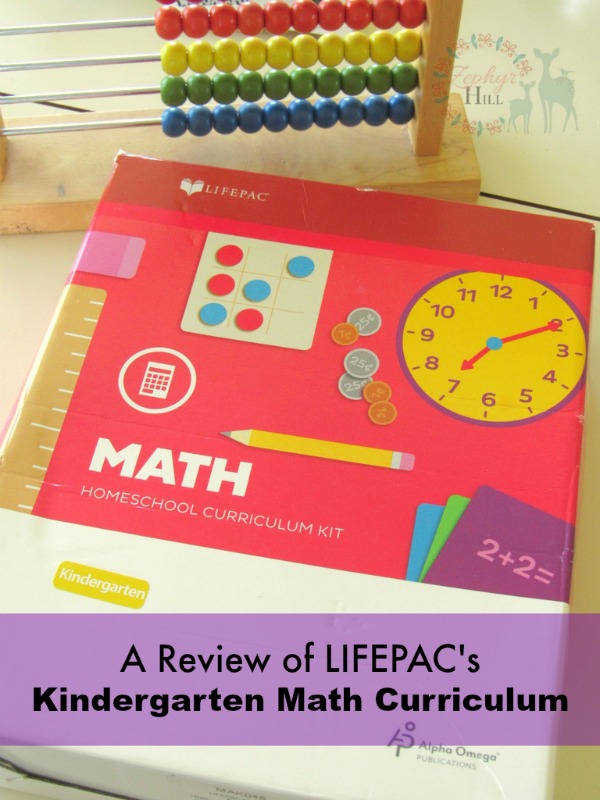
Erik is five and enters Kindergarten this year, so choosing a homeschool math program was on my to do list. Alpha Omega Publications gave us the chance to try their LIFEPAC Kindergarten Math Kit in exchange for a review, so that relieved me of having to shop around!
LIFEPAC’s full-color, worktext curriculum is based on the principle of mastery learning, in which students truly grasp the context and skills of one unit before progressing to the next. LIFEPAC’s math curriculum uses repetition, drill and application to encourage mastery of basic arithmetic skills.
Erik was immediately drawn to the full-color workbook pages and cute illustrations; he wanted to sit down right away and work on some lessons (even though it was only July!).

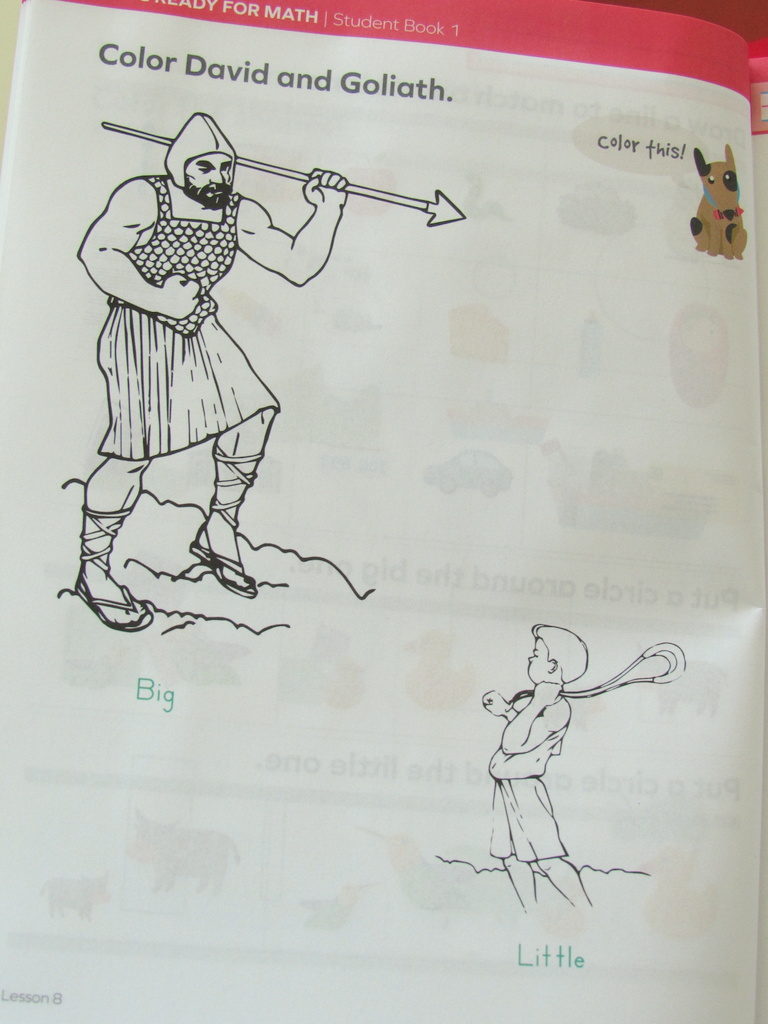
LIFEPAC level K starts out with very simple concepts like big vs. little and counting 1, 2 and 3, so Erik jumped right in with no problem.
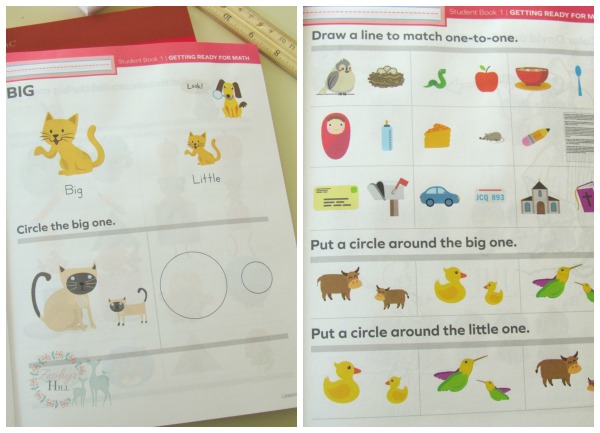
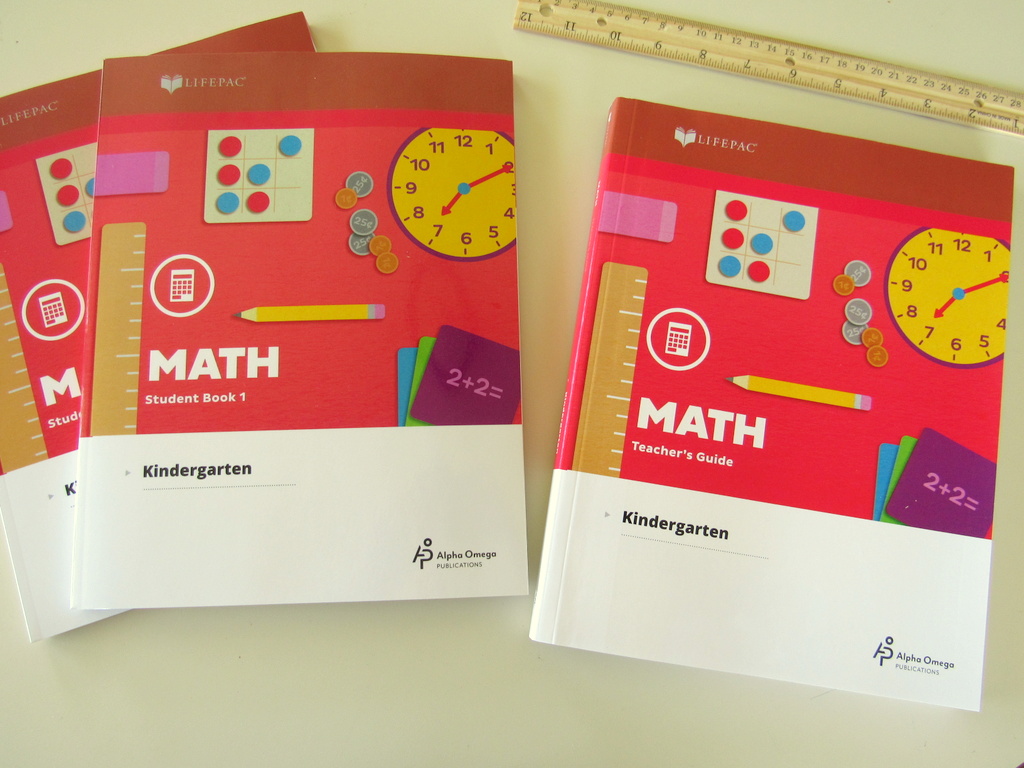
The Kindergarten Math Curriculum Set includes a teachers manual and student workbooks 1 and 2 packed in a sturdy box. The kit retails for $56.95, or you can buy each of the three books separately $17.95 each. The kit price is very reasonable and comparable to other similar programs which include the worktext and teacher’s guide.
There are 160 lessons in total. If you do math 5 days a week, then this gives you 32 weeks to finish the program completely. For my young students, we’ve always followed a 4-day school week, and I can easily work the LIFEPAC into our system by having Erik do two lessons instead of one on some days. Many of the lessons, especially in book one, are very simple and involve coloring a picture or circling the right answer. If you have a child who isn’t into coloring, just skip those pages.
The work pages aren’t time consuming or overwhelming, so it’s been enjoyable going through the program with Erik. Sometimes, he even asks to do extra pages.
The LIFEPAC curriculum introduces one concept at a time, and encourages mastery of each topic. Since most children in Kindergarten are just learning to read, they will need guidance with the workbook directions.
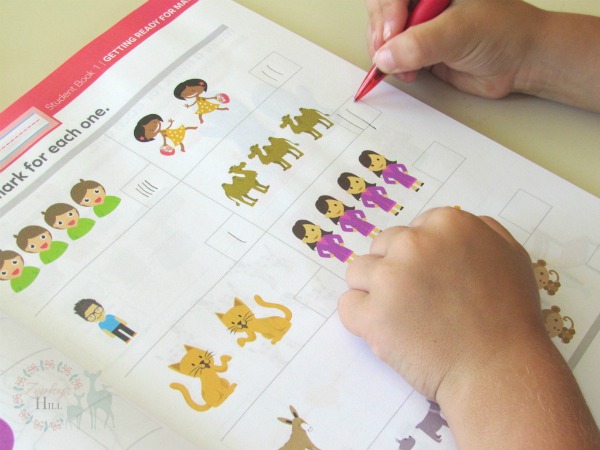
You’ll find many typical beginning math exercises in the worktext, plus a few that are a little bit different. I like the variety, such as using tally marks to count, instead of having to write numbers all the time.
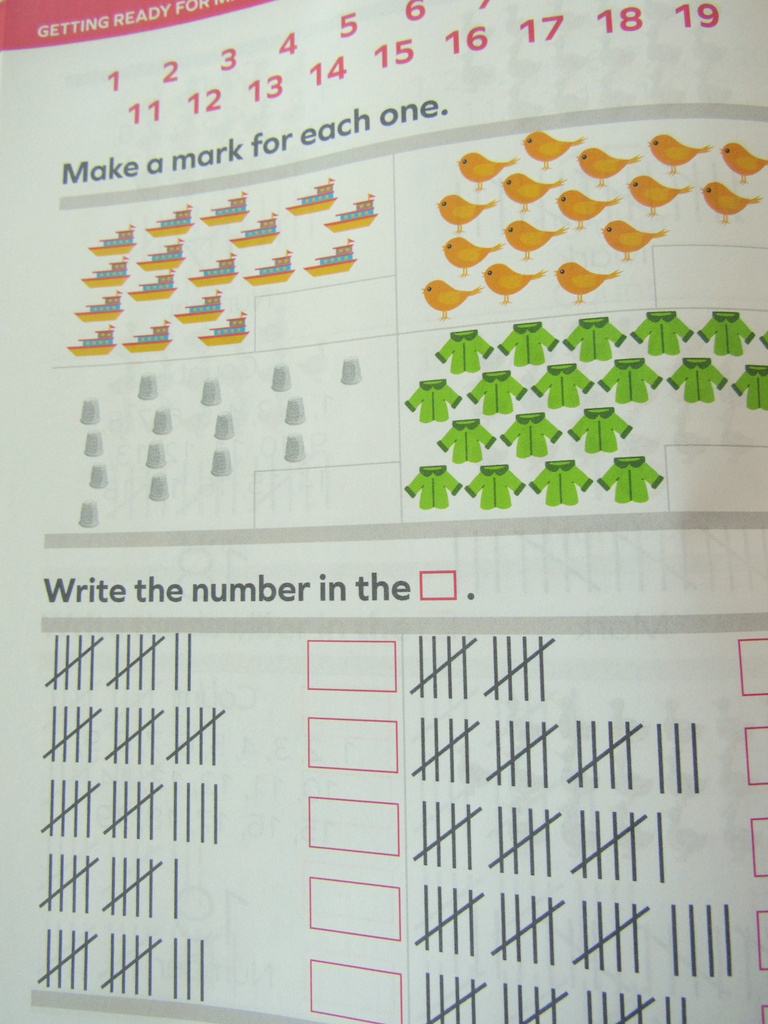
The concepts covered in Alpha Omega’s Kindergarten math program include:
- Shapes and size comparison
- Counting (in Book 2, your student reaches 100)
- Writing numbers
- Sets
- Addition facts up to 10
- Subtraction facts up to 10
- Telling time (hour and half hour)
- Number sequences (before and after)
- Money (pennies, nickels and dimes)
The teacher’s guide provides step-by-step teaching instructions for all 160 lessons, an answer key, and lots of ideas for additional activities designed to reinforce important math concepts. There’s also a weekly lesson planner page that you can photocopy.
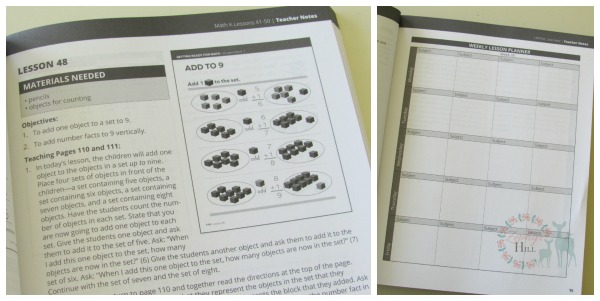
The suggested materials in the teacher’s guide are easy to obtain:
- Crayons
- Pencils
- Objects for counting
- Flash cards (you will need to purchase these elsewhere – dollar stores have them for a buck or two)
You can see the scope and sequence of the Kindergarten program, plus more sample pages here.
Alpha Omega is a Christian publisher, and there are what I would describe as “non-denominational” themes throughout the workbooks. For instance, in the math workbooks there might be a coloring page featuring a biblical character, or a dot-to-dot with a short message about Jesus.
Alpha Omega offers a full homeschool curriculum for grades 1-12, including Bible and electives. The full accredited learning program has print-based, computer-based and online components.
My only suggestions for improvement would be: (a) For Alpha Omega to offer additional resources and/or manipulatives to enrich their math program for hands-on and visual learners, and (b) For the workbooks to be spiral-bound. That way, they lie flat and are easier for young children to work with.
Overall, Erik and I both really like this math program and look forward to completing it in the spring!
You can shop Alpha Omega Publication’s LIFEPAC curriculum materials directly at their website. You can also follow on social media:
Are you in the market for a new math program? What features do you like to see?