Is bamboo really the miracle fabric that some marketers make it out to be? Does it really kill bacteria? Is it super eco-friendly? Does it cure cancer?
You get my drift. There’s a lot of hype surrounding bamboo, and this was especially true when it first hit the cloth diaper world.
Here are some questions and answers about what has now become one of the most popular diapering fabrics:
What is bamboo? It’s a fast-growing plant (in the grass family) that is tough and fibrous. The hard stalks can be used to make utensils, furniture and even tools. The leaves and pulp can be rendered into food products and even fabric. When it’s processed to be used as a fabric, the technical name is actually “rayon from bamboo” or “viscose,” and it arguably is actually a synthetic fabric rather than a natural one (in the traditional sense of the word). Rayon fabric can be made from things besides bamboo, including cotton or wood pulp.
Manufacturers and sellers are supposed to label and market their bamboo/viscose products accordingly, but they often don’t, especially in advertisements.
Is bamboo environmentally friendly? All fabrics, even those marketed as “eco-friendly,” impact the environment in some way. Bamboo is a very green crop on several scores. It absorbs more carbon dioxide than a typical tree, and quickly grows after harvest, because unlike a tree that dies after being cut, bamboo replenishes in much the same way that grass does. It grows well without irrigation, pesticides or chemical fertilizers. And because it grows like grass and has more surface roots, it helps to prevent soil erosion better than trees and other plants do.
But what about the chemicals used to turn it into rayon fabric? Sodium hydroxide is the major player; it’s also known as caustic soda. While it is a strong chemical, it poses no health hazards when used properly and disposed of in a responsible manner. Caustic soda is even used in the product of organic cotton, which is also marketed as a green fabric. One way that factories lessen the environmental impact of rayon from bamboo production is to use a closed loop system that recycles the sodium hydroxide and water for re-use.
Is bamboo anti-microbial? Although some marketers claim that it’s naturally antimicrobial, I haven’t been able to verify that. Even if it was in its raw form, the benefit would likely be lost in processing.
Why is bamboo ideal for cloth diapers? Some babies who are sensitive to microfiber do well when switched to bamboo. It’s also more absorbent than cotton, and has a wonderful silky feel to it.
Are there any drawbacks to bamboo as a diapering fabric? Bamboo holds on to stains more easily than synthetic fibers like microfleece and microfiber. Bamboo is more expensive than it’s major competitor – cotton – but not by too much. Here are some cost comparisons from Nicki’s Diapers:
- Imagine cotton prefolds are $1.75 each; Imagine bamboo prefolds are $2.25 each
- Imagine cotton flats are $1.66; Imagine bamboo flats are $3.85 each
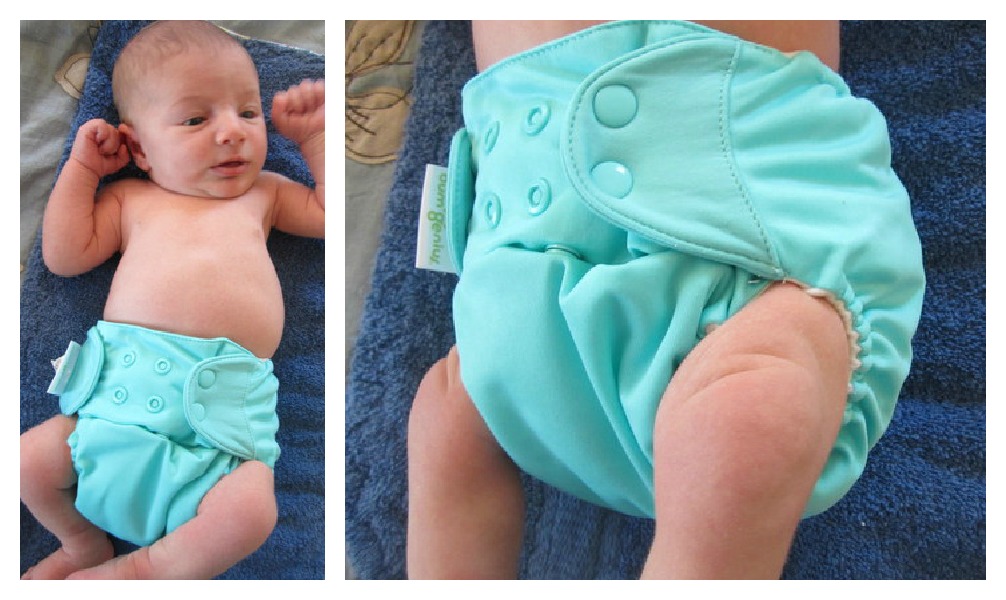
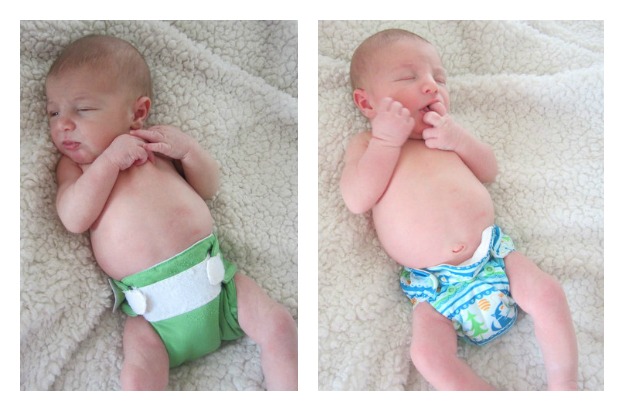
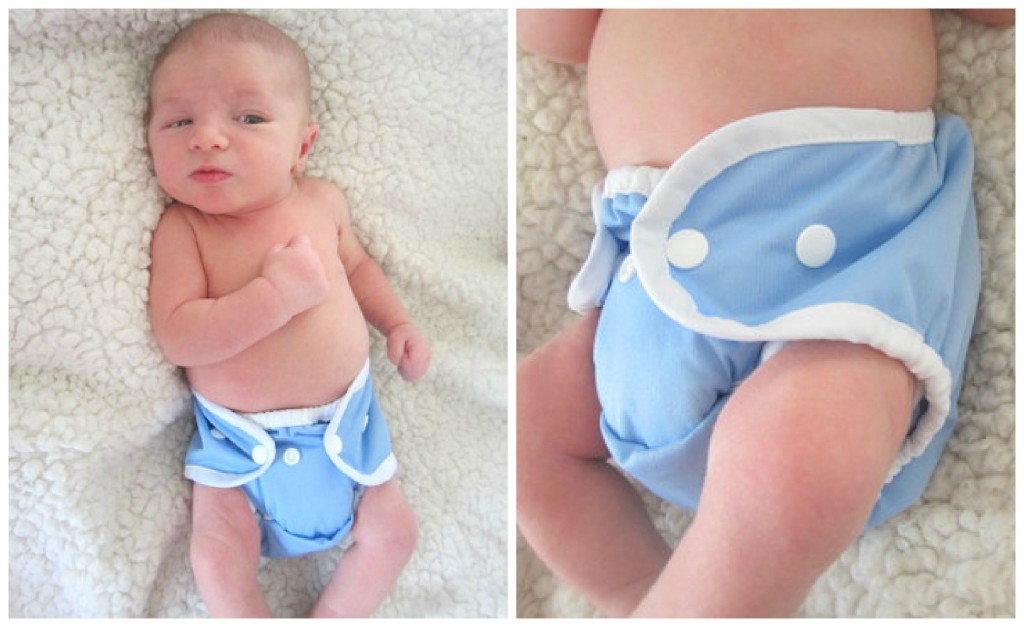
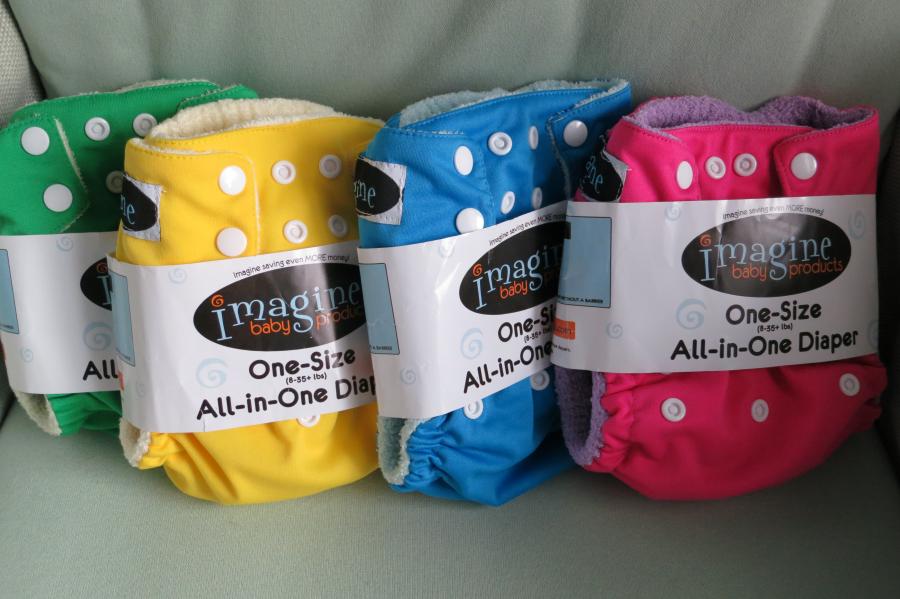
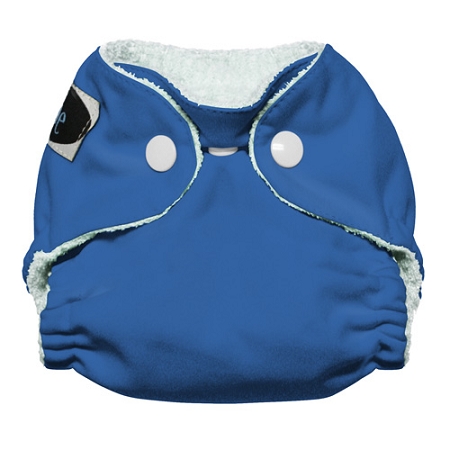
Imagine Newborn Stay-Dry AIO is $10.95; the Imagine Newborn Bamboo AIO is $11.95 (photo below)
What are some of my favorite bamboo diapers?
- The Diaper Rite Bamboo All-in-One
- The Funky Fluff All-in-One
- Imagine Stretchy Bamboo Flat Diapers
- Diaper Rite Bamboo/Cotton Flats