Zephyr Hill

A Family Blog

Header Menu

  • Home
  • Contact Me
  • Terms / Privacy
  • Homeschooling
  • Faith and Family
  • Book Reviews
  • Cloth Diapers
  • Pets

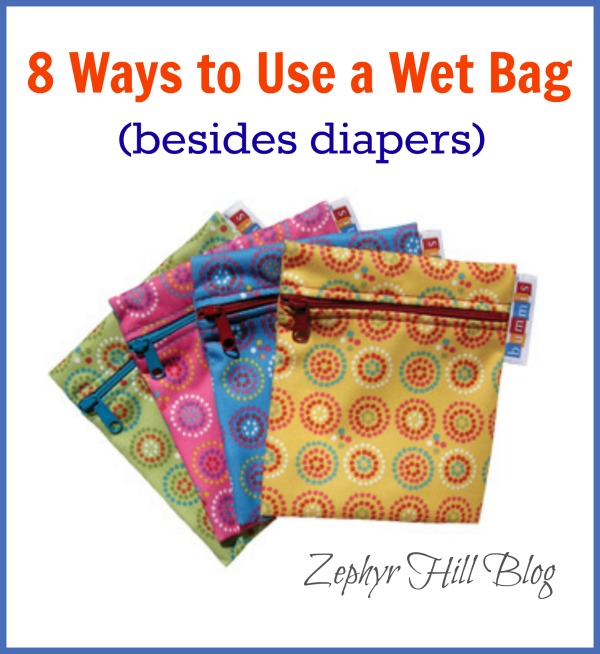
8 Ways to Use a Wet Bag (Besides Diapers)

June 16, 2014 by Anne Marie 114 Comments

wetbag1

Wet bags aren’t just handy for dirty diapers. Sealed seams and zipper closure make them much more secure than your typical tote bags. Plus, they are machine-washable and so easy to sanitize.

If it’s wet, smelly, delicate or needs to be organized…..a wet bag can help. To find a great selection of top brands, starting at just $7.95, click here!

Here are a few creative ways you can put wet bags to work:

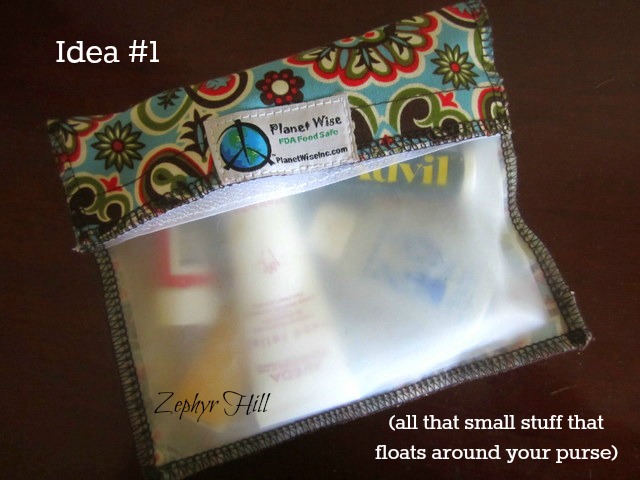
PURSE FLOATERS: Use little wet bags and even reusable snack bags to corral the small items that tend to float around in your purse, or drift to the bottom: cosmetics, sunglasses, keys, store rewards cards, lip balm, hand sanitizer, medication, etc. Planet Wise bags are just right, especially the window bags that have a see-through front. No trying to remember what’s inside!
wetbbag2

WET SURPRISES: Did rain spoil your play date or picnic? Did someone spill a drink on their clothes or unexpectedly wet their pants? Or perhaps the baby spit up all over you. Family life is full of unexpected, and often messy, surprises. You will be SO thankful to have an extra wet bag (or two) in your diaper bag or car to gather up the dirty stuff and lock in odor.

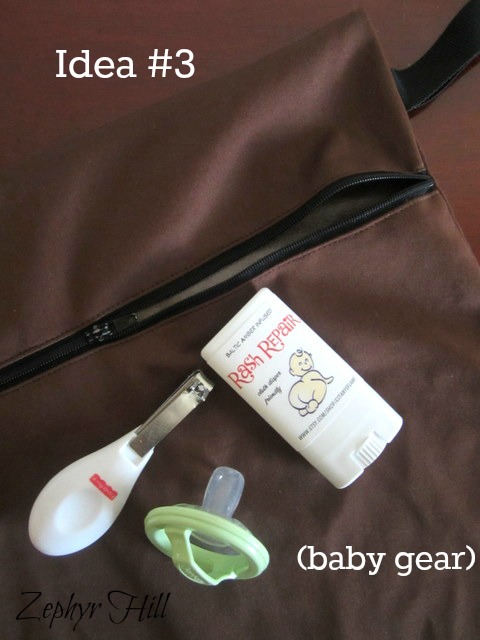
BABY GEAR: Small wet bags and snack bags also work great for holding your baby’s pacifiers, extra bottle nipples, diaper cream samples and teethers. The Bummis Mini Bag (available at Kelly’s Closet) is the perfect size for this and comes in 4 fun prints that match their diaper covers:  A large wet bag can also protect and store a soft structured baby carrier, wrap or sling.
wetbag3

CONDENSATION CONTAINMENT: Keep a large wet bag in the back of your vehicle and stow all those things from the grocery store that “sweat” on the way home: jugs of milk, frozen foods, etc. Periodically wash the bag, just like you would a reusable tote, to get rid of potential germs or bacteria. Drawstring closure wet bags, like those from Rumparooz/Kanga Care, work especially well for this purpose.

SEWING PROJECTS: You can keep all your supplies handy for whatever sewing, knitting or crochet project you might be currently working on in a wet bag. Take it with you wherever you go and everything will be handy. Blueberry makes it easy to find a cute bag to hold your sewing supplies because of their fun selection of fabrics and competitive pricing.

FIRST AID: Create a first aid kit to keep in your vehicle at all times and use a (brightly colored: easy to identify) wet bag to hold everything in. It’s easier to store than a box and is also easier to clean if a tube or bottle happens to leak.

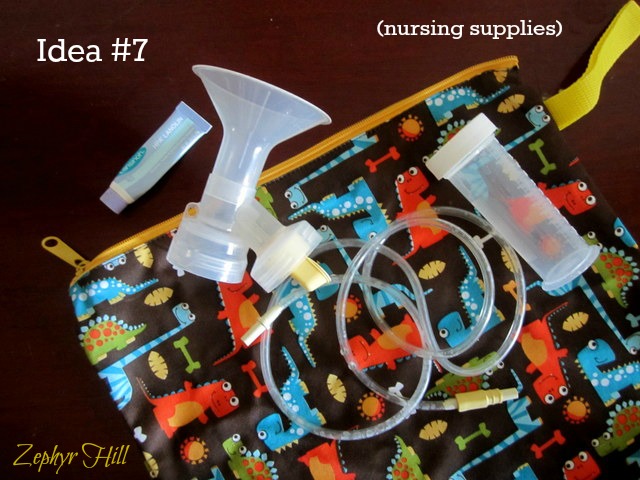
NURSING SUPPLIES: Use a wet bag to carry your breastfeeding gear. A good-size bag can hold a pump and supplies (tubing, bottles, milk storage bags, Lanolin, etc.). A wet/dry combo bag is perfect with one pocket for clean pads and one for soiled pads and burp cloths.
wetbag4

TECH PROTECTION: Protect your small electronics from moisture damage by storing in small sealed wet bags. I can’t count the number of times my digital camera has been protected by an accidental splash, spray or dunk by the wet bag it was in! I like that wet bags are less bulky than padded cases.

If you have creative ideas for using wet or dry bags, I’d love to hear them!
 

Filed Under: Cloth Diapers, Giveaways Tagged With: cloth diaper hacks, ways to use wet bags, wet bags

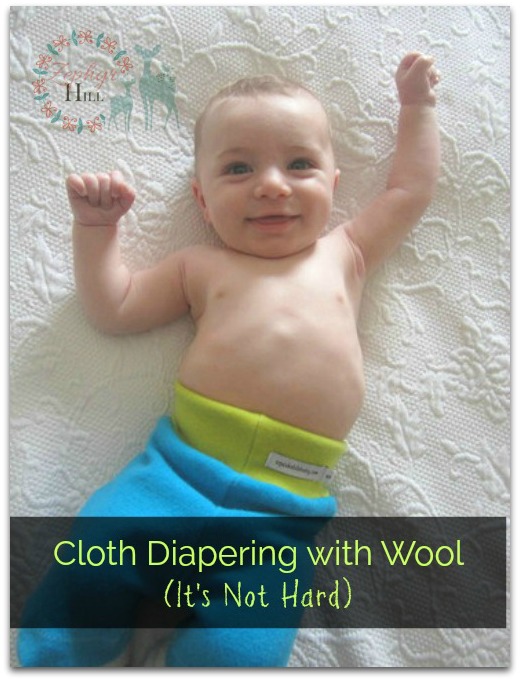
Cloth Diapering with Wool (It’s Not Hard!)

February 27, 2014 by Anne Marie 18 Comments

Do you hesitate to try wool because it requires special care?
Are you worried that wool is too difficult to learn to use?
Do you shy away from wool because of the higher price tag?

Today’s post is for you! Let me address those three main concerns here, to help put wool into perspective. Four years ago I would have answered YES to all three of those questions, so I know exactly where you’re coming from.

Does Wool Require Special Care?

Yes, it does. But so do bras and panty hose! Think of wool like you would your favorite bra. It’s not “hard” to take care of, it’s just different than a pair of socks.

What about the special laundry soap you’ll need? You don’t, actually. Wool wash is certainly one option, but you can also use soap nuts or soap nut bars, as well as gentle, natural baby wash like Aveeno or Earth Mama Angel Baby.  You don’t have to go out and spend money on expensive wool care products.

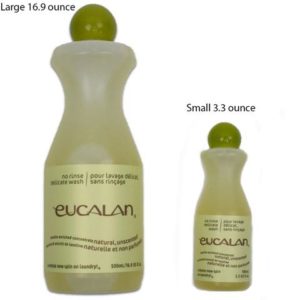
I highly recommend a tried and true favorite – Eucalan Wool Wash. It gently cleans and restores some lanolin with each wash. You can find Eucalan at Nicki’s (free shipping over $10!), Diaper Junction and Kelly’s Closet.

Need a little bit of pure lanolin? Free samples are available. I can mail you a few, so  just send me a message.

Is Learning to Use Wool Difficult?

Not at all! The first time I washed a wool cover I was truly surprised at just how easy it was. You’re basically just hand washing, like you would a delicate piece of lingerie. You’ll need a sink, some wool friendly soap and a thick bath towel. I’ll share my quickie instructions courtesy of the CJ’s bottle, since that’s what I use and recommend. Plus, it saves you the hassle of lanolizing.

    • Rinse your wool in cool water and then squirt a nickel-sized amount of wool wash into each item, focusing on the wet zone and any soiled areas.
    • Fill the sink with warm water and swish your wool around a little bit. Use a light touch (no rubbing or agitating needed).
    • Let it soak for 30 minutes.
    • Lay the wool on the towel, roll the towel up and press gently to absorb excess water.
    • Air dry (flat or on a rack works well). This part takes a day or more, so plan accordingly.

And remember, you’ll only go through this little routine about every 3 weeks or so. Nice!

Wool covers can be aired out between uses to cut down on the times you need to do actual washing. This also means you’ll need LESS wool covers as compared to PUL (poly) covers. 

Note: If during the wash or soak you notice any of the colors bleeding, simply wash those in a different sink or container.

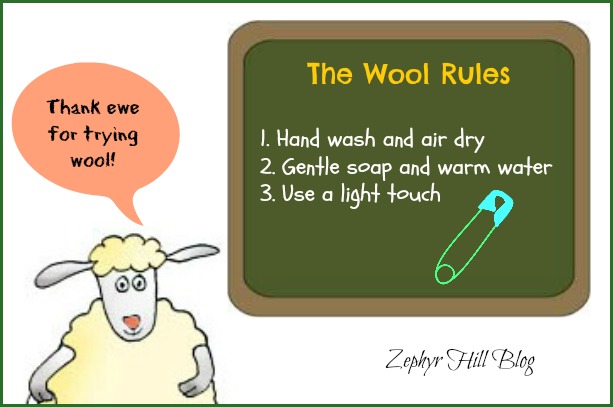
Here are the easy-to-remember Wool Rules:

What About Lanolizing?

If you opt not to use the CJ’s “all in one” wash I mentioned above, then you’ll need to lanolize occasionally as a separate step. You must add lanolin back in to keep your wool waterproof since the sheep has taken a permanent vacation! Wool needs to be lanolized if it sinks and saturates completely in water or if it stinks when peed on; this comes out to about once a month or once every few months, depending on much use that particular item is getting.

Luckily, the lanolizing routine is almost the same as the wool washing routine, so you’re already in the know. Put a pea-sized amount of Lansinoh and a squirt of baby wash or wool wash into a small container with a lid (bottle, jar, Tupperware) and add 1 cup of hot water. Shake vigorously until melted and mixed and then add to a sink full of warm water. Add wool and gently swirl. Let it soak for 10 minutes on one side and 10 minutes on the other. Roll up in a thirsty towel and press gently to soak up water. Air dry as usual.

If you are lanolizing a brand new wool item for the first time, I recommend using this solid lanolin method described above, even if you’re going to use CJ’s lanolin wash from then on. But you only need a pea-sized amount for the initial lanolizing, so if you can’t get a free sample of Lansinoh from your doctor, midwife or lactation consultant, check on Ebay. They are about 1 or 2 dollars, usually with free shipping.

NOTE: Lanolin is the magical ingredient that gives wool its waterproofing qualities, however it’s not 100%. The diaper you put underneath your wool cover is very important, and the less urine that leaks out of a diaper onto your wool cover, the less often you’ll have to wash the wool.

What diapers work well with wool?

Most mothers use fitteds underneath wool, but fastened prefolds and flats work nicely, too. I’ve even used a wool soakers or longies over an AIO diaper as added insurance, and for extra warmth on a cool day. If you want to use wool without fastening/snapping your prefolds and flats, try a wool wrap with snap or velcro closure; since it’s not the traditional “pull up style” it looks and functions just like a PUL cover.

Is wool a good choice for newborns?

Personally, I don’t use wool very much for a new baby. There is so much of the frequent, runny breastfed poo that I lose one of the main benefits of wool – not needing to wash frequently. Wool longies are great for keeping a newborn warm, though, and easily fit over things like a prefold and Thirsties cover.

Doesn’t Wool Cost Too Much? 

Not necessarily. Granted, when compared to other covers, wool does fall in the higher price range. But the price is fair and reasonable based on value and performance. Can my $8 PUL cover be used for 2 weeks without laundering? No, but my $16 wool longies potentially can. Double the price, double the performance. And as mentioned above, you don’t need to buy as many wool covers. Most mothers who use wool full-time can get by with 2 for day and 2 for night. Compare that to the 6-8 PUL covers that is usually recommended.

Some name brands can cost $25 or more, but Nicki’s now has Merino Lite covers for $19.99 and Imagine pull-ons for $14.99 – not bad at all! You can also save lots of money on wool by purchasing used on swap sites like Cloth Diaper Trader and Diaper Swappers, or by choosing creations from work-at-home-moms.

How Do You Store Wool for a Long Time?

Waiting on another baby? Or maybe you’re just not sure if you want to sell or give away those cozy soakers and wraps. Wool is easy to store. Wash and dry thoroughly, but don’t lanolize. Use airtight storage containers for a short-term solution (i.e. 6 months or so). Cotton bags with cedar chips or lavender sachets inside make a better long-term (12 months or more) storage solution, because they will allow the fibers to breathe. You can wrap each wool item in a piece of newspaper (moths don’t like it). Always keep storage containers and bags off the floor where dust, hair and dirt tend to collect, and avoid stowing them away in hot attics or damp basements.

Are there other wool perks to consider?

As they say here in the Midwest, you betcha!

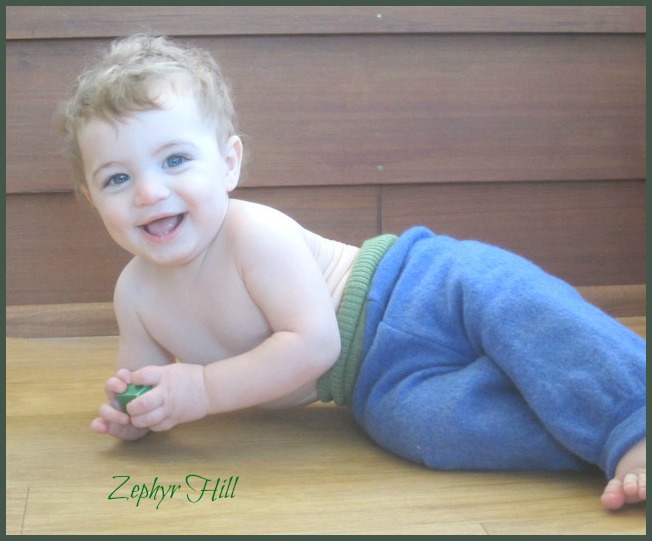
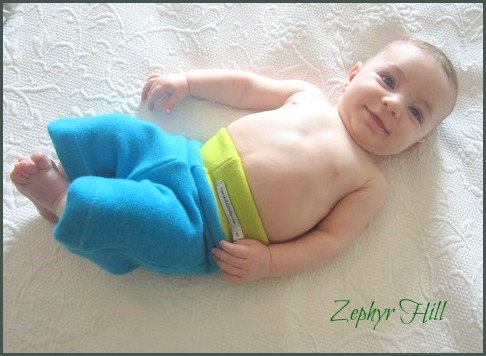
When Erik is wearing a PUL diaper cover, that’s all it is. A diaper cover. When he’s wearing a wool soaker or pants, he’s wearing both a cover and an article of clothing. It’s a two-fer! This is really nice perk on cool or cold days, or overnight. With his longies on there’s no need for a cover+pants. The wool serves both purposes. And unlike cotton or fleece pants, if there’s a little bit of wicking overnight, I don’t have to wash it immediately. It can be refreshed and used again…..and again.

Of all the fabrics in my stash, wool definitely scores the lowest on the stink-o-meter, if there is such a thing. And it’s not technically the wool that’s responsible. It’s the lanolin in the wool which has antifungal and antimicrobial properties. A properly lanolized cover will naturally inhibit the smell of urine microbes on and in the fibers. You can boost this property by rotating and airing out your covers. (By the same token, persistent odor is your clue that it’s time to wash and lanolize the wool again.)

Additionally, wool makes an ideal nighttime cover because it can absorb moisture and still remain dry to the touch. And along with being absorbent, it’s highly breathable and allows air to circulate around the skin (compare this to PUL which traps heat and moisture). These two properties make it super comfortable for your baby, and a great choice for little ones with skin sensitivities or who are rash-prone.

Have you ever heard critics say that cloth diapers aren’t eco-friendly because of the water needed to wash them? Wool need not apply. Hand washing in the sink with a small amount of water and a squirt of natural soap is one of the most sustainable laundry routines I can think of!

In Summary

Moms who are just starting out with cloth tend to go for cheap and easy, so wool is naturally not the first choice. I get that. But there comes a time in your cloth diapering journey that you get curious about what’s out there. You hear mamas talking about this or that and you wonder if it might benefit your baby or help troubleshoot an issue with your current system. That’s what happened to me. I love and appreciate my easy waterproof covers and flats routine, but wool now makes up a valued part of my stash as well. It does things that my other diapers just don’t do, and that’s pretty neat!

Where are you right now when it comes to wool? Expert, newbie, a little curious….or still not interested?

Filed Under: Cloth Diapers Tagged With: cheap wool, how to store wool diapers, how to use wool diapers, how to wash wool diapers, wool 101, wool antibacterial, wool cloth diapers, wool diaper care, wool diaper storage, wool wash

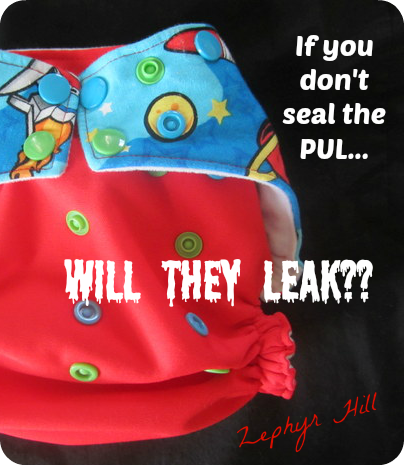
If You Don’t “Seal” the PUL in Diapers, Will They Leak?

November 8, 2013 by Anne Marie 18 Comments

Do not dry your diapers on high heat; it will damage the PUL fabric!

If you do not dry your PUL diapers on high heat, they might leak!

Cloth diaper advice can seem contradictory at times. Which of the above statements about PUL is true? I’ve been wondering about that for a long time, so I did a lot of research and asked questions of both manufacturers and home sewers.

Let’s start with the basics.

First of all, what is PUL? Also called polyurethane laminated fabric, “PUL” is basically just that: a poly knit that has been laminated with a clear, thin film of polyurethane to create a waterproof backing. It comes in different thicknesses (like 1 mil and 2 mil) and can be made of different components, but the basic concept is the same. PUL was first made for hospitals, which needed a reusable waterproof fabric that could withstand autoclaving (high heat steam sterilization). Naturally, this durable, washable and waterproof fabric found its way into the diaper market years later.

Is all PUL pretty much the same? No. Sarah, the highly experienced diaper-maker over at Wallypop, told me “A lot of the PUL out there these days is manufactured specifically for the diaper market…. There are numerous factories these days pumping out PUL – which is all slightly different, since there are several ways to adhere the layers together, and most major brands have their own PUL manufactured to their specifications.” [emphasis mine]. So be careful about recommendations to bleach or boil PUL since it was “made to withstand autoclaving” and other harsh treatment; unless you’ve checked with the manufacturer first, don’t assume you’ve got medical-grade PUL in your stash!

As you probably know already, diaper manufacturers generally advise against exposing PUL to high heat. They recommend wash cycles of no more than 130 degrees and to dry on low.  They also discourage the use of the harsh “sanitize” cycle available on some washing machines.

Then why the often-seen recommendation to dry a diaper on high heat to seal (or reseal) the PUL? It’s a theoretical answer to the question of tiny little holes that are present in the fabric.

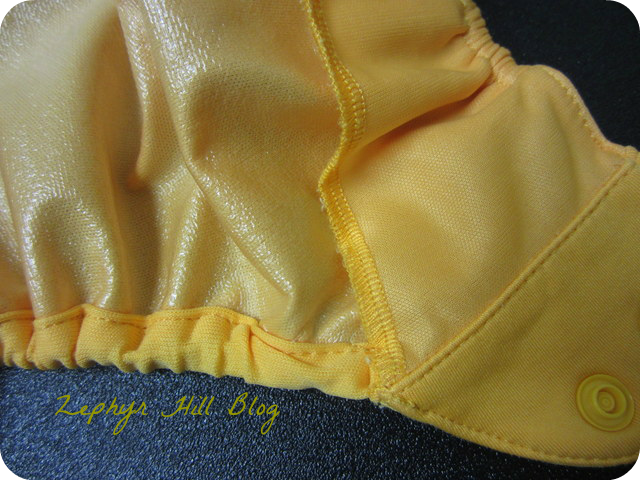
When you sew PUL does it create holes? Yes, this is an undisputed fact. It’s a laminated, waterproof fabric and so it behaves differently than something like cotton, which has tiny fibers that meld and mesh back together.

So do the holes really need to be sealed up? Emma at Babyville Boutique (which makes PUL for home sewers) told me yes. “What the sealing does is close the needle holes from sewing the diapers. This is something you need to do anytime you sew with PUL and you want it to remain waterproof.” However, she did add “If you are purchasing premade PUL diapers and any other items, I would hope they have been pre-sealed. If not, then you cannot be sure they will not leak…The only way to close these holes is to put the article in a dryer and allow the laminate to shrink around the hole.” (emphasis mine) My friend, Kassie, who blogs at Homespun Aesthetic and also sews diapers in her spare time, told me “You’re supposed to use a ballpoint needle because they’re smaller. Many use their universal needle anyway (including me for my own diapers) because there’s no difference in the stitching or the way it sews for me.” This is why you’ll find WAHM’s recommending that diapers with PUL components be dried at least once on high heat before use. 

Are factory-made covers already sealed for you? Not necessarily. I checked with my three favorite brands of diaper covers and here’s what they told me. Nancy from Sweet Pea Diapers said that their PUL components do not need to be sealed by the consumer. Cotton Babies (maker of bumGenius and Flip) also gave me an affirmative: “The fabric is pre-sealed.” But then they cautioned “Please do not put them in the dryer,” which is consistent with their online recommendation to line-dry covers. I should also mention that the Flip covers made by Cotton Babies have a second piece of fabric on the inside of the diaper to cover the holes made by snaps or hook and loop. When I asked Thirsties about their covers, the answer was different: “We do not pre-seal our PUL but we do recommend to dry on high occasionally to help re-seal the lamination.” My Thirsties worked great from day one, so I asked how that could be when they weren’t factory-sealed. Thirsties explained “We use a heat bonding method on our PUL, which is greener and provides a strong bond between the lamination and the fabric.”

Do you have to re-seal the PUL every so often to prevent leaks? I often see WAHM’s recommending this. And Thirsties was the only major brand I contacted that recommended this as well. The idea is that the tiny holes in your PUL will “open back up” with normal use, so you can re-seal it with a 15 minute tumble on high in the dryer. I have seen anecdotal evidence from both sides, so unfortunately the question remains unanswered. Moms will tell you their covers stopped leaking after they put them in the dryer on high heat; others swear they’ve never had a leak and their covers have been line dried from day one. The jury is out, and as far as I know, there isn’t any authoritative study on the subject.

I’ll close with one very important point that I hope this post has brought to light: it is extremely important to check with the manufacturer if you have questions about laundering or troubleshooting your diapers. I know some veteran cloth diapering moms and so-called experts might scoff at my advice, proclaiming “they’re just diapers, for crying out loud!” But the indisputable fact is, that each manufacturer has its own specifications when a diaper is made, and this has a lot to do with the care recommendations. Nor is all PUL fabric created equal. Garments have care labels for a good reason; no, it’s not just to “cover their tails” if a problem occurs. It’s their product, they designed it, so it pays to at least hear them out when it comes to care and use. 

And now I’d love to hear your take on this issue! Do you line dry all your PUL diapers? Have you noticed any leaking, or has that never been an issue? Have you ever “fixed” leaky diapers by putting them in a hot dryer? Do you think it’s all a myth? Or are you a diaper maker with some experience to share? Leave your comments below!

Filed Under: Cloth Diapers Tagged With: how do you seal pul, leaky diapers, needle holes in diapers, putting diapers in the dryer, seal pul, will dryer damage pul

The New and Improved Thirsties Duo Wrap

October 10, 2013 by Anne Marie 115 Comments

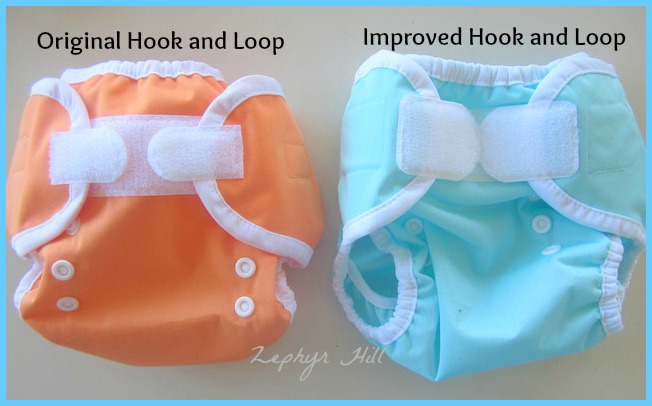
Thirsties fans have been waiting a long time for this news: the hook and loop closure on diapers, covers and fitteds is now wider, stronger and longer-lasting. You’ll find the new hook and loop closure on their covers, fitteds and AIO diapers.

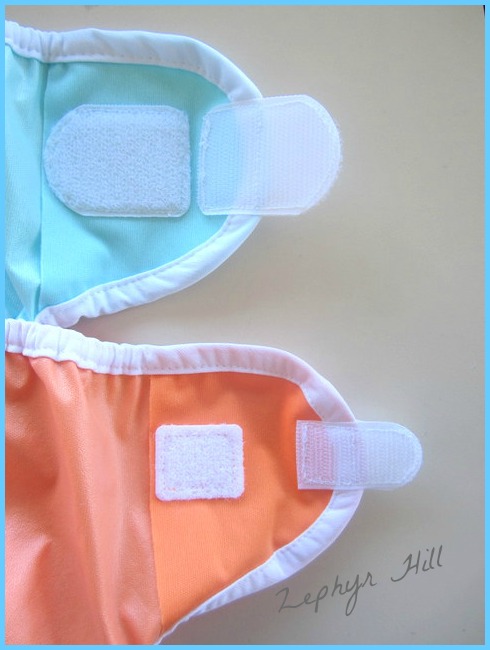
Here’s a quick photo comparison using my old (mango) Duo Wrap and an improved (aqua) Duo Wrap:

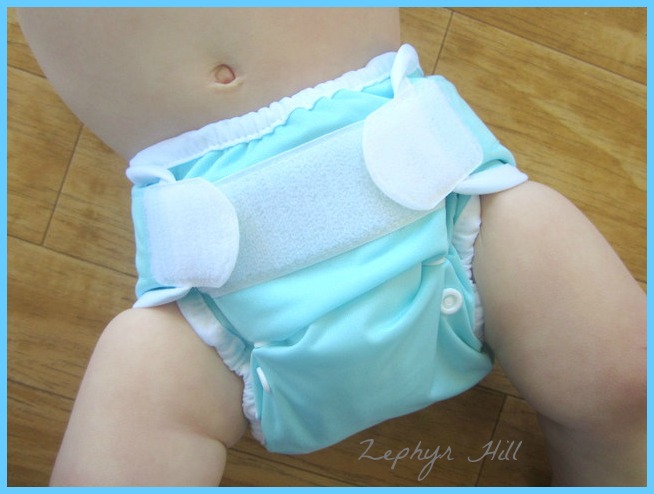
One of the biggest problems encountered by Thirsties fans was the hook and loop closure snagging on other stuff in the laundry. Thirsties wanted to address this issue with the new aplix tabs. I’ve tested my new and improved cover this week and the hook and loop is definitely stronger. It’s noticably harder to unstick the tabs from the strip on the waistband and from the laundry tabs. They do not come undone in the wash anymore.

The new Thirsties hook and loop is stronger thanks to a wider design; the larger surface area means more sticking power. They’ve also upgraded to a more durable hook and loop product so your Thirsties covers should last a lot longer.

So I’m really impressed with the new hook and loop, however it did not eliminate the waistband problem.

With the new hook and loop changes come some color/print changes (Duo Wraps and sized covers are now available in the same colors/prints), so if you are feeling nostalgic and want to grab some of the older styles at deep discounts before they are gone for good, check out Kelly’s Closet (aff link) and see what’s left in stock! I grabbed my new covers from Kelly’s Closet because they were one of the very first shops to have them available.

*GIVEAWAY*

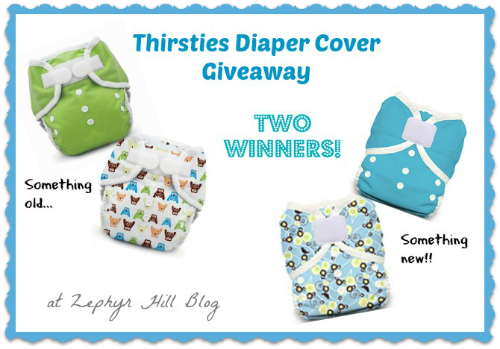
TWO of my readers will win a Thirsties Duo Wrap prize package!

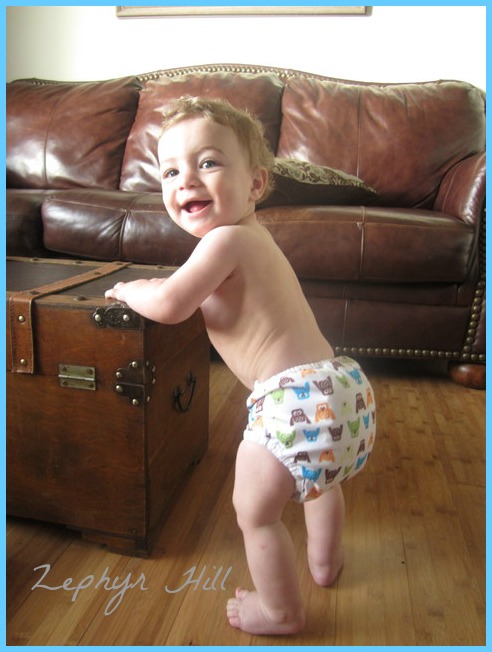
Something old: The first name I draw will win a nostalgic prize package containing a size 1 Thirsties Duo Wrap with hook and loop in the “Hoot” print, and a size 2 Thirsties Duo Wrap with hook and loop in the lovely “Meadow” (green) color. These are the discontinued styles that will eventually disappear!

Something new: The second name I draw will win the newly designed hook and loop Thirsties Duo Wraps size 2 in the “Baby Bird Blue” print PLUS a green Snappi diaper fastener. You can try the new aplix closure and let me know what you think!

Enter using the Rafflecopter below and good luck!


*GIVEAWAY CLOSED*

Filed Under: Cloth Diapers, Giveaways Tagged With: thirsties diaper covers, thirsties diaper giveaway, thirsties duo wrap review, thirsties new hook loop, thirties new aplix

How Long Do Microfiber Inserts Last?

October 2, 2013 by Anne Marie 14 Comments

Pockets are the most popular choice by far among cloth diapering families. But have you ever wondered what the lifespan is of those fluffy white microfiber inserts that work in tandem with the diapers? When is it time to replace your pocket diaper inserts?

I was curious so I did some research.

My friends Julie (the Cloth Diaper Geek) and Heather (at Knickernappies) had this to share about the industry’s recommendations: “The inserts themselves will hold up and absorb practically forever, but peak absorbency most likely is a couple of years.” They also mentioned that no one has done an official longevity study, but my anecdotal research with other cloth diapering mothers bears out their statement.

Many of the moms I talked to said their inserts were still absorbing after two or even three years. That’s really good news if you’re planning to re-sell the diapers, or pass them on to another child.

Basically, your inserts won’t look as pretty after a few years (because the polyester fibers “flatten out” and get kind of dingy), but they will still work. However, after their absorbency level peaks, it would be wise to consider replacing them. Simply put, your diapers will work better, and that’s especially important for naps and nighttime. Or to paraphrase what Julie told me “If you bought used diapers and have never tried a brand new microfiber insert, you may not know what you’ve been missing!”

Fortunately, if it’s time to replace inserts, microfiber is cheap and easy to find. Prices range from $1.50 to $3.00 each, depending on where you buy (there are 9 different brands/types of inserts available at Kelly’s Closet). There isn’t too much of a difference from one brand of insert to the next, so most will work with whatever pockets you are currently using. 

If are wondering what to do with really old inserts that are past their peak absorbency, cut the serging off the edges and the insert will come apart into three separate layers. These small and thin microfiber cloths are perfect for cleaning computer screens and eye glasses. If you’re handy with a needle, you might even be able to turn them into washable mop pads.

One last note: if you are buying used pocket diapers, be sure to ask detailed questions about the condition. Many sellers use terms like “good” or “gently used” to describe their diapers, but that doesn’t give you the full picture. Ask how long they were used; a one year old insert is going to absorb differently than a three year old insert. On the flip side, when selling pockets it’s always a good idea to disclose this type of information in your listing. Or you can just say “please message me if you need more details about condition or usage.”

So how are your microfiber inserts holding up?


Filed Under: Cloth Diapers Tagged With: how long do microfiber inserts last, how long does microfiber last, lifespan of microfiber insert, pocket diaper inserts, when to replace microfiber inserts

  • « Previous Page
  • 1
  • …
  • 7
  • 8
  • 9
  • 10
  • 11
  • …
  • 13
  • Next Page »

SOCIAL MEDIA

Newly Published

  • The Coop Upgrade Nobody Talks About Until It’s Too Late
  • Ignore the Radio Ads About Life Insurance, But Please Read This Post
  • Do Catholic Parents Have to Choose a Saint Name for Their Baby?
  • The BEST and Most Comprehensive Baby Name Books for Parents
  • Educational Games to Enjoy With Your Children

Popular Posts

  • My Home Birth Story: Full of Surprises
  • Organics by Ti Bamboo Flats Review & Giveaway
  • Home Schooling with Limited Space
  • 5 Ways to Handle Food Throwing and Messy Eating
  • Outside-the-Box, Delightful Gift Ideas for 2022

Copyright © 2026 · Zephyr Hill Blog · Design by Albemarle PR

Copyright © 2026 · Albemarle PR - Hannah Template on Genesis Framework · WordPress · Log in