Zephyr Hill

A Family Blog

Header Menu

  • Home
  • Contact Me
  • Terms / Privacy
  • Homeschooling
  • Faith and Family
  • Book Reviews
  • Cloth Diapers
  • Pets

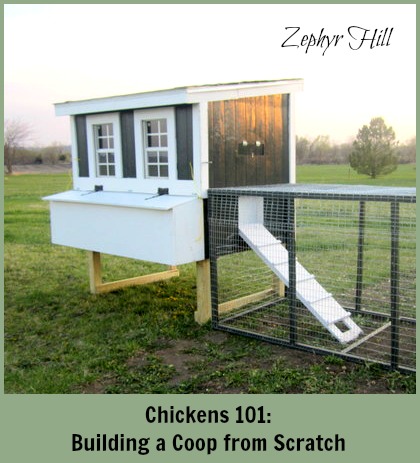
Chickens 101: Building a Coop from Scratch

March 13, 2015 by Anne Marie 5 Comments

cooptutorial

You’ll notice I did not put the words “how to” in the title of my post. I didn’t build our fantastic chicken coop, and I certainly don’t know how my husband did! All I can say is, he wasn’t pleased with the online plans he found and decided to start from scratch (that’s a chicken pun, by the way).

We decided on a non-portable coop because the wind here can be ferocious and the heavier something is, the longer it will last. The coop, which was made to accommodate a flock of 20 birds, measures 78 inches high, 74 inches wide and about 51 inches deep. The nest boxes stick out about another foot on the back side.

My husband assembled the coop in our garage because of the extreme and unpredictable weather in a Midwest spring. He can only work on things in his spare time, so we didn’t want the unfinished coop being exposed to the elements for weeks on end.

Step One: Framing

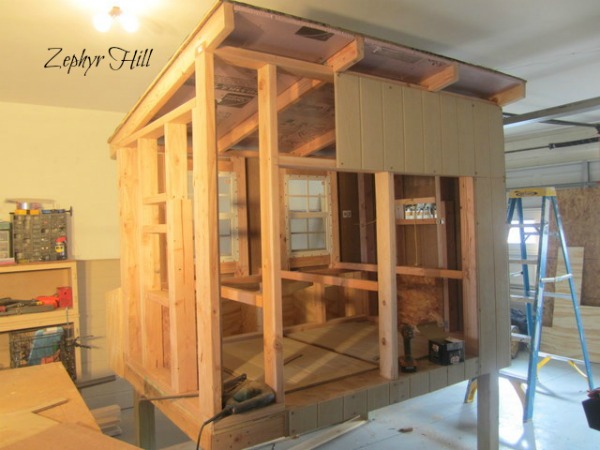
The opening on the left is for a small door and a vent hole. The openings on the front are for large, double doors. The openings on the right mirror the left, and the openings on the back are for the next boxes.

coop1


Step Two: Flooring and Roof

Yes, that’s tile on the floors. The roof has a layer of insulation underneath. You may or may not need that, depending on the climate.

coop2

 Step Three: Siding

coop3

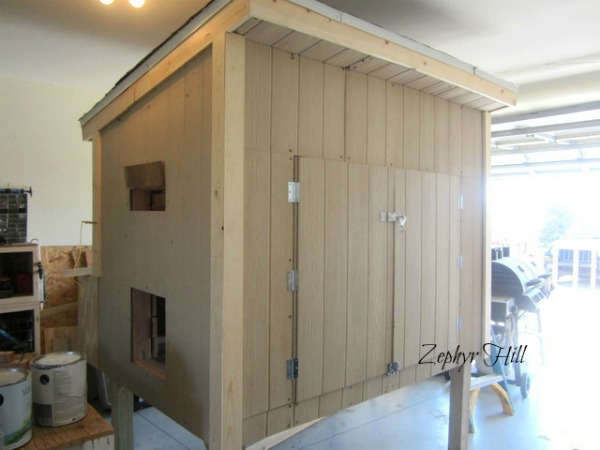
Step Four: Finish Doors and Windows and Siding

The second view shows the nest boxes with a heavy, hinged top.
coop4

coop5

Step Six: Painting and Transporting

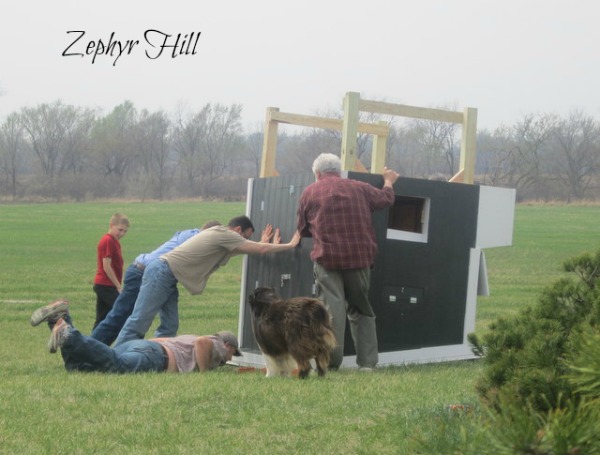
The most difficult thing about this project was getting it out of the garage and into the back yard. It was incredibly heavy and required a lot of male friends and relatives (plied with pizza and beer) to move.

It didn’t cooperate with skids or rollers because of the weight and the uneven terrain, so we had to resort to dragging, lifting and rolling. Good times!

coop6

coop7

Step Seven: Enjoy!

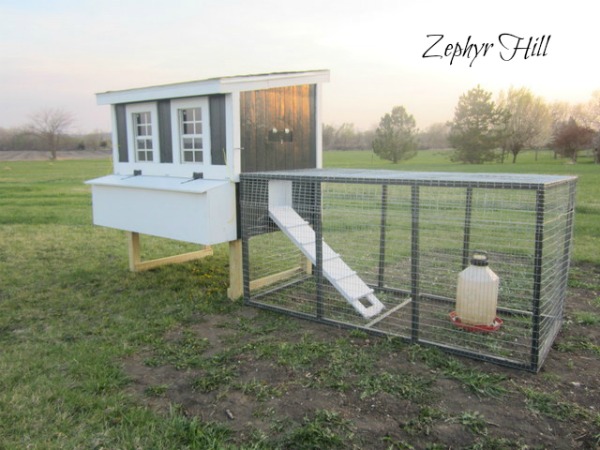
Here’s an outside view with the attached chicken run in place.
coop8

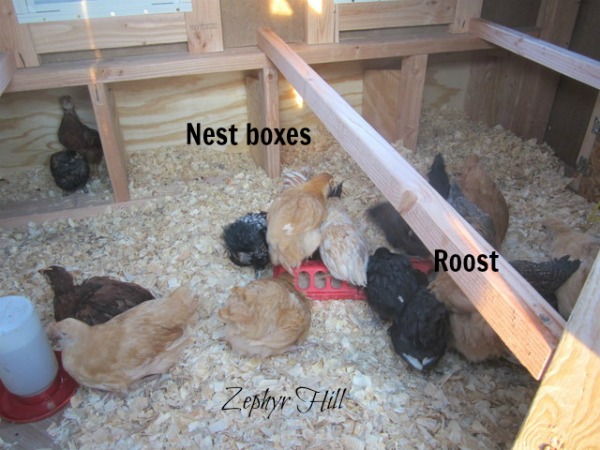
An inside view of the girls in their chicken palace.
coop9

Here’s what we like best about the coop:

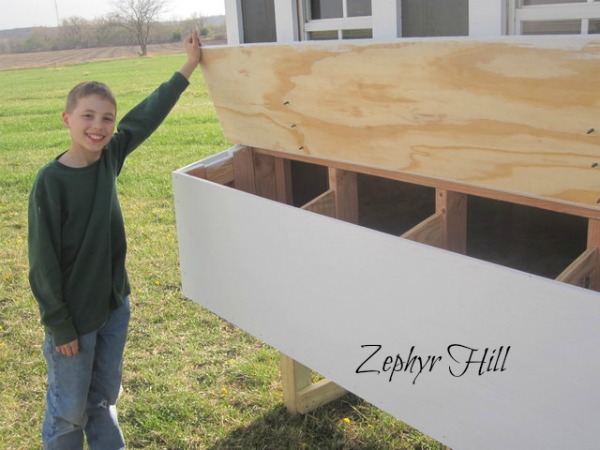
The egg boxes. Insert hand, pull out breakfast!
coop10

The lift-and-lower chicken door. Pull the rope and out come the birds. The rope is wound around a hook to keep the door open.
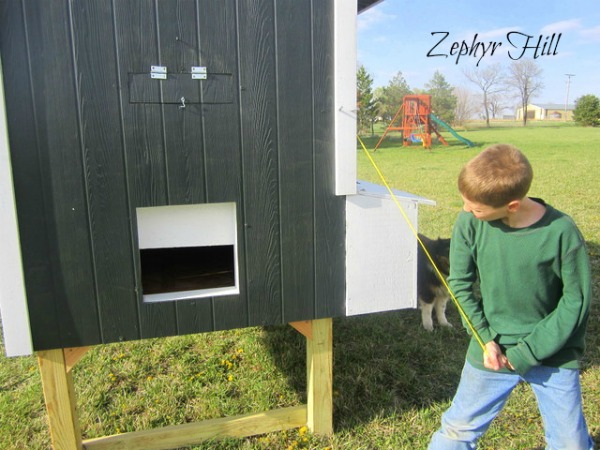
coop11

And here’s the master builder!

j

annesignature

Filed Under: Hobby Farming, Pets

Meet the Cats We Have Rescued

February 24, 2015 by Anne Marie 8 Comments

OLYMPUS DIGITAL CAMERA

I used to live next door to a man with many cats. Way too many cats. Most of them were feral and sickly. Seeing a few of them almost brought me to tears because of the terrible shape they were in. Every couple of a months a new litter would appear; with every crop of cats came more fighting, more illness and more mess. Thankfully, my family was able to trap many of these feral cats and have them fixed through the local Spay-Neuter-Release program. These volunteer-led efforts spay or neuter free-roaming cats at a discounted rate and then return them to the communities they call home, thus helping control feral populations. Cats who go through these programs are permanently ID’d in some way, such as ear-tipping, so that an observer can quickly tell they’ve already been altered.

Let me introduce you to some of the cats we’ve rescued over the years…..and added to the family.

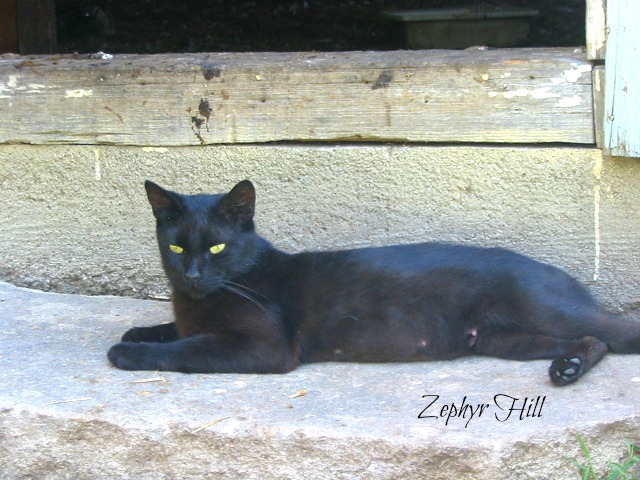
Mink was a beautiful, raven-black female that we found starving and pregnant on the streets of our neighborhood. She came home to our farm and promptly gave birth 2 weeks later, much to the joy of our children and the consternation of my husband….

01mink

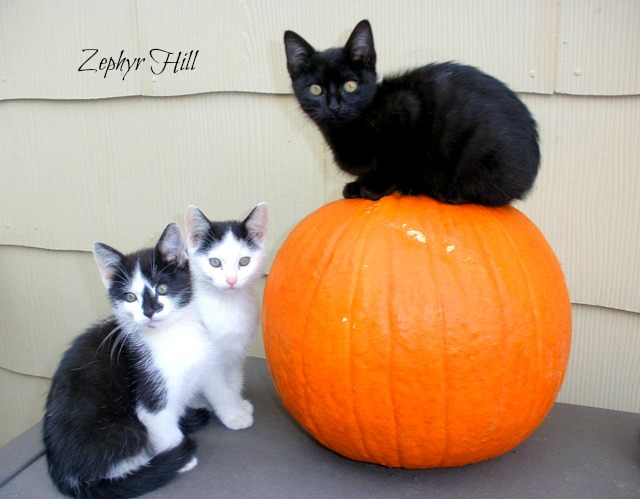
Mink had three baby boys. From left to right: Houdini, Cosmo and Batman. We decided to keep Houdini and he grew up with our flock of chickens, spending his nights in the warm coop and his days scuffling playfully with the birds over kitchen scraps. His brothers were adopted out through Craigslist to wonderful families.

OLYMPUS DIGITAL CAMERA

Today, Houdini is just as handsome as ever and he still has that upside-down heart on his nose. He might just as well have been named James Cagney (one of my favorite actors) because his motto is “I don’t take nuthin’ from nobody.”

OLYMPUS DIGITAL CAMERA

Solomon was abandoned during a local blues festival in our town. He sought shelter in a tree in our back yard and boy was I glad he picked us. Solomon (in all his glory) turned out to be one of THE best cats we have ever had the privilege of knowing. He let Catherine dress him up in doll clothes, purred with contentment while the toddlers “handled” him, and remained calm in the storm of chaos and noise that a family of 7 children often stirs up. He passed away last year at the age of 8 and was deeply mourned.

OLYMPUS DIGITAL CAMERA

While shopping the antique stores downtown, the children and I found some tiny little kittens in very bad shape, huddled under a pile of trash. They were so young that we had to mix up kitten formula and feed it to them with syringes. But it didn’t take long for them to recoup and thrive on our farm.

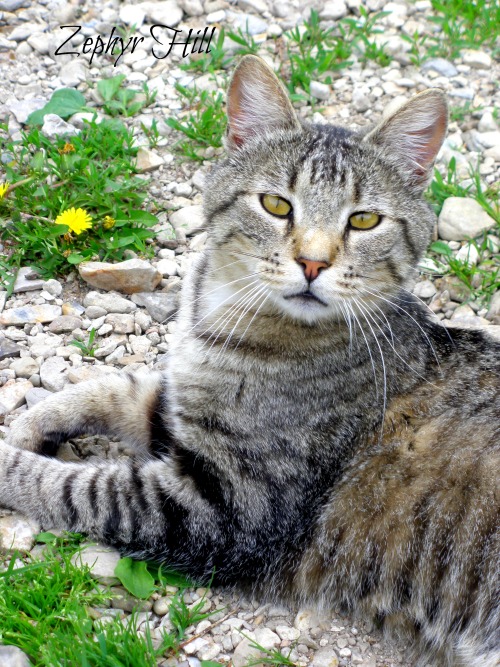
Dante (the gray) is a couple of years old now, but still a big baby. He seeks out my lap constantly and likes to “make muffins” (that’s what my children call it when a cat kneads its paws up and down). Pixie (the silver Siamese) also stuck around and became a favorite of our oldest son. Corduroy (the brown Siamese mix) was adopted by my sister. He has grown to be the most impressive of all, like Aslan in his glory. My brother-in-law has nicknamed him “Dragoslav,” which he feels is more fitting for such a magnificent and awe-inspiring feline. 🙂

01dante

Now, I know this post is all about stray rescues, but I can’t leave out the Queen Bee. The very first thing I did after graduating from college and getting my own apartment was to buy a cat from PetSmart on the day that the local humane society was offering adoptions. Foxy Brown was sassy and fiery right from the start; I laughed out loud as she trounced every one of her litter mates.

Foxy is 14 years old now and the darling of my heart. I admit she is pampered more than the others, but that’s her right as the dominant female and as a “senior citizen” in cat years.

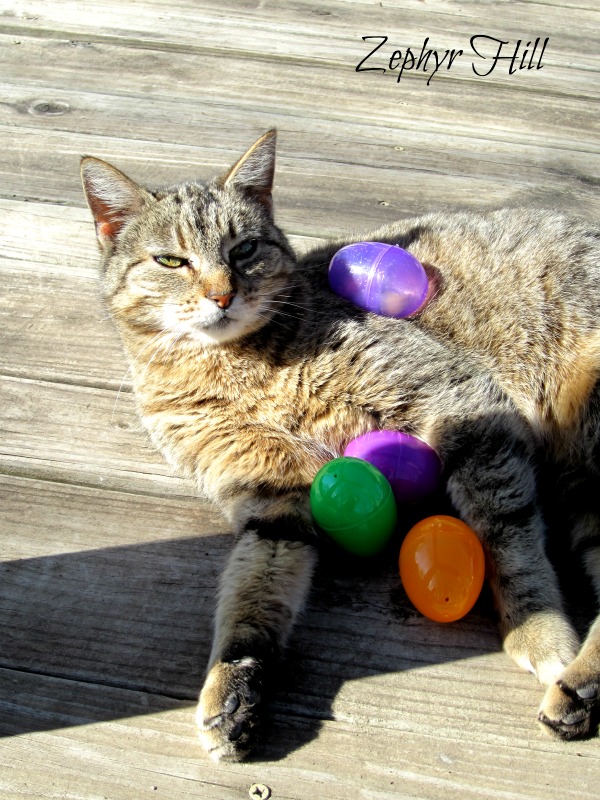
Look at this face. She knows she’s IT. The children “decorated” her with Easter eggs last Spring and Foxy bore it well with no loss of her dignity. She might as well be wearing a diamond tiara in this photo.

01foxy

I’d love to hear about your pets and how they became part of your family!

annesignature


Filed Under: Names, Pets

How to Keep Your Dog Out of the Trash

November 16, 2014 by Anne Marie 2 Comments

jasper3

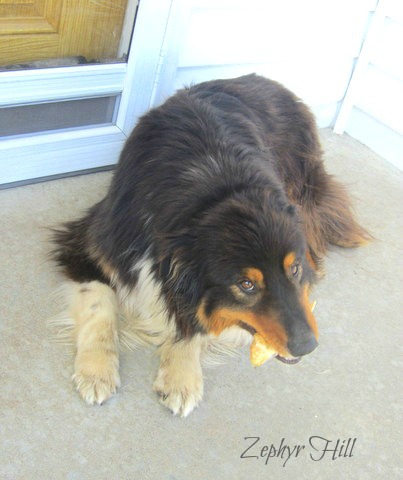
I wish you could meet Jasper. He is one of the greatest dogs we’ve ever owned. A Collie-Shepherd mix rescue, he became top dog literally the day he arrived at our farm. Jasper gets bored every once in a while. Yes, I know we have 7 children. And 5 cats. And 12 chickens. But Jasper still gets bored every so often, and if there isn’t a good chew bone or old shoe handy, he starts looking for mischief.

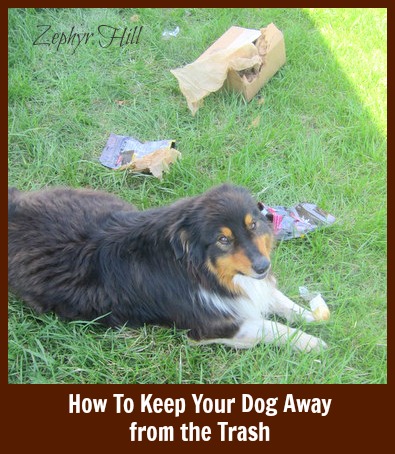
One day he discovered the cats’ litter box. Hmmm, that was tasty! Another time, he got into a package left by the UPS man on our doorstep. To his credit, the package did contain gourmet dog treats, and he did act pretty sorry, but still. That box was addressed to me! I took a picture of him that day because the guilty look on his face was really comical.

jasper2

A couple of times, he’s raided the trash cans. That’s no fun to pick up the next morning. And the last time it happened, he had a bad upset stomach for two days following. Thankfully, we have a mobile vet in the area who takes care of livestock and pets on site. That, plus a normal, nutritious diet, got him back to his old self in no time. If you have questions about pet nutrition or your dog’s diet, check out Royal Canin’s Ask the Vet resource.

Since that incident, we’ve taken some steps to ensure that Jasper can’t raid the trash. And since this seems to be something dogs are fond of doing, I wanted to share some tips with you.

#1 Don’t let your dog get bored. Make sure there are plenty of toys or things to chew on. Something that smells like you is especially comforting. You might even have a special treat to give him just for when you are gone; that way, when you leave, he’ll be thinking about enjoying the treat and not thinking about what he can do to kill time. If you are going to be gone longer than usual, consider asking a friend or family member to pop in and break up the monotony for your pet.

OLYMPUS DIGITAL CAMERA

# Secure the bins. This might seem like a no-brainer, but dogs can get into pretty much anything, so you have to think ahead of them. We use huge, heavy-duty trash bins outside, and even with lots of bags inside, Jasper has actually been able to topple them over. The jolt easily busts the lid open, spilling out those delicious contents onto the ground. For our large outside cans, we use a tether with hooks on either end, sort of like a bungee cord. The tether stretches up and over the lid and the hook fastens to a receiver on the outside of the house. Keep indoor bins in a drawer or closet, or in a separate area with a door you can close – like the garage.

Another way to secure an indoor trash can, and keep it from getting knocked over, is to put a weight inside (the kind that attaches to the end of a barbel). A 10 or 20 pound circular weight will fit into most standard cans; just put the trash bag on top.

# Teach a command. When you see your dog near the trash, use and reinforce a stern command like “Off!” while you physically redirect him to another area.

# Make a booby trap. Something unpleasant but harmless should do the trick. Try leaving a metal cookie sheet on top of the lid of the trash. The deafening crash it makes as it falls can startle and dissuade a dog. A small stacked pyramid of empty soft drink cans will also produce the same effect. Commercial repellent sprays might work for outdoor cans, but you probably don’t want that smell in your home. I’ve heard that clove oil is anathema to dogs, and the fragrance is likely tolerable to humans. Additionally, booby traps are probably not a good choice if you have an anxious or overly sensitive dog.

annesignature


I was selected for this opportunity as a member of Clever Girls and the content and opinions expressed here are all my own.

Filed Under: Pets

5 Reasons to Have a Rooster in Your Flock

September 9, 2014 by Anne Marie 4 Comments

OLYMPUS DIGITAL CAMERA

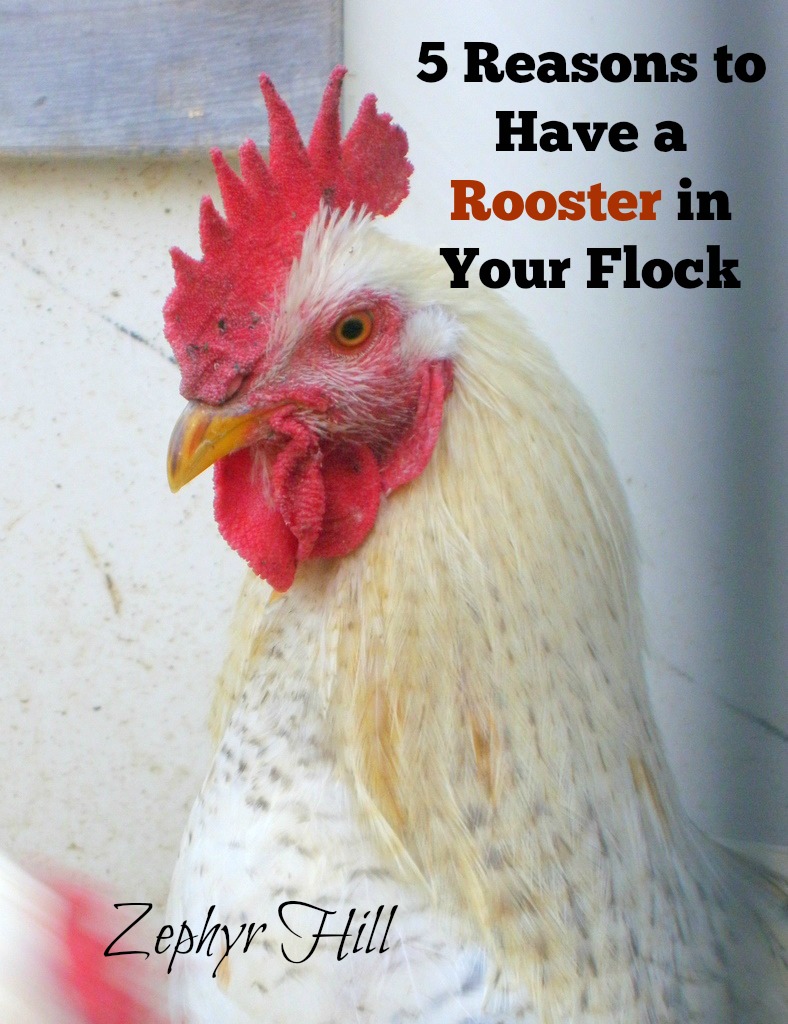
Should you have a rooster in your backyard flock? Some families worry about aggression, or being woken up every day at the crack of dawn. But my family LOVES having a rooster. Assuming there’s no ordinance or law against it in your area, here are five reasons you might consider adding a cockerel to the mix:

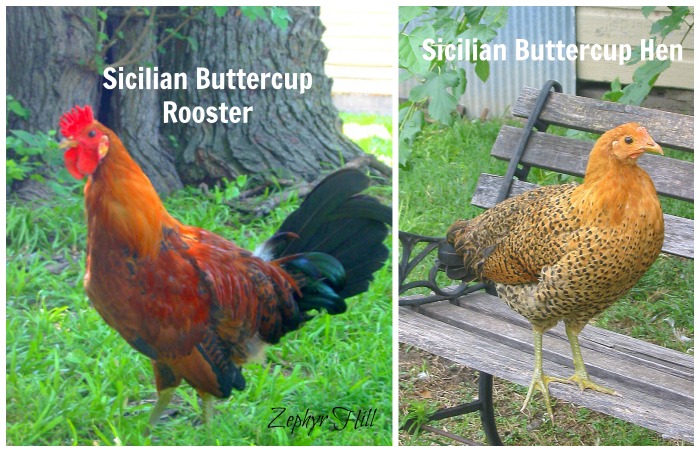
Roosters are beautiful. As with many other species on Earth, the males are more showy. Roosters don’t just stand a head above the hens; their feathers are often more colorful or unusual. Some look quite exotic!

rooster2

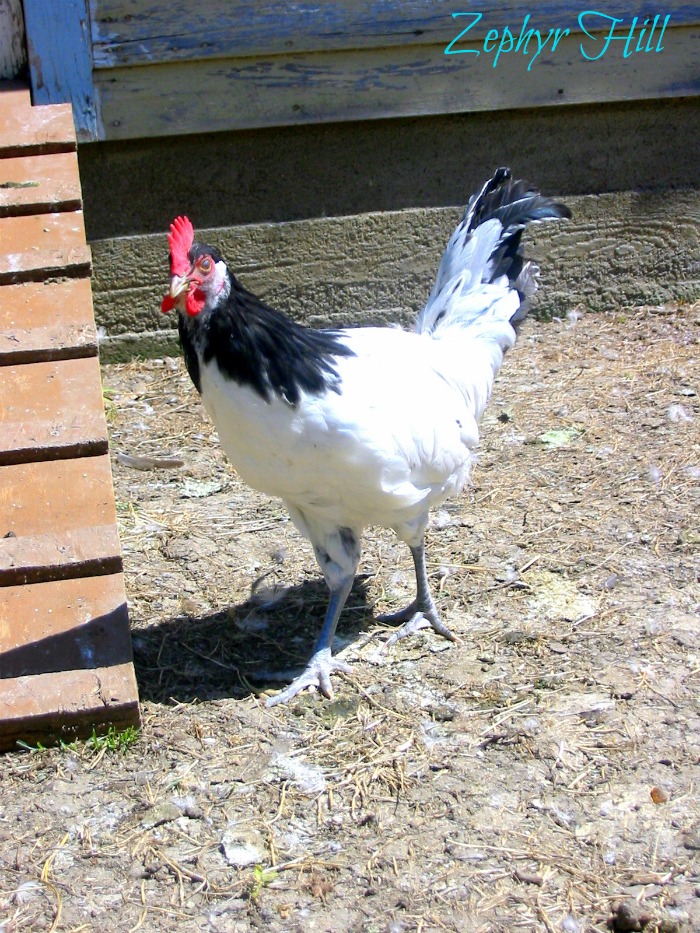
Roosters are helpful. They are fierce and vigilant protectors. At the slightest sign of danger, they go into action. I love watching our rooster corral the ladies in a safe place; he scolds them and threatens them if they try to venture out before he feels it’s safe to leave. When attacked, a hen begins to cry in a loud, pitiful voice. She tries desperately to get away. The rooster, however, will fight back with all his strength.

It’s nice to know someone else (besides us) is watching out for “the girls.”

Roosters are entertaining. Grab a cup of coffee and enjoy the show. We like to sit in the backyard and watch the rooster do his thing. He crows. He struts. He bosses the girls around. He’s the cock of the walk and doesn’t want anyone to forget it.

rooster3

Roosters add possibility. If you decide to hatch some eggs later on, having a rooster is handy. Otherwise, you’ll have to purchase fertilized eggs.

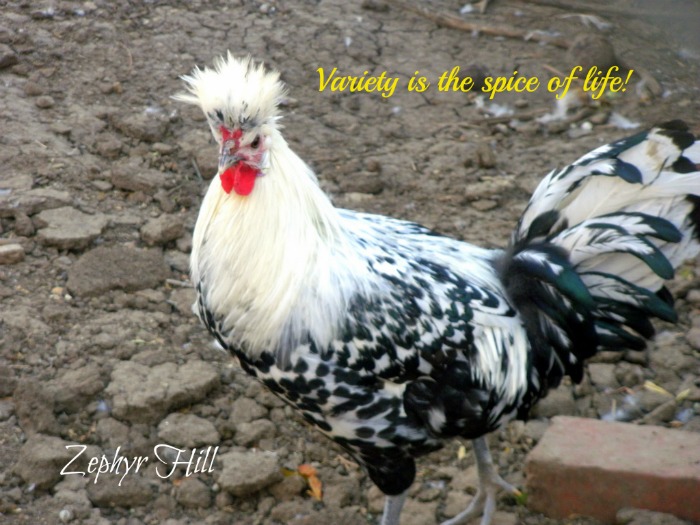
Roosters add diversity. Who wants a bunch of mommies and no daddy? Let’s hear it for variety, right? Having both females and males in your flock makes things more interesting, and educational for everyone.

OLYMPUS DIGITAL CAMERA

While we’re on the subject of roosters, here are three common questions people often ask:

Do our hens need a rooster in order to lay? Not at all; hens will give you nutritious, delicious eggs whether they are mated or not.  And although some people still hotly debate the topic, most studies seem to show there’s not a difference nutritionally between fertilized and unfertilized chicken eggs, although there are some slight variances in structure. Some chicken enthusiasts will swear to you they can taste a difference, but I’ve never noticed it.

How many roosters should you have? The ratio of roosters to hens will vary according to breed and living quarters. For most standard backyard breeds, having one rooster for every 6-8 hens is plenty. Some smaller and more active breeds (like the Buttercup pictured above) can suffice with one rooster for every 10-12 hens. Free ranged birds give you greater flexibility; housed or caged birds offer less. Too many roosters will result in in-fighting and “roughing up” the females.

Are all roosters mean? Not by a long shot, so don’t let the story your grandmother told you about beating off a cock with a two-by-four scare you away. Certain breeds can be prone to aggression (the Rhode Island Red immediately comes to mind), and others are more mild (we’ve had good luck with Orpingtons and Buttercups). However, breed alone is not a determining factor. Handling also comes into play, so try out your “chicken whispering” skills early on. Hand feed your birds. Hold them in your lap. Let the children carry the young cockerels around. When all else fails, throw the bad boy in the stew pot, or use Craigslist to re-home him.

annesignature

Filed Under: Hobby Farming, Pets Tagged With: are fertilized eggs better, fertilized vs unfertilized eggs, should you get a rooster, what to do with roosters, why roosters are useful

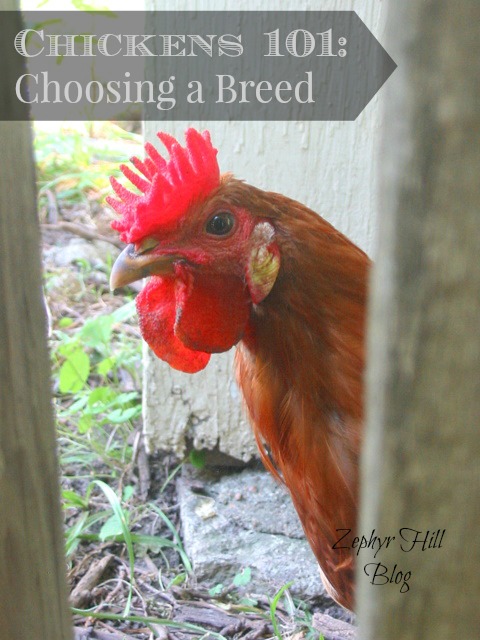
Chickens 101: Choosing the Right Breed

April 27, 2014 by Anne Marie 9 Comments

After you’ve made the decision to own backyard chickens, picking a breed or breeds is probably going to be your next step. Jeremiah and I spent hours upon hours poring over books and catalogs so we would better understand the breed profiles and find a good fit for our family and our geographical region.

There are hundreds of breeds to choose from, and within the breeds themselves, there are ranges of colors and patterns. And all this just to get a fresh egg? Yes, God knows we all like variety!

Over the years we’ve tried about 20 different breeds, including some of the rare ones. I love the rare breeds because you just don’t see chickens like that in most backyards, and they always turn heads. I’m going to group the breeds by certain characteristics to make choosing easier. This is not an exhaustive list, by any means. It includes most of the birds you’ll find available for purchase in catalogs or farm stores.

RELIABLE BROWN EGG LAYERS

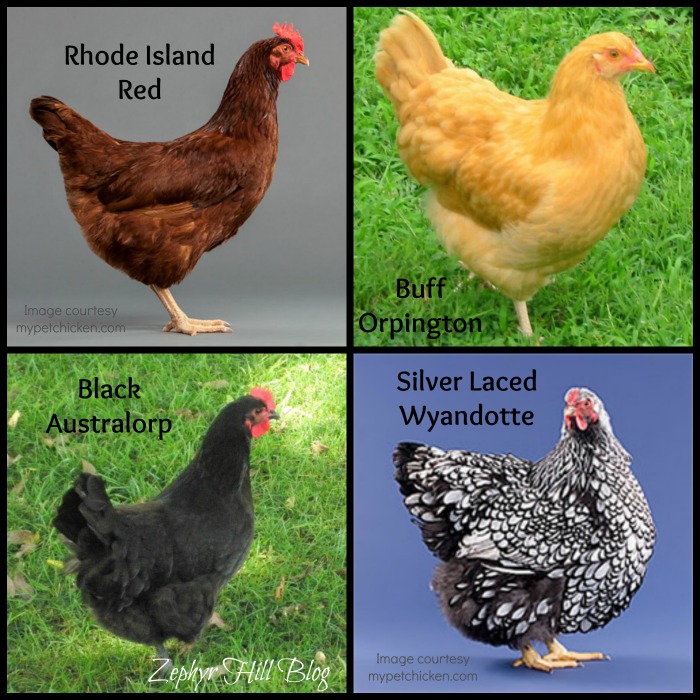
Breeds in this category: Buff Orpington, Black Australorp, New Hampshire Red, Rhode Island Red, Barred Rock, Dominique, Delaware, Speckled Sussex, Wyandotte, Black Sex Link and Red Sex Link

Profile: These are all very popular backyard breeds because they lay those signature brown-shelled eggs and do so at a very reliable rate (about 4 or 5 per week). They are medium to heavy birds (that can be dual-purpose, providing both eggs and meat) and are generally cold-hardy. If this sounds like your ideal chicken, there are plenty of colors to choose from among the breeds – everything from white to gold to black to spotted.

My thoughts: You can’t really go wrong with any of these breeds, so just have fun picking colors. They are tried and true; most every backyard flock will have one or more of these workhorse chickens. At some point, we’ve owned every single breed except for the Sex Links (which are color-sexable at birth). I especially love the Buff Orpington because of its soft golden plumage and self-assured, curious temperament. We had a favorite several years ago that the children called Big Mama; she loved to be held and spent a lot of time on our deck, like a family dog would.  Black Australorps have that wonderful “beetle-black” sheen to their feathers which glows green when highlighted; they reliably lay even in cold weather, when other birds have thrown in the towel. Be wary when buying New Hampshire Reds and Rhode Island Reds; the roosters are notoriously aggressive. For looks, Wyandottes are quite dramatic; the gold and black and silver laced varieties are my favorites.

CLASSIC WHITE EGG LAYERS

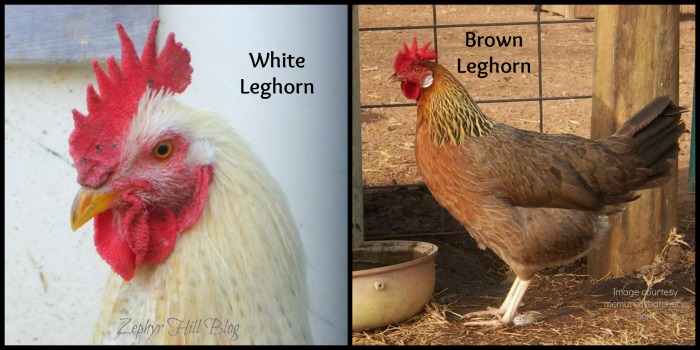
Breeds in this category: White Leghorn, Brown Leghorn, Hamburg

Profile: Although many families have in their mind that those soft brown eggs symbolize true “farm fresh,” wholesome eggs, the White Leghorn breed still remains popular because a lot of folks do love pure white eggs. (Note: Leghorns are the preferred commercial layers because they have a great feed to output ratio). If you’ve ever watched the old Warner Brothers cartoons, then you might simply decide to buy a couple of these so you can have Foghorn Leghorn strutting around the run! The Hamburg and Brown Leghorns are other (less common) white egg layers, and output is not as prolific. But they offer MUCH more variety in their feathering (solid, spangled, penciled, etc.).

My thoughts: If you love white eggs and white chickens, go for some Leghorns. If you want white eggs, but more variety as far as looks go, choose the Brown or a variety of Hamburg; Silver-Spangled Hamburgs are simply stunning!

THE TROPHY CHICKENS

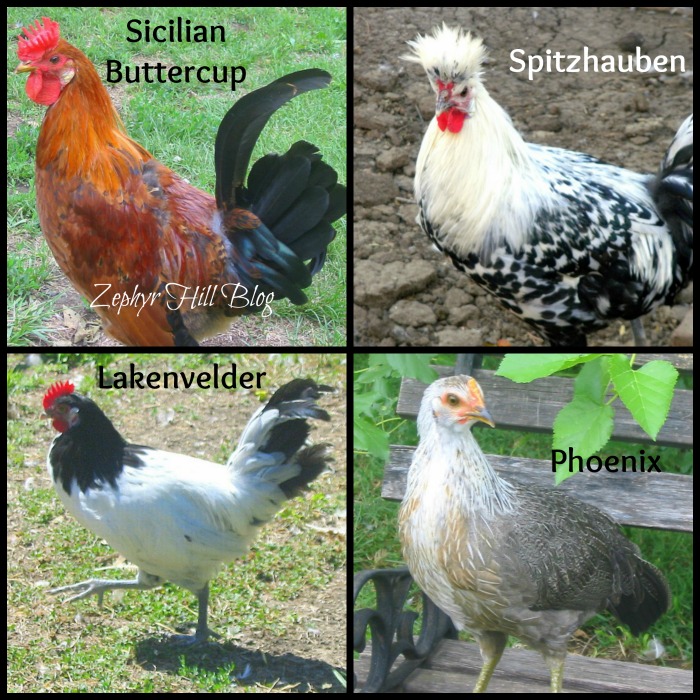
Breeds in this category: Spitzhauben, Campine, Buttercup, Andalusian, Lakenvelder, Phoenix, Polish and Bantams

Profiles: These chickens take home trophies for their looks, not their egg-laying proficiency. Egg colors and body sizes will vary, as will temperament. Because many of these are of the Mediterranean variety or of smaller/delicate composition, they can be a little less hardy than the breeds mentioned above. They serve as excellent 4-H projects and exhibition birds, but I personally recommend sitting on a swing in your backyard and just watching them.  🙂

My thoughts: We always have at least a few birds like this that are just plain fun to look at. Many of them have unusual markings or physical features (like a unique comb or feather coloring) as well as personality quirks that you don’t find in the standard backyard breeds. The Mediterranean breeds (like Buttercups and Andalusians) are active, skilled foragers; although they aren’t the “cuddliest” birds you’ll own, they are gentle. Our Buttercup roosters ate out of our hands.

RAINBOW LAYERS

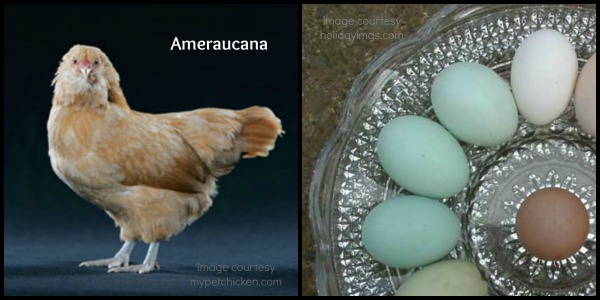
Breeds in this category: Easter Eggers, Ameraucana, Maran and Welsummer

Profiles: If the thought of brown and white eggs seems limiting, never fear. Easter Eggers and Ameraucanas will lay a lovely assortment of pastels (green, blue, pink, etc.); Maran and Welsummer shells are the color of chocolate.

My thoughts: Our Marans were somewhat delicate and since hardier birds are appreciated in the inclement Midwest; we haven’t bought this breed again. But you’ll always find Ameraucanas in our flock! The children love harvesting the multi-colored eggs, and I personally think these birds are adorable because of the feathered “muffs” and “beards” on their faces. With a sweet disposition to match and a rainbow of patterns to choose from, it’s a win-win. They lay about 3 eggs per week which is considered to be a good rate.

THE BIG BOYS AND GIRLS

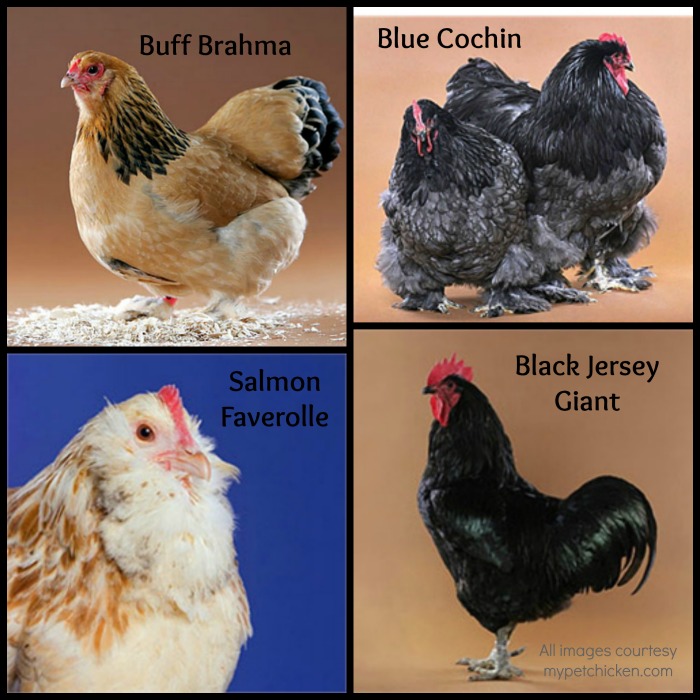
Breeds in this category: Cochin, Jersey Giant, Brahma, Faverolles

Profile: Move over, Big Bird. These are some rather large backyard chickens! Weighing in at 7 to 8 pounds, or more, they can easily be dual-purpose birds. It’s especially fun to get a rooster of one of these varieties; his sheer size will make him that much more impressive.

My thoughts: Bigger birds eat more, but they also lay bigger eggs, so it’s a nice trade-off.


Many thanks to mypetchicken.com for some of the breed profile photos!

Filed Under: Hobby Farming, Pets Tagged With: backyard chickens, best chicken breeds, best egg layers, best show birds, chicken breeds, choosing a chicken breed, easter egg chickens, poultry breeds, rainbow layers, raising backyard chickens

  • « Previous Page
  • 1
  • 2
  • 3
  • 4
  • 5
  • Next Page »

SOCIAL MEDIA

Newly Published

  • The Coop Upgrade Nobody Talks About Until It’s Too Late
  • Ignore the Radio Ads About Life Insurance, But Please Read This Post
  • Do Catholic Parents Have to Choose a Saint Name for Their Baby?
  • The BEST and Most Comprehensive Baby Name Books for Parents
  • Educational Games to Enjoy With Your Children

Popular Posts

  • Tiny Love Bouncer Review
  • Sweet Pea AI3 One-Size Diaper Review & Giveaway
  • 6 Common Homeschooling Mistakes to Avoid
  • Sweet Pea Bamboo AIO and Pail Liner Review & Giveaway
  • How to Study (and Teach) at Home With Less Distraction

Copyright © 2026 · Zephyr Hill Blog · Design by Albemarle PR

Copyright © 2026 · Albemarle PR - Hannah Template on Genesis Framework · WordPress · Log in