Zephyr Hill

A Family Blog

Header Menu

  • Home
  • Contact Me
  • Terms / Privacy
  • Homeschooling
  • Faith and Family
  • Book Reviews
  • Cloth Diapers
  • Pets

How to Plan a Successful Baby Shower

March 16, 2016 by Anne Marie 4 Comments

babyshowers1

The arrival of a baby is one of the most exciting events in a woman’s life, so planning a beautiful baby shower for the mother-to-be is a pretty big deal. As host, you want the shower to be an occasion to remember.

Here are some tips to help you through the most important elements:

Setting the Date

Most baby showers occur in the third trimester of pregnancy, but some choose to have their parties sooner. Before you decide on a date, check with the important family members and friends you know she’ll want there with her. It would be a shame to set a date, send out invitations, and find out the most important attendees are unable to make it. Some mothers even prefer to have the shower after the baby has been delivered as family members and friends can meet the baby (this is great for loved ones who live far away and may only be able to make one trip). Once you’ve settled on a date that works for her and her most important attendees, send out the invitations. You can go old school with paper invites, or use email invites from Evites.com for ease.

The Food

When it comes to food, baby showers are graze-happy affairs, which will alow for a variety of fare. And since the guest of honor happens to be pregnant, be sure to check with her first when it comes to preferences and/or aversions. Serve finger foods that are easy to eat while milling about and visiting. Mini sandwiches, deviled eggs, tiny cupcakes, and chopped up veggies and fruits are just a few ideas.

Here’s an easy cheat if you don’t want to bake or buy cupcakes. Arrange Reece’s Peanut Butter Cups on a platter, put a dollop of whipped cream on top and garnish with pretty sprinkles.

cupcakes

Think beyond punch, soda and wine when it comes to beverages. Hot herbal tea is a relaxing and delicious change of pace; offer coffee and flavored creamers if your shower is in the morning.

teatime

A lovely cake can double as a decoration. A basic frosted cake can be smashing with the addition of fresh fruit or flowers on top. If the baby’s sex has been revealed, use those colors on top; if it’s still a mystery, white is always classic and elegant.

Here’s a simple frosted white cake garnished with white roses and leaves, on top of doilies from the dollar store.

whitecake

The Decorations

Decorations don’t have to break the bank, and there are so many do it yourself craft ideas that can make creating décor for the baby shower a piece of cake. Once again, keep the mother-to-be in mind. Does she have a theme picked out for the nursery? Does she love natural beauty, or is her style modern/contemporary?

One easy way to add flair to the party is to pick up some vibrant blooms and place them in vases of different shapes and color all around the room. Wildflowers or daisies in mason jars are whimsical and sweet; large flowers like pink peonies deliver a lot of color with no arranging skills required.

peony

For decorations that are beautiful and edible, grab a variety of clear jars, vases or glasses and fill with pastel candies (make it easy on yourself by having them delivered to you from Dylan’s Candy Bar). They can be arranged on the main table or placed throughout the room.

candycup

The Games

What would a baby shower be without some fun games? You can stick with old favorites or try some of my outside-the-box ideas. Tried and true antics include identifying melted candy bars in a diaper, “pin the baby on the mommy” and guess the baby food.

The Presents

If you’re racking your brain in an attempt to come up with the perfect present for the mother-to-be and her baby, make thoughtfulness your aim and you can’t go wrong. She’ll probably receive lots of necessities at the shower and registry items, you can make your hostess gift more memorable in several ways. Consider personalized baby gifts like a blanket, cup or toy. Or give her the gift of pampering with a gift certificate for a massage, a store gift card or even a homemade coupon for a meal from you after the baby arrives.

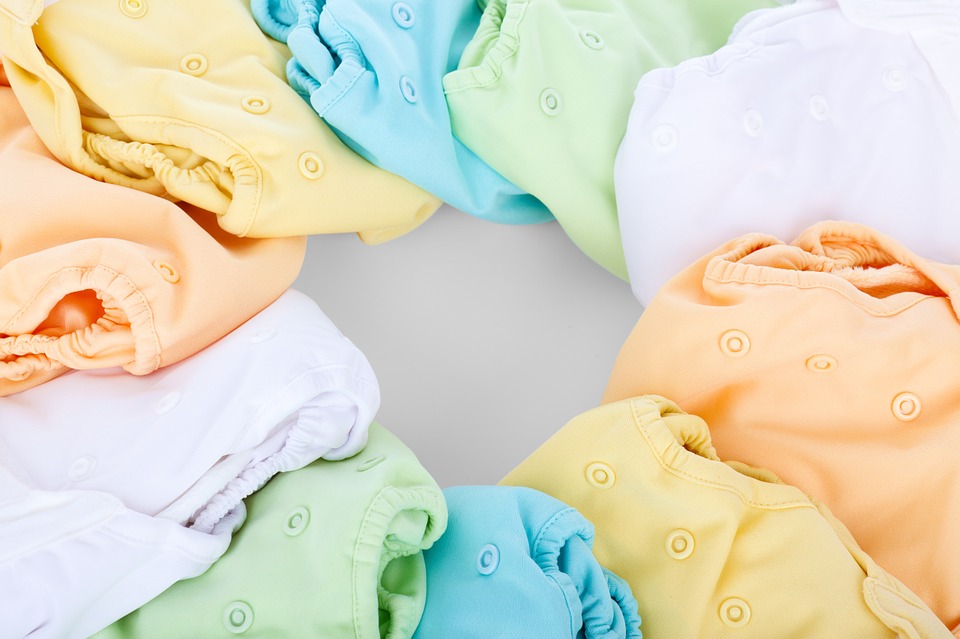
And don’t forget to remind the mother-to be that she can indicate in her registry a preference for cloth diapers, if the family has chosen to go that route. Some online cloth diaper shops (like Diaper Junction and Kelly’s Closet) allow you to set up registries on their sites as well.
babyshower2

Have you ever hosted a baby shower? Please share your ideas and experience in a comment below!

annesignature

This post was sponsored by Purple Camel Media. All opinions are my own.

Filed Under: Faith and Family Tagged With: baby shower games, baby shower ideas, cloth diaper baby shower, hosting a shower, planning a shower

How to Find Lost Library Books

January 14, 2016 by Anne Marie 43 Comments

bookshelf

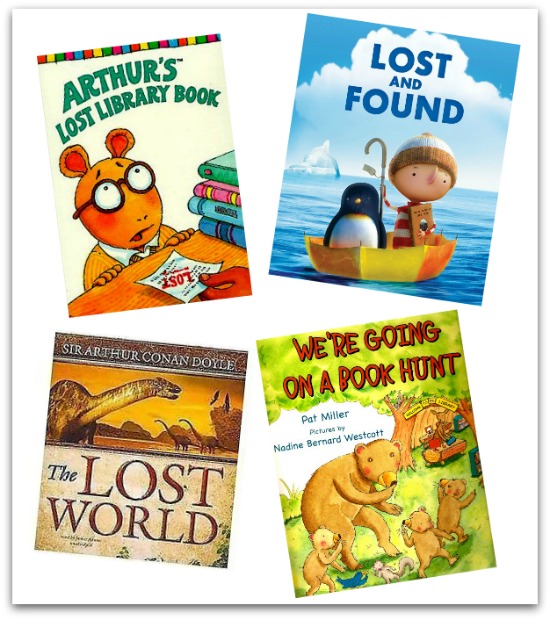
If you are facing penalties or unable to use your card because of lost library books, don’t give up hope yet. Here are some places you might not have looked yet. Over the years, we’ve found missing books in many of these spots.

  • In a Closet: Things often get thrown on the floor of a closet. Tidy it up and you might just find a missing book buried under there.
  • Under Beds: Since we often read in bed, books can get dropped between the wall and the bed.
  • Under the Couch: This is another popular reading spot. Move the entire couch to make sure you don’t miss anything.
  • In Your Vehicle: Look under the seats, under car seats and in the trunk.
  • Chair and Couch Cushions: It’s easy for small books and paperbacks to get wedged here.
  • On the Bookshelf: Imagine that! Books fall behind other books, get put in backwards, or simply get caught so deeply between other titles that they disappear from view.
  • In a Back Pack: Many a missing book has hitched a ride in a child’s backpack, hoping to make friends with his textbooks, I suppose.
  • Lost and Found: Check to see if your library book was found at school, at church, etc.
  • At the Library: Every once in a while, a book you return will be shelved before library staff scans/checks it in. This happened to us twice! A book we kept getting email notifications about ended up being at the library.
  • In a Pile: Library books like to hide in piles where they don’t belong. Piles of school books, piles of magazines, piles of coloring books, etc.
  • In a Hamper: If your children have their own hampers for dirty laundry, they may toss toys and books in there occasionally in their hurry to “clean up” the room.
  • In a Toy Container: Check toy chests, boxes and baskets. Lots of things besides toys love to hang out there, because children (who are rushing through a clean-up job) will toss pretty much anything inside.
  • Ask Your Spouse: One time we found a missing book in my husband’s work truck. Apparently, one of our boys had taken it along when they went on an errand together. Another time, the picture book we were looking for was right next to my husband’s bed, at the very bottom of a stack of books he was working his way through. Yes, everybody in the family loves library books!
  • Piano Bench: It’s made for storing books, right?
  • Under an Appliance: Check under the stove, the fridge, washer, dryer, etc.
  • Under a Rug: Area rugs can easily hide a paperback library book.
  • In the Bathroom: Any place in the house where people like to read is fair game!
  • With the Laundry: Children who are in a hurry or not paying attention often throw things besides dirty clothes into laundry baskets.
  • In the Yard: Check your patio, deck boxes and play equipment. I don’t know about you, but I love reading in the great outdoors!
  • Someone Else’s House: Did they take the book to Grandma’s? To a friend’s house? To God’s house?

lostbooks

Searching for books can be a big hassle, and the more children you have, the stickier it gets. So here are some ways to AVOID losing books in the first place:

  • Designate a Place: It could be a shelf, a box, a backpack or a shopping tote, but have a place where library books are always kept when no one is reading them.
  • Make Book Rules: Decide where books can and cannot be taken.
  • Avoid Small Books: Many of the board books and primary readers for young children are extremely small or thin and can get lost SO easily. Look for large board books and picture books.

Where you you lost AND found missing books? Do you have any ideas for keeping library books from disappearing?

Filed Under: Faith and Family Tagged With: how to find lost books, library books, lost and found, lost books, missing library books

15 Potty Training Tips for Success

December 28, 2015 by Anne Marie 3 Comments

This post contains affiliate links.

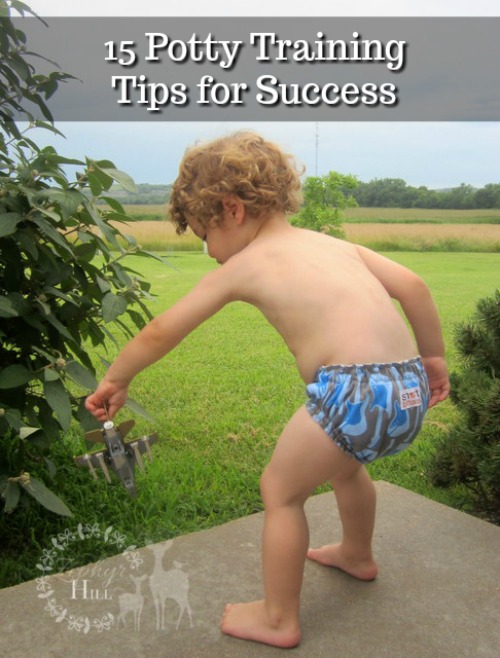
Erik is learning to use the potty right now. He’s at the stage where there’s curiosity and know-how, but very little commitment! Every child is different, so here is a list of things that have worked over the years for our children. Hope you find something here that will lead to success.

  • 1 – Reward Your Child: Give a piece of candy, a sticker, etc. for a particular task. At first it might simply be sitting on the potty. Later, it could be for staying dry all day or all night. To make it even more exciting, put the reward in sight but out of reach. For example, line up 10 Hot Wheels cars on the mantle and tell your son that he gets 1 car for every time that he does #2. It’s a great motivator!
  • 2 – Find a Hero: Who does your child idolize? Get a third party involved that has great influence over your child. It could be the local fireman or even your pastor. They can help cheer your child on and provide accountability.
  • 3 – Be Understanding: There are a lot of things that can make a child resistant to training, and those things are very real to him or her. Common issues include sitting on a big potty, the noise of flushing, using a public restroom and wanting privacy. Find out what the hurdles are and gently provide encouragement and instruction.
  • 4 – Clean Together: Hygiene is a big part of potty training that parents often miss in their rush to be done with diaper changes.  Every child needs to understand that using the potty and being clean go hand in hand. Having your learner help clean up accidents in the beginning teaches an important lesson: when you make a mess, it has to be cleaned up. Be sure to stress the positive side, too! Whenever your child uses the potty, say “This is great! See, now we don’t have to clean anything up. You can go play!”
  • 5 – Boot Camp Training: This is where you forget trainers and underwear completely, and let the chips fall where they may. No pun intended. For modesty, your child can wear a loose dress or big t-shirt. This works well if you do it for 3 or more consecutive days when you will be home.
  • 6 – Go Often: Most learners need a lot of prompting and reminders in the beginning, so much that you’ll get tired of being in the bathroom all the time. But children get distracted so easily when playing, and some of them will purposely ignore cues because they are busy having fun. Every 15-30 minutes, ask if they feel like they need to go. At least every hour, have them sit on the potty, even if only to go through the motions.
  • 7 – Get a Helper: When Samuel (now 5) was ready to train, I did something completely new. Pregnant and trying to stay on top of homeschooling and our family of 6 children, I paid my 10-year-old daughter, Catherine, to train him for me! She was eager to take charge and earn some money; I was so blessed to be relieved of the burden. Interestingly, I also had a helper when Catherine herself was learning. I was in the hospital for 2 months with our infant daughter, Margaret. Catherine’s grandmother potty-trained her while I was away. It was a pleasant surprise to come home to!
  • 8 – Cute Pants: Some children can be motivated by pretty colors and cute prints. Trainers with their favorite colors or characters can make learning more enjoyable. When Susanna (now 4) was learning, we got her some Hello Kitty underwear that she could put on after using the potty. Some parents will save the new underwear and give as a gift when training is completed.
  • ptips29 – Play Games: If you have a child that’s nervous about the whole process, make it fun with games. Some toddlers like to sing or read a book. Boys can be prompted to “aim” for things in the potty (my friend calls this game Sink the Cheerios).
  • 10 – Pay Attention to Personality: Since every child is different, it’s your job to find out how they learn, and what motivates them. Train according to temperament and the process will be much faster. For example, a “type A” child will like challenges and learning at a faster pace. A phlegmatic or laid-back child is cautious and learns slowly and may regress under too much pressure.
  • 11 – Be Patient: Children can sense a parent’s frustration and disappointment, so try to hide your emotions. Oddly enough, some toddlers will actually make huge strides when Mama and Daddy quit stressing over it and just “walk away.” Suddenly, with all the pressure gone, the child will want to train.
  • 12 – Eating and Drinking: Making sure your child is well-hydrated and getting adequate fiber can be key during the training process. The more regular your toddler is, the easier it is to go.
  • 13 – Ignore the Numbers: When your neighbor’s child trains at 18 months and you have a 5-year-old that still wets the bed, you might feel jealous, inadequate or just plain discouraged. And what about those who swear by the 3-day training method? If it takes your child much longer than that, does that mean something is seriously wrong with both of you? STOP. Don’t focus on arbitrary numbers or statistics; instead, just use your common sense. If your child is ready to train, then what you need to be focusing on is how to help him/her succeed, NOT how he/she is measuring up to peers. If the delay is partly your fault (i.e. you haven’t devoted enough time to training), then acknowledge that and quickly move on.
  • 14 – Get the Timing Right: You and your child both need to be ready. Sounds pretty obvious, right? But in reality, the opposite often happens. The child is ready but the parent is too busy with other things. Or the parent is ready, but the child is not. You have very little chance of success when on different pages.
  • 15 – Train Before You Train: There are subtle ways to lay the groundwork for potty training. When your baby begins to toddle around, you can familiarize him/her with the bathroom. Give him/her little things to do like flushing the toilet after you, crumpling up a few squares of tissue and throwing in the potty, or closing the lid. Go ahead and put a little potty chair in the bathroom and let him/her sit there at will. When someone in the family goes to the bathroom, point this out to your toddler. It helps make the connection early on that you go to the potty whenever nature calls.

ptips3

I’d love to hear what’s worked for your family, so please share your potty training tips below!

annesignature


Pictured: Smart Bottoms trainer and Ella Bella Bum pocket diaper

Filed Under: Faith and Family

Christmas Greetings for 2015

December 24, 2015 by Anne Marie 2 Comments

christmas2015

Another year is coming to a close, and I want to wish you all a very merry Christmas. I count you among my many blessings!

The light of the Christmas star to you,
The warmth of home and hearth to you,
The cheer and good will of friends to you,
The hope of a childlike heart to you,
The joy of a thousand angels to you,
The love of the Son,
And God’s peace to you.  

~a traditional Irish blessing
annesignature


Filed Under: Faith and Family

16 Money-Making Jobs for Teenagers

November 10, 2015 by Anne Marie 5 Comments

josephtheworker

When teenagers express interest in working and earning money (yay!), they are usually advised to babysit, cut grass or walk dogs. But there are SO many other ways for a teen to make money doing things he loves, and nurturing his unique talents. That’s why I’m sharing this list with you today.

Some of these jobs can also be done by adolescents and “tweens.” And thanks to You Tube, your son or daughter can learn any number of simple and marketable skills with online tutorials (examples: kid’s hair cuts and repairing bikes).

1- Gopher/Personal Assistant: Offer to run errands for someone else. A service like this is especially useful to people that are unable to leave their home for some reason. Local businesses also hire “gophers” part-time to do any number of tasks. For instance, law offices need documents mailed and picked up almost on a daily basis. I have a friend that is paid to accompany an elderly lady while she goes shopping or keeps appointments. This lady needs help getting around, paying and carrying things. Your child may need a drivers license for this job.

2- Typing: It’s easy to improve your typing speed, and it’s very possible that your teen is already proficient. Put this skill to use by typing copy for local businesses and professionals. Schools and teachers may also pay a helper to type worksheets, memos or school bulletins. Rates are usually negotiated per word.

3- Computer Guru: One of the best skills a young adult has going for him these days is technological know-how. It might be hard to believe, but there are still a lot of people out there that have techno-fear or just hate fooling with a computer. Teens can be hired to help others sell on Ebay, teach them how to use a smart phone, set up a new desktop computer, start a free website or blog, or just be available whenever computer help is needed. I’m currently employed by a local woodworker because he has very little computer knowledge, and has difficulty even checking his email sometimes.

4- Consignment Seller: Everyone has something they’d like to sell or get rid of, but few have the time it takes to photograph and list on the right venues. Your teen can easily start a consignment business by selling items for other people, and keeping a percentage of the sale as commission. All you need for this job is a camera, a computer and a simple contract for clients to sign.  Your teen needs to know how to search sites like Ebay, Craigslist, Amazon Marketplace and other venues for current market values, and also how to accurately describe the condition.

5- Proofreading: If your teen is all about the details, he can go to work as a proofreading. Work can be found both locally and online. Make some calls to the local newspaper and send emails to prospective publishing sites.

6- Tutoring: This is not as daunting as it sounds. Tutoring can be as simple as helping the homeschooling mother down the street bring her 3rd grader up to speed in math. The best way to go about landing this job is for your teen to decide what he enjoys and excels at in school and then decide which grade levels he can comfortably mentor in. Don’t limit it to academics, either. Teens can share their athletic, artistic, dance and musical skills, too. I pay my 12-year-old son, Joseph, a small amount each week to teach Tae Kwon Do to his younger brother. Post flyers on Facebook and Craigslist and keep rates lower than professional tutors in the area.

7- Seasonal Yard and Home Maintenance: Why limit yourself to grass cutting. Most homes need care year-round, and with so many two-income households, basic tasks are often left undone. Teens can wash windows, rake leaves, shovel snow, mulch, prune, clean gutters, paint fences and remove brush and debris.

8- Farm/Food Jobs: Pull the tassels off corn. Pick apples. De-bone fish. Harvest lavender. See what’s available in your local area, depending on the crops and products being produced.

9- Home Baking: There are other ways to make money besides bake sales. Make a batch of muffins and send it to work with dad so he can sell to co-workers. Offer to bake and decorate cakes or cupcakes for birthdays and baby showers. Bake casseroles and freezer meals, then package and sell to busy families.

10- Road Work/Construction: By law, teens can safely tackle certain construction or road jobs. Some examples include directing traffic through and around work sites, painting, landscaping and planting, masonry work and carpentry that doesn’t involve power tools.

11- Delivering Papers or Flyers: Ever found a printed advertisement under your windshield wipers? Someone was paid to put it there. Teens can deliver a lot of things besides newspapers. Businesses also pay individuals to hold signs at busy intersections when a big sale is going on.

12- Political Activism: Depending on age and interest, your teenager might be interested in a paid political internship. Local campaigns may also hire part-timers for mailing flyers, phone campaigns or website work.

13- Photography: Teenagers love to take pictures! For those with a good eye and some technical savvy, photography can be a real money-maker. And it’s not just limited to portraits and family photos. My local newspaper pays for quality pictures of local events. Businesses may pay for good pictures to post on their website of shop exteriors and interiors. Photo documentation is also in demand by museums, historians and scientists.

14- Entering Contests: This might seem like an odd way to money, but lots of people do it very successfully. If your son or daughter has a particular talent, there are thousands of contests going on right now that attract artists, writers, photographers, video gurus, musicians and more. Prizes vary from cash to gift cards to merchandise. Places to search: Google, Facebook, Twitter, your local newspaper, magazines in your teen’s area of interest and local schools.

15- Writing: There are a lot of freelance writing gigs for teenagers. Whether it’s guest posting for a themed or young adult focused blog or writing copy for product descriptions on a retail site, it’s pretty easy to hop online and look for opportunities. Just to get you started, here is a list of blogs that pay up to $100 (or more) for quality posts.

16- Retail Jobs: Retail stores aren’t just limited to cashiers and sales people. My niece once had a job decorating the store window in an antique shop. Other ideas include gift-wrapping during the holidays, designing displays and dressing mannequins, organizing, stocking and accounting. Bonus: your teenager might score some employee discounts!

Note: For some jobs listed here, you’ll need to check and see if there are age restrictions before getting started. The Department of Labor is one place you can check the FLSA (Fair Labor Standards Act) guidelines.

In the comments below, share your outside-the-box ideas for young adults to make extra money!


Filed Under: Faith and Family

  • « Previous Page
  • 1
  • …
  • 18
  • 19
  • 20
  • 21
  • 22
  • …
  • 31
  • Next Page »

SOCIAL MEDIA

Newly Published

  • The Coop Upgrade Nobody Talks About Until It’s Too Late
  • Ignore the Radio Ads About Life Insurance, But Please Read This Post
  • Do Catholic Parents Have to Choose a Saint Name for Their Baby?
  • The BEST and Most Comprehensive Baby Name Books for Parents
  • Educational Games to Enjoy With Your Children

Popular Posts

  • My Home Birth Story: Full of Surprises
  • Organics by Ti Bamboo Flats Review & Giveaway
  • Home Schooling with Limited Space
  • 5 Ways to Handle Food Throwing and Messy Eating
  • Outside-the-Box, Delightful Gift Ideas for 2022

Copyright © 2026 · Zephyr Hill Blog · Design by Albemarle PR

Copyright © 2026 · Albemarle PR - Hannah Template on Genesis Framework · WordPress · Log in