This is the 2nd post in my Titanic series
“It’s a rash man who says he knows the final answer to anything having to do with the Titanic.”
Walter Lord, author of A Night to Remember
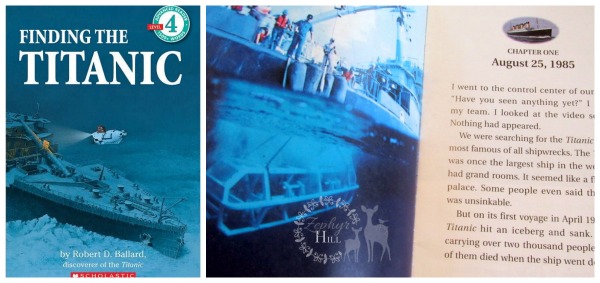
The iconic passenger liner Titanic, which now lies over 2 miles below the Atlantic Ocean, has given up some of her secrets since Dr. Robert Ballard first discovered her wreckage in 1985. But five mysteries still remain, and still befuddle Titanic aficionados.
#1 What happened to Captain Smith in his final moments? We know that he went down with the ship, in that chivalric maritime tradition, but what about his last minutes? Some say he tenderly held a boy and girl in his arms until the end. Others saw him on the bridge, later to be swept away as a wave of water washed over. A few claim that he jumped into the water and was invited into a lifeboat, but turned away and selflessly headed back to his ship.
Officially, the last mention of the Captain’s whereabouts came at 2:10 a.m., when Steward Edward Brown saw Smith with a megaphone in his hand. “Well boys,” he said sadly, “Do your best for the women and children, and look out for yourselves.” Captain Smith then walked out onto the bridge alone; barely 10 minutes later, Titanic plunged to the bottom of the ocean.
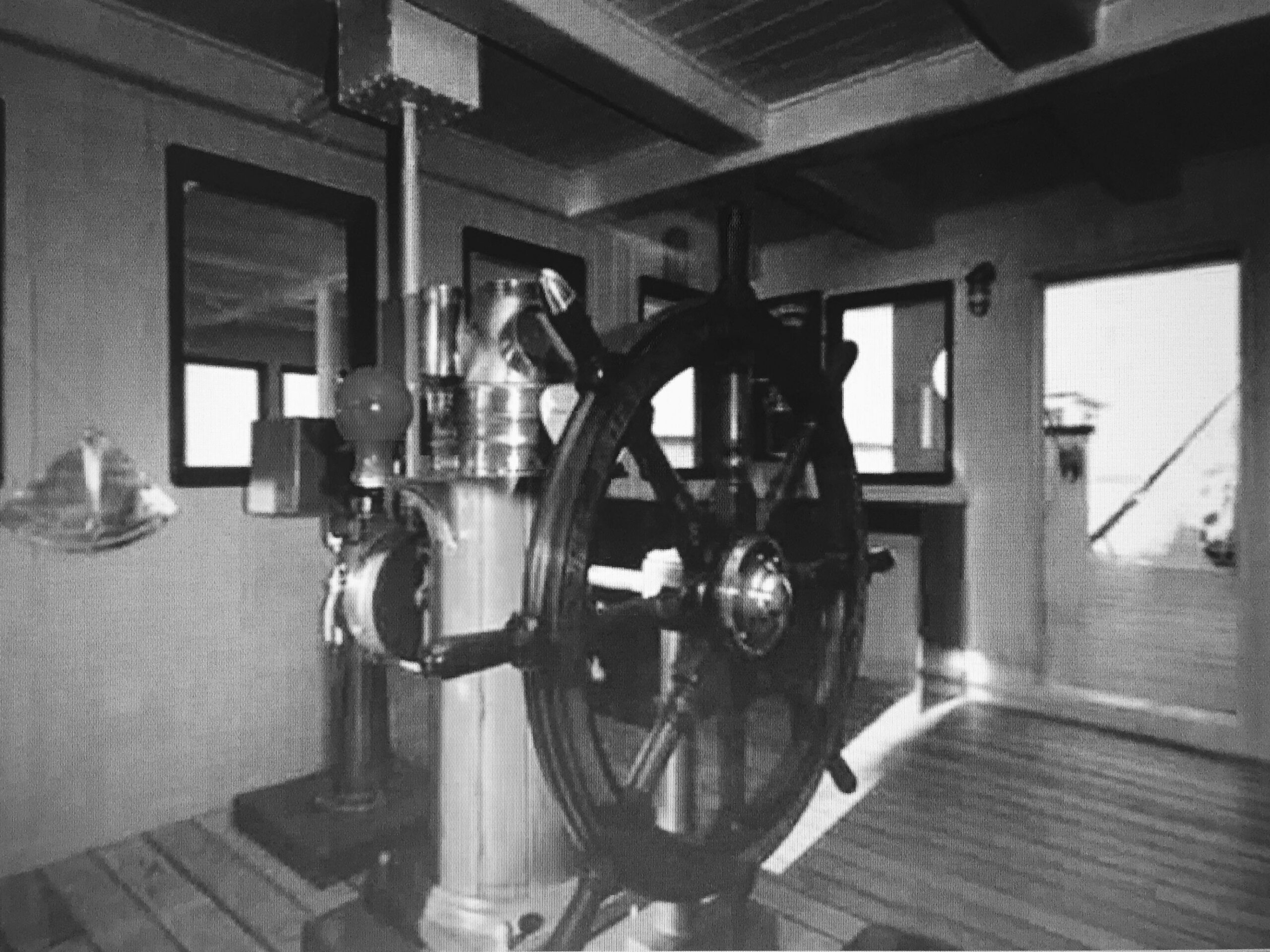
Titanic’s bridge or wheelhouse
Robert Williams Daniel, an American banker who survived by jumping off the stern and somehow making it into a lifeboat, testified: “I saw Captain Smith on the bridge. My eyes seemingly clung to him…The water had risen slowly, and was now to the floor of the bridge. Then it was to Captain Smith’s waist. I saw him no more. He died a hero.”
Since there are several conflicting claims from survivors, and no real way to disprove one or the other, Smith’s final moments will always be veiled in mystery.
#2 What about the Californian and Captain Lord’s response to Titanic’s signals? One particularly dicey outcome of the Titanic disaster was Captain Lord’s ordeal as master of the Californian, as he was roundly criticized for his apparent lack of response to the foundering Titanic. And what about all those distress rockets that Titanic’s officers kept firing? The crew of Californian clearly saw them, but had conflicting opinions about what they meant. Lord also failed to enter the incident in his log.
Lord’s sharpest detractors claim that he failed in his duty to at least attempt some type of rescue. His enemies and advocates (dubbed Lordites) have gone back and forth about it for years. Lord’s own son worked tirelessly for years through the court system, trying to clear his father’s name.
Lord was implicated by a British investigation which was published in 1992 by the Marine Accident Investigation Branch. It criticized the officers’ response to the signals and concluded that the rescue of some survivors could have been accomplished. In 2009, author David Allen Butler described Captain Lord as a negligent sociopath.
We will never be 100% certain about distances and visibility on that tragic night thanks to ambiguous and conflicting testimonies over the years, and the incorrect position reported by Titanic herself.
Providing what might be partial exoneration, the British government and historian, Tim Maltin, have explored the possibility that light refraction on the night of the sinking may not only have led to the deadly collision but also to Californian’s skewed view of the rockets. It may also explain why Captain Lord’s morse lamp signals were ignored by Titanic. Historical Paul Lee has also provided some meticulous research which attempts to explain Lord’s inaction, and also addresses some of the attacks on his character. Similarly, Senan Molony offered his own defense in 2006.
In my opinion, the jury is still officially out on this one, and no formal charges were ever brought against the captain. Additionally, even Lord’s detractors don’t all agree as to the extent of his “crimes” or his motives. Titanic scholars, researchers and afficianados still have not come to a unanimous verdict even to this day. And many of them question whether, thanks to logistics, Californian could have even saved many lives, if any at all, had she headed towards the Titanic that night.
More recently, in 1992 the British government concluded that Lord’s ship was out of visual sight of the Titanic; however, they were critical of the response to the rockets which were seen. It is a fact that Captain Lord received many testimonials of good conduct throughout his career and many honorable people were willing to risk their own reputations to help him find employment with a line line after the Titanic tragedy.
With SO many human errors occurring on board Titanic herself that directly contributed to the sinking, many of which could have been easily avoided and might have saved thousands of lives, the focus on Lord’s involvement is (in my opinion) vastly disproportionate.
What is your opinion of Lord’s involvement in the Titantic fiasco?
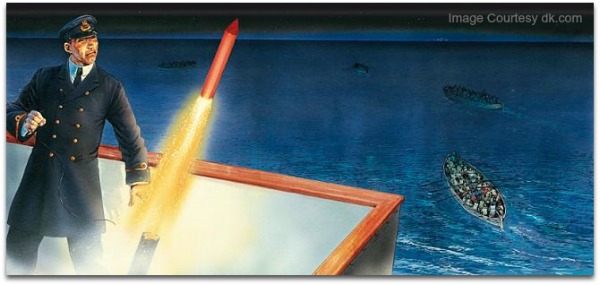
#3 Did First Officer Murdoch commit suicide? By all accounts, First Officer Murdoch, the man whose maneuvers failed to thwart the iceberg’s death blow, worked bravely and efficiently for some time to get the lifeboats loaded and lowered away. And then, an eyewitness suggests that, Murdoch turned a gun on himself. In his words “I was sent down to take charge of No. 14 boat, but before I went one of the officers had shot himself on the bridge.” Many other witnesses reported directly or indirectly, Murdoch’s suicide, and the fact that most of them were near the boat deck or within view, gives added weight.
“One officer shot a man who attempted to get into a crowded boat. Immediately afterward
the officer said:-“Well, goodbye,” and killed himself.”
(George Rheims, First Class Passenger)
It was intimated that either guilt or fear, or both, burdened Titanic’s First Officer and led to his suicide. After the sinking, several seaman charged that if Murdoch had kept a stricter lookout on the bridge (rather than reacting to a last-minute cry from the crow’s nest) he would have spotted the iceberg in plenty of time to allow for the ship to swing away. It is also generally agreed that had Murdoch rammed the berg head on, instead of turning and killing the engines, Titanic could have remained afloat long enough to get everyone off safely. Surely no one would have suffered deeply from the nightmare of “what if’s” than the ship’s First Officer.
At this point in time, no evidence has ever come to light Murdoch was not the officer seen committing suicide. His most notable defender, well-respected passenger Archibald Gracie, admitted that he didn’t even know Murdoch by sight. While we will never know for certain, there are enough testimonies to suggest that perhaps this seasoned seaman, who was on board his first ship at age 15, felt such crushing guilt over the tragedy he partially helped to in motion that he felt justified in ending his life.
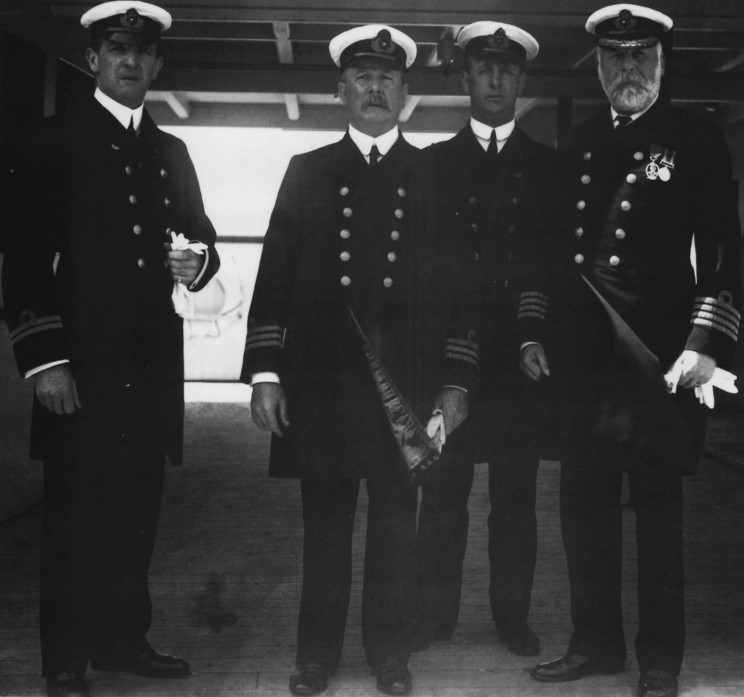
#4 What happened in the wireless room? We know there was a scuffle in the Marconi room as the ship foundered, but what exactly happened is simply not clear. This is largely because the only surviving witness kept changing his story!
Wireless operator and survivor Harold Bride stated that he came upon a gripping scene in the room when he went to check on his colleague, young Jack Phillips. Bravely tapping out the distress calls, Phillips had no idea that a stoker was sneaking up from behind, intending to take away his life belt, by force if necessary. Bride’s actual words were “I had to do it. I could not let that coward die a decent sailor’s death, so I shot him down and left him alone there in the wireless coop to go down with the hulk of the ship. He is there yet, the only one in the wireless room where Phillips, a real hero, worked madly to save the lives of two thousand…”
In a story dictated to a New York Times reporter in 1912, Bride’s story was slightly different and mentions no pistol. “I did my duty. I hope I finished him. I don’t know. We left him on the cabin floor of the wireless room and he was not moving.” Here, too, he references Phillips, suggesting it was a two-man job.
Nine days later, while giving his official report to Marconi officials, Bride shifted again stating that he returned “to find a Fireman or Coal Trimmer gently relieving Mr. Phillips of his lifebelt. There immediately followed a general scrimmage with the three of us.”
On May 23, 1912, at the British inquiry, Harold Bride’s tale received yet another coat of varnish:
EXAMINER LEWIS: You are supposed to have hit him?
HAROLD BRIDE: Well, I held him and Mr. Phillips hit him.
EXAMINER LEWIS: Mr. Phillips hit him?
HAROLD BRIDE: Yes.
EXAMINER LEWIS: That is the difference between what you say and what I read.
You are absolutely positive on this question?
HAROLD BRIDE: I am positive on it, yes.
It is fascinating to see the evolution of Bride’s story as it morphs from him gunning down a man, to him simply holding the man as Phillips finishes him off. And his friend Jack Phillips’ lips are sealed at the bottom of the sea.
#5 Did the officers actually shoot people while Titanic was sinking? Some Titanic survivors claim that officers shot and killed a few people that caused trouble during the lifeboat-loading phase. Others assert that order was kept without any passengers being shot.
“These men tried to rush the stairway, pushing and crowding and pulling the women down. Some of them with weapons in their hands. I saw two dagos [i.e. Italians, an ethnic slur] shot and some that took punishment from the officers.”
(Eugene Patrick Daly, 3rd Class Passenger from Ireland, sharing his story while on board the rescue ship Carpathia)
“While the last boat was leaving, I saw an officer with a revolver fire a shot and kill a man who was trying to climb into it.”
(George Rheims, 1st Class Passenger, from a letter to his wife in France dated April 19, 1912)
“I was on the boat almost to the last, and I didn’t see anyone shot.”
Henry Stengel
While it is an established fact that the captain and some of the officers possessed firearms, which may have been used to assert their authority during a crisis, no one has been able to verify anything for sure beyond that, although the evidence may lean towards shots being fired, because those who claim they saw nothing, while likely speaking the truth, simply did not have a full view of the entire ship during her sinking. Boats were being loaded on both port and starboard sides.
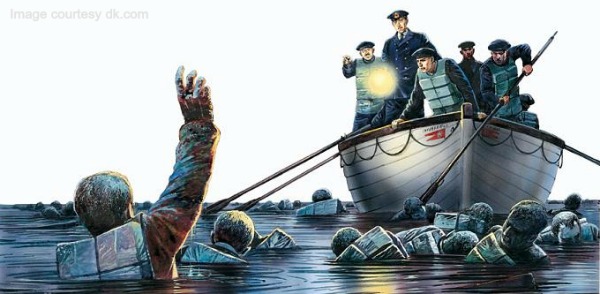
The Problem With Eyewitness Accounts
Eyewitness accounts are a tricky thing, especially after catastrophic events such as this. We tend to think “He was there, so he must know the truth!” but history shows us it isn’t that simple. Why?
- Stress can affect our memory.
- Emotion and personal opinion may cause us to embellish or insist upon things that we actually do not know for certain (example: if you were mad about Ismay – director of White Star Lines – getting off the ship alive while her Captain and architect perished, you might be inclined to believe that he shoved his way into one of the first boats).
- Location and visual conditions matter very much when it comes to what we are (and are not) able to observe. Many Titanic survivors testified to things that they could not possibly have seen or heard, given their location.
- We are affected by other people’s testimonies, as well as what we read in the news.
- When someone lacks distinctive characteristics, our testimony may be less reliable. How many of Titanic’s survivors who accused Ismay of cowardice even knew what he looked like, or could accurately spot him from a distance in the middle of a panicked scene?
- The press often asks leading questions that can steer a survivor one way or the other.
- We want to be helpful (to the authorities, to the newspapers, etc.), and may claim we know or saw more.
Psychologists have found that our memories are reconstructed rather than played back each time we recall them. It’s more like putting together a puzzle than it is like playing a DVD recording.
But still, survivor accounts, together with official records and other data, do still have a great deal of value.

Other sources, besides linked articles:
Eaton, John P. and Haas, Charles A. (1996). Titanic: Destination Disaster. W.W. Norton & Company.
Lynch, Donald, Marschall, Ken and Ballard, Robert D. (1995). Titanic: An Illustrated History. Hyperion.
Marshall, Logan. (2006). On Board the Titanic: The Complete Story with Eyewitness Accounts. Dover Publications
Mowbray, Jay Henry. (1998). Sinking of the Titanic: Eyewitness Accounts. Dover Publications.