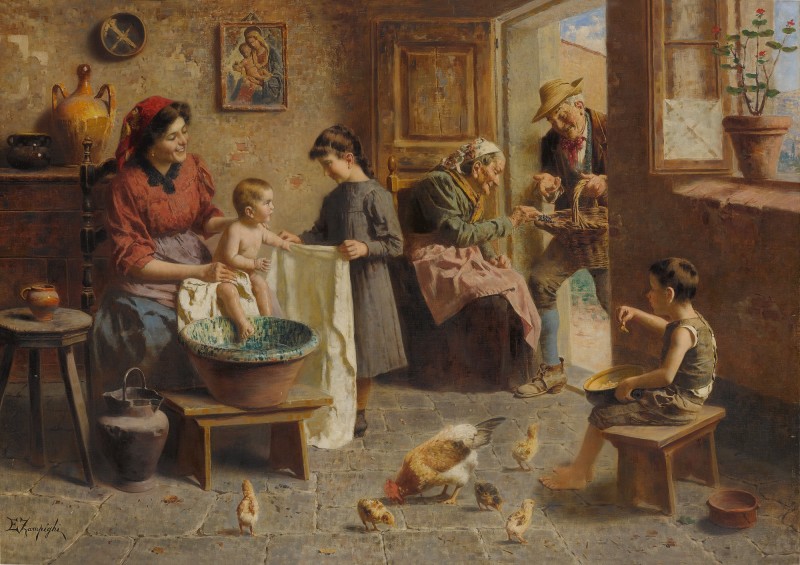
“Rags to riches” is a universally appealing theme in Western literature. How satisfying it is when the good guy is rewarded not only with a happy life, but a material windfall as well. The humble tailor must rise to a prince; the poor orphan girl will discover she’s an heiress. The starving shoemaker will become fabulously wealthy and never want for anything again.
After recently finishing The Inheritance (written by a 17-year-old Louisa May Alcott) and The Tenant of Wildfell Hall by Anne Bronte, it hit me that the whole rags-to-riches thing might have some small connection to that modern pariah we Christians call the Prosperity Gospel. It’s the “name it and claim it” crowd that gives Christianity a bad name, promising wealth and health and worldly success to those who follow Jesus faithfully. We may all scoff at this flagrant materialism among our brethren, but these ideas found fertile ground in American culture and it begs the question “why were we such an easy target for the likes of Joel Osteen?”
Where did Western society get this idea that the righteous should receive both spiritual and material blessings? That poverty is a curse and a hindrance, and that rising above our father’s station in life is a source of great pride.
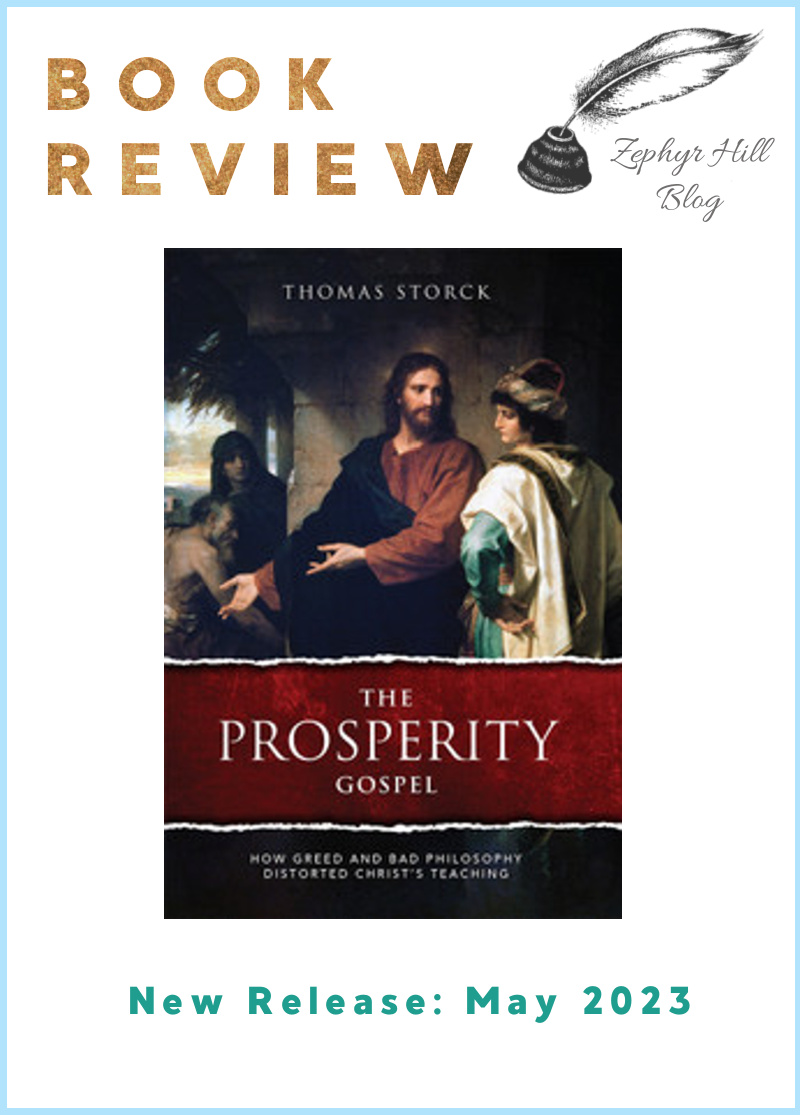
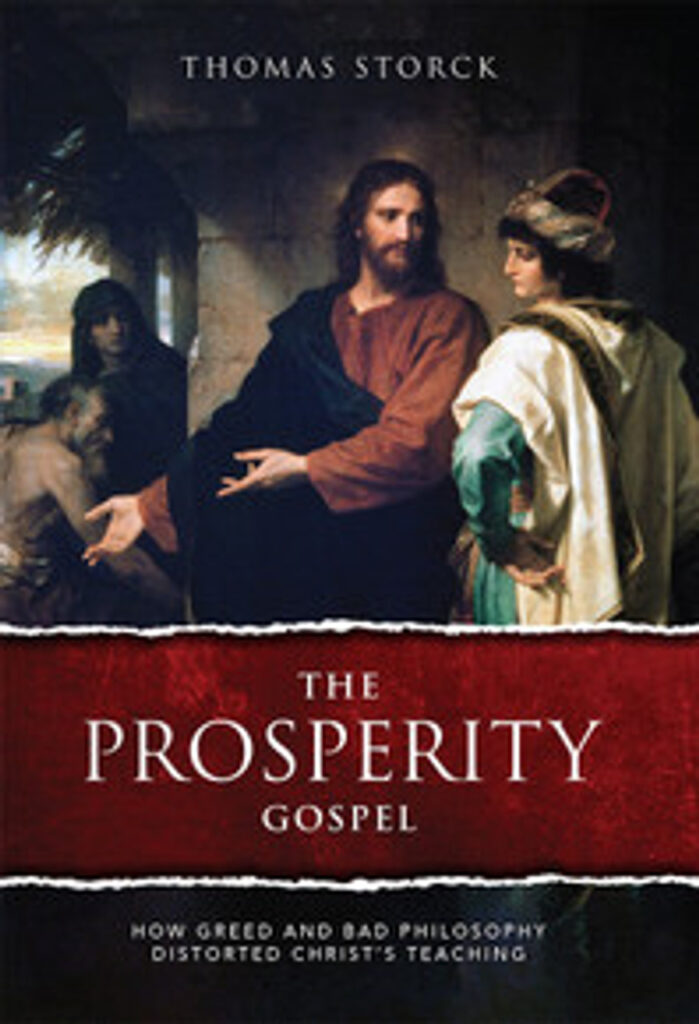
It was quite a coincidence that as I was pondering these questions, TAN Books contacted me about reviewing a new book by Thomas Storck called The Prosperity Gospel. The subtitle summed up perfectly the idea that I was eager to flesh out – and flush out, specifically that “Greed and Bad Philosophy Distorted Christ’s Teaching.”
Storck traces the origins of the prosperity gospel to the Protestant Reformation and the Enlightenment, which gave birth to concepts like:
- Religion as a private affair, which tends to divorce business and politics from the dogmatic realm,
- Admonitions against recreation, holy days/holidays, and pleasure, and
- Work and industry as one’s “calling,” as opposed to the traditional Christian idea of a “vocation” to religious, married or single life.
Thomas Storck often references The Protestant Ethic and the Spirit of Capitalism, written in 1904 by Max Weber, who viewed the capitalistic machine primarily as an outgrowth of Protestantism. Also featured are the observations of astute cultural historian Christopher Dawson. Adding the insights of Chesterton, Belloc and great popes like Leo XIII and John Paul II, Thomas Storck assembles a convincing case against what has become an obsession with wealth and worldly success in our culture.
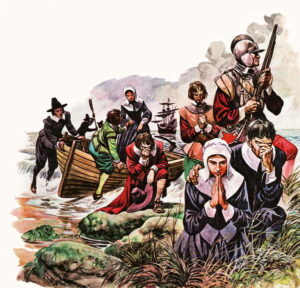
In our times, what beckons the desperate masses to America’s shores is the golden egg of economic prosperity; contrast this with 1620 when the pearl of great price for Catholic and Protestant newcomers was freedom of religion.
It didn’t take too long for the shift to occur, either. In the 1800’s Alexis de Tocqueville was already writing, “One usually finds that love of money is either the chief or a secondary motive at the bottom of everything the Americans do…” and “The American will describe as noble and estimable ambition that which our medieval ancestors would have called base cupidity.”
If there’s one thing the book left me hungry for, it was more concrete examples sourced directly from Reformers and Reformation-era thinkers (like Calvin or Luther), to underscore the claim that the Prosperity Gospel has its origins there. Most of the book’s quotations, although stellar and thought-provoking, are from later writers and apologists.
Now, the author is quick to admonish that the “disordered desire for riches is present in the heart of every person.” While we can debate about the roots of materialistic Christianity, the admonitions against the pursuit and hoarding of wealth in Scripture are universal. Thomas Storck’s book is much-needed clarion call to Christians of every culture and nation that our true treasure lies in Heaven.
Storck writes, “We may be significantly influenced by our cultures, but we are not altogether trapped within them.” Further, “We decide whether we will prefer material goods to spiritual or intellectual goods, a larger house and a newer car, or a more expensive vacation, to perhaps one more child,” because “If it is indeed God whom we have placed at the center of our hearts, then, perhaps gradually but eventually, all the multitudinous things of earth and earthly life will arrange themselves in a hierarchy according to the place that God intends for them.”
You can purchase a beautiful new hardback copy of The Prosperity Gospel directly from TAN or at Amazon. Speaking of Amazon, I’ve also got a $100 gift card giveaway for you to enter today. Use it to purchase Thomas Storck’s newest title (and a few more off your wish list), or anything else you might be in need of this Spring.
TWO Giveaways!
Enter the $100 giveaway by using the entry form below. It’s open to US and Canadian residents and you must be 18 years of age or older to enter. Giveaway ends on June 12th. Update: Winner is announced on the giveaway widget below!
Enter the Prosperity Gospel book giveaway from TAN by leaving a comment on this blog post. Alternately, you can retweet this status to enter the book giveaway. Open to US residents only. This book giveaway ends on June 14th. Update: Winner is Stephen!
Thanks for reading and God bless!

Disclaimer: Today’s giveaway is sponsored by fellow Catholic blogger, Elia at Conservamome. Confirmed giveaway winner will be contacted through email and have 48 hours to respond before a new winner will be drawn. No purchase is necessary. Void where prohibited by law. The sponsor will be responsible for product fulfillment to the winner of the giveaway.

















 And here’s a game that everyone in the family can dive right in and play: