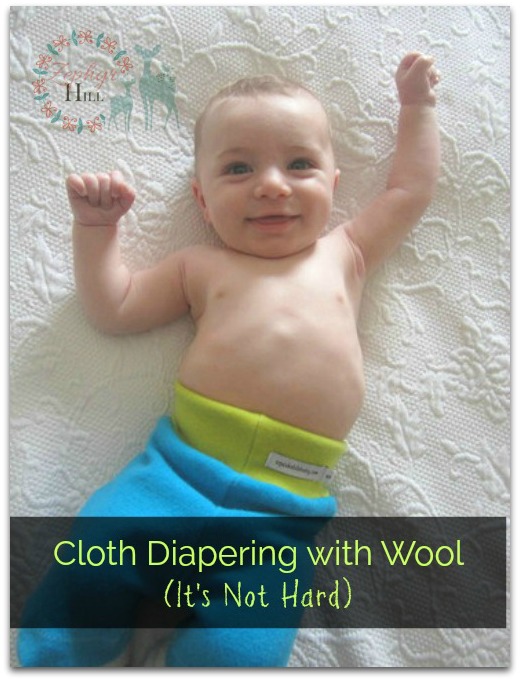
Do you hesitate to try wool because it requires special care?
Are you worried that wool is too difficult to learn to use?
Do you shy away from wool because of the higher price tag?
Today’s post is for you! Let me address those three main concerns here, to help put wool into perspective. Four years ago I would have answered YES to all three of those questions, so I know exactly where you’re coming from.
Does Wool Require Special Care?
Yes, it does. But so do bras and panty hose! Think of wool like you would your favorite bra. It’s not “hard” to take care of, it’s just different than a pair of socks.
What about the special laundry soap you’ll need? You don’t, actually. Wool wash is certainly one option, but you can also use soap nuts or soap nut bars, as well as gentle, natural baby wash like Aveeno or Earth Mama Angel Baby. You don’t have to go out and spend money on expensive wool care products.
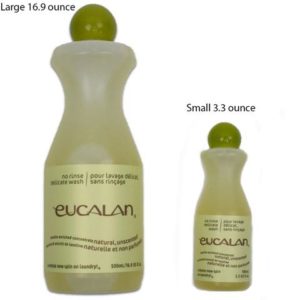
I highly recommend a tried and true favorite – Eucalan Wool Wash. It gently cleans and restores some lanolin with each wash. You can find Eucalan at Nicki’s (free shipping over $10!), Diaper Junction and Kelly’s Closet.
Need a little bit of pure lanolin? Free samples are available. I can mail you a few, so just send me a message.
Is Learning to Use Wool Difficult?
Not at all! The first time I washed a wool cover I was truly surprised at just how easy it was. You’re basically just hand washing, like you would a delicate piece of lingerie. You’ll need a sink, some wool friendly soap and a thick bath towel. I’ll share my quickie instructions courtesy of the CJ’s bottle, since that’s what I use and recommend. Plus, it saves you the hassle of lanolizing.
-
- Rinse your wool in cool water and then squirt a nickel-sized amount of wool wash into each item, focusing on the wet zone and any soiled areas.
- Fill the sink with warm water and swish your wool around a little bit. Use a light touch (no rubbing or agitating needed).
- Let it soak for 30 minutes.
- Lay the wool on the towel, roll the towel up and press gently to absorb excess water.
- Air dry (flat or on a rack works well). This part takes a day or more, so plan accordingly.
And remember, you’ll only go through this little routine about every 3 weeks or so. Nice!
Wool covers can be aired out between uses to cut down on the times you need to do actual washing. This also means you’ll need LESS wool covers as compared to PUL (poly) covers.
Note: If during the wash or soak you notice any of the colors bleeding, simply wash those in a different sink or container.
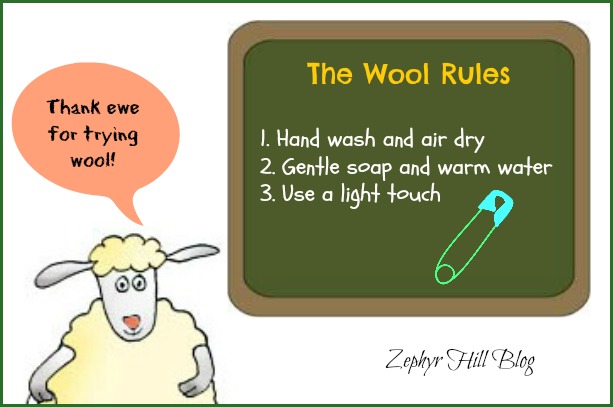
Here are the easy-to-remember Wool Rules:
What About Lanolizing?
If you opt not to use the CJ’s “all in one” wash I mentioned above, then you’ll need to lanolize occasionally as a separate step. You must add lanolin back in to keep your wool waterproof since the sheep has taken a permanent vacation! Wool needs to be lanolized if it sinks and saturates completely in water or if it stinks when peed on; this comes out to about once a month or once every few months, depending on much use that particular item is getting.
Luckily, the lanolizing routine is almost the same as the wool washing routine, so you’re already in the know. Put a pea-sized amount of Lansinoh and a squirt of baby wash or wool wash into a small container with a lid (bottle, jar, Tupperware) and add 1 cup of hot water. Shake vigorously until melted and mixed and then add to a sink full of warm water. Add wool and gently swirl. Let it soak for 10 minutes on one side and 10 minutes on the other. Roll up in a thirsty towel and press gently to soak up water. Air dry as usual.
If you are lanolizing a brand new wool item for the first time, I recommend using this solid lanolin method described above, even if you’re going to use CJ’s lanolin wash from then on. But you only need a pea-sized amount for the initial lanolizing, so if you can’t get a free sample of Lansinoh from your doctor, midwife or lactation consultant, check on Ebay. They are about 1 or 2 dollars, usually with free shipping.
NOTE: Lanolin is the magical ingredient that gives wool its waterproofing qualities, however it’s not 100%. The diaper you put underneath your wool cover is very important, and the less urine that leaks out of a diaper onto your wool cover, the less often you’ll have to wash the wool.
What diapers work well with wool?
Most mothers use fitteds underneath wool, but fastened prefolds and flats work nicely, too. I’ve even used a wool soakers or longies over an AIO diaper as added insurance, and for extra warmth on a cool day. If you want to use wool without fastening/snapping your prefolds and flats, try a wool wrap with snap or velcro closure; since it’s not the traditional “pull up style” it looks and functions just like a PUL cover.
Is wool a good choice for newborns?
Personally, I don’t use wool very much for a new baby. There is so much of the frequent, runny breastfed poo that I lose one of the main benefits of wool – not needing to wash frequently. Wool longies are great for keeping a newborn warm, though, and easily fit over things like a prefold and Thirsties cover.
Doesn’t Wool Cost Too Much?
Not necessarily. Granted, when compared to other covers, wool does fall in the higher price range. But the price is fair and reasonable based on value and performance. Can my $8 PUL cover be used for 2 weeks without laundering? No, but my $16 wool longies potentially can. Double the price, double the performance. And as mentioned above, you don’t need to buy as many wool covers. Most mothers who use wool full-time can get by with 2 for day and 2 for night. Compare that to the 6-8 PUL covers that is usually recommended.
Some name brands can cost $25 or more, but Nicki’s now has Merino Lite covers for $19.99 and Imagine pull-ons for $14.99 – not bad at all! You can also save lots of money on wool by purchasing used on swap sites like Cloth Diaper Trader and Diaper Swappers, or by choosing creations from work-at-home-moms.

How Do You Store Wool for a Long Time?
Waiting on another baby? Or maybe you’re just not sure if you want to sell or give away those cozy soakers and wraps. Wool is easy to store. Wash and dry thoroughly, but don’t lanolize. Use airtight storage containers for a short-term solution (i.e. 6 months or so). Cotton bags with cedar chips or lavender sachets inside make a better long-term (12 months or more) storage solution, because they will allow the fibers to breathe. You can wrap each wool item in a piece of newspaper (moths don’t like it). Always keep storage containers and bags off the floor where dust, hair and dirt tend to collect, and avoid stowing them away in hot attics or damp basements.
Are there other wool perks to consider?
As they say here in the Midwest, you betcha!
When Erik is wearing a PUL diaper cover, that’s all it is. A diaper cover. When he’s wearing a wool soaker or pants, he’s wearing both a cover and an article of clothing. It’s a two-fer! This is really nice perk on cool or cold days, or overnight. With his longies on there’s no need for a cover+pants. The wool serves both purposes. And unlike cotton or fleece pants, if there’s a little bit of wicking overnight, I don’t have to wash it immediately. It can be refreshed and used again…..and again.
Of all the fabrics in my stash, wool definitely scores the lowest on the stink-o-meter, if there is such a thing. And it’s not technically the wool that’s responsible. It’s the lanolin in the wool which has antifungal and antimicrobial properties. A properly lanolized cover will naturally inhibit the smell of urine microbes on and in the fibers. You can boost this property by rotating and airing out your covers. (By the same token, persistent odor is your clue that it’s time to wash and lanolize the wool again.)
Additionally, wool makes an ideal nighttime cover because it can absorb moisture and still remain dry to the touch. And along with being absorbent, it’s highly breathable and allows air to circulate around the skin (compare this to PUL which traps heat and moisture). These two properties make it super comfortable for your baby, and a great choice for little ones with skin sensitivities or who are rash-prone.
Have you ever heard critics say that cloth diapers aren’t eco-friendly because of the water needed to wash them? Wool need not apply. Hand washing in the sink with a small amount of water and a squirt of natural soap is one of the most sustainable laundry routines I can think of!

In Summary
Moms who are just starting out with cloth tend to go for cheap and easy, so wool is naturally not the first choice. I get that. But there comes a time in your cloth diapering journey that you get curious about what’s out there. You hear mamas talking about this or that and you wonder if it might benefit your baby or help troubleshoot an issue with your current system. That’s what happened to me. I love and appreciate my easy waterproof covers and flats routine, but wool now makes up a valued part of my stash as well. It does things that my other diapers just don’t do, and that’s pretty neat!
Where are you right now when it comes to wool? Expert, newbie, a little curious….or still not interested?