Zephyr Hill

A Family Blog

Header Menu

  • Home
  • Contact Me
  • Terms / Privacy
  • Homeschooling
  • Faith and Family
  • Book Reviews
  • Cloth Diapers
  • Pets

Bambino Mio Diaper Cover + Flats Review & Giveaway

May 15, 2017 by Anne Marie 34 Comments

This post contains affiliate links.

Bambino Mio is a household name in the UK, but the brand is also gaining popularity in the US and Canada. When I found out that you can buy them at Kelly’s Closet, Nicki’s Diapers, Walmart.com and Amazon, we picked up some Bambino Mio products to try on Mary Kate and Ingrid.

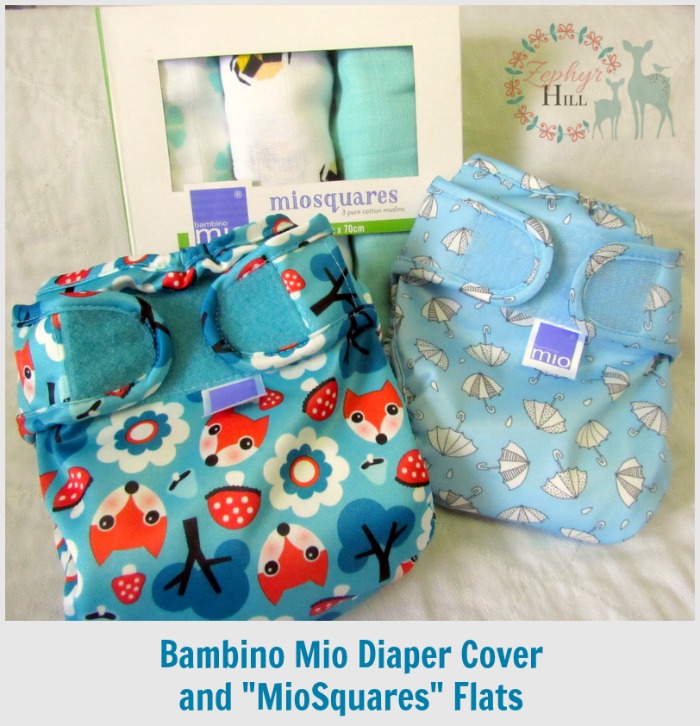
Muslin MioSquares by Bambino Mio are made of 100% cotton and come in packs of three for about $11. Although not marketed as diapers, my first thought when I spotted them was to use them as flats. Bambino Mio does sell standard cotton prefolds as well.

MioSoft diaper covers are available in size 1 and 2, with velcro closure. There are no rise snaps at all on the front.

Size 1 fits 19 pounds (9 kg) or less
Size 2 fits 19 pounds or more

Bambino Mio covers have front and back elastics, fold-back laundry tabs and a wide flap at the inside front. This a cover you can use again if not soiled (just use a baby wipe to freshen up the inside). The PUL material is very soft and has a little bit of a sheen to it. There are double gussets at the leg openings.

Bambino Mio actually makes two different kinds of MioSquares; these are the larger 27 inch versions that come in packs of three. Each one is a different print (the assortment I purchased is called Bumble). 100% cotton muslin is soft, lightweight, cool and breathable. MioSquares have a more open weave than our bamboo flat diapers. Besides working great as flats, they also function as burp cloths, blankets, nursing covers, etc.

They are smooth before washing:

And then get “quilty” and soft after prepping. The edges are hemmed and stitched.

Laid flat, they shrink from 27 inches square to 24 inches square. Padfolded, they are about 12 inches long and 4.5 inches wide, and fill the size 1 cover perfectly.

The absorbency of these flats is pretty good – better than a flour sack towel but not as thirsty as a bamboo flat. I can double them up in the size 2 cover with no problem. Having a whole stash of these might not be practical, but 3 pretty flats for $11 is something you might be able to splurge on. They also make an ideal shower gift because they are beautiful and have so many uses.

MioSoft covers have very strong velcro and stretchy wings, making it very easy to get a good fit – and fast. The laundry tabs are strong and have always stayed fastened in the wash for us. They are roomy enough to work with most any diaper, plus inserts, including prefolds and fitteds. I like to use the Size 2 MioSoft cover with 2 of the muslin MioSquares padfolded inside for my toddler Ingrid’s nap.

Thanks to the double gussets around the legs and the stretchy hook and loop wings, I get a nice, snug fit fit on 3-month-old Mary Kate with the Size 1 cover. Because she’s small, the rise is high, which may or may not bother you aesthetically (many mothers like a more low-rise look). There’s plenty of room for her to grow in this cover, both in the rise and the waist. NOTE: It was too big to fit her at birth; she was 9 pounds.

The Size 2 cover fits Ingrid, my 2-year-old toddler, very nicely right now. She’s small for her age.

The hook and loop is very strong and stays fastened in the wash.

The only issue I’ve had with the covers is that the front of the waistband, where the elastic is, sometimes will curl inward after the diaper has been on for a while. When that happens, the velcro rubs up against the girls’ tummies.

The other potential problem is with sizing, since there are no rise snaps. The size 1 cover is way too big for a newborn and Ingrid only just now fits into it at 3 months. And even so, the rise is still pretty high.

Speaking of flats, did you know that the 7th annual Flats and Handwashing Challenge just started? Sign-up here, if you haven’t already. Share your thoughts, experiences and encouragement on social media using the #flatschallenge hashtag. My hats off to Kim Rosas for creating this important event, and for Jenny who is now carrying the torch forward. For 6 years, the flats challenge has helped families to see that switching to cloth diapers is well within reach, even in difficult situations.

Where to Buy: Bambino Mio covers start at $9.16 each and can be purchased directly from their website, at Kelly’s Closet or from Walmart.com with free shipping over $35. When they aren’t in stock at Walmart, you can also check Amazon.
Giveaway:  I am giving away a 3-pack of muslin MioSquares, just like the one reviewed, plus a MioSoft diaper cover of your choice (size and color, from available stock at Walmart). This giveaway is open to US and Canadian residents. Good luck!

Filed Under: Cloth Diaper Reviews, Giveaways Tagged With: bambino mio review, cloth diapers, flat diapers, flats challenge, miosoft, miosquares

3 Things I Learned After Hand-Washing Cloth Diapers

May 22, 2016 by Anne Marie 1 Comment

flatschallenge7

The Flats and Handwashing Challenge ends tonight and the big question is – what did I learn?

Basically, these three things:

  • How to hand wash diapers – Or anything else, for that matter. It’s a good skill to have and it just goes to show that cleaning doesn’t require a degree in rocket science. It takes time, common sense and a little bit of trial and error. Our wash routine took about 45 minutes total plus 5+ hours for drying on the line. I have to admit it would be difficult to do this 45 minute chore every other day, with everything else I have going right now in my life (seven children, housework, homeschooling, the blog, etc.), but I know that it CAN be done. It’s just a matter of setting aside time.
  • What it’s like to use flats exclusively – It took some getting used to, not reaching for my bamboo prefolds or fitteds at night, or grabbing a pre-stuffed pocket diaper for a quick change. All-in-One diapers with velcro closure are my oldest daughter’s top choice when she’s helping me out, so it was an adjustment for her, too. It’s not that we don’t use flats; we have – for years. But only as part of a bigger rotation. It’s easy to get spoiled with all the different styles of diapers out there. I had to learn to think differently in various situations because we had to make the flats work ALL the time, whether that was naps, car trips or night time. Not all all flats are created equal when it comes to absorbency, so we had to make adjustments there, too.
  • How cloth diapering is different when you’re on a tight budget – Your style choices are much more limited, and you have to cut corners and make sacrifices. When we first started diapering 7 years ago I would have loved to have some AIO diapers for convenience but simply could not afford them. Being on a limited budget means you might have to scrounge around and make your own doublers, accept whatever prints/colors are available in the covers you can afford, and maybe even forego conveniences like pail liners and wet bags, diaper sprayers, and flushable liners.

If you did the challenge, let me know what you learned. Or maybe you’re thinking ahead to next year and your first try?

annesignature


Filed Under: Cloth Diapers Tagged With: budget cloth diapers, flat diapers, flats and handwashing challenge, flats challenge, hand washing diapers

Flour Sack Towels vs Flat Diapers

May 20, 2016 by Anne Marie 19 Comments

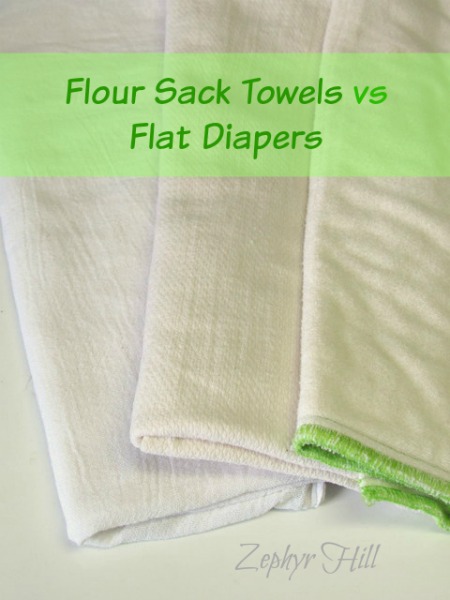
fst2

Since we’re using only flat diapers this week, I thought a post which compared the absorbency of “flour sack towels” (or FST, as they are often abbreviated) against other flat diapers would be helpful.

First of all, here’s a simple absorbency scale I made based on our experiences over the years of using many types of flat diapers. Do you agree with the rankings?

flatdiapers

Flour sack towels aren’t really diapers, of course. But they are a simple and cheap way to get started with cloth because you can find they at nearly any big box store and they cost a dollar or less apiece. How absorbent are they, though? Compared to other flats, I would say that FST score pretty low, unless they are doubled up. Ingrid can barely go 1 hour before she saturates 1 flour sack towel. Two FTS’s together will work for maybe 4-5 hours max; overnight it’s too bulky/clumsy to use 3. Everyone I’ve talked to who actually uses FST’s overnight has to add some sort of double or insert to the towels.

I’ve found that 2 FST’s folded together equal the absorbency of ONE of our bamboo flats, so I prefer to just use the bamboo flat. Why not use one diaper instead of two? It’s trimmer, not that much more expensive, and one less diaper to launder. 😀

I also like that when you buy actual flat diapers from a shop, you get service and a warranty to back up your purchase.

In terms of softness, bamboo flats have an edge over FST’s and plain cotton flats.

You might be wondering, if other flat diapers are softer and more absorbent, why would someone choose to use flour sack towels? I think there are many answers to this question. Some thrifty mothers take a lot of pride in being able to say they didn’t spend more than a dollar for their baby’s diapers. If using something they already have, or were given, then it means you’re diapering for nearly free (because of needing covers).

And some people just prefer the fabric with its thin, semi-sheer look and feel. You could argue that since it’s so lightweight, it’s even easier to clean and dry than regular flats.

There’s also a little bit of old-fashioned romance when it comes to flour sack towels. After all, they were the invention of creative housewives in the early 1900’s who discovered that empty cotton flour bags could be cut up and turned into household items like clothing, linens and yes, diapers.

However, keep in mind that modern “flour sack towels” aren’t much like the originals (this has been confirmed for me by several women who actually made and used real flour sacks). Real FTS’s were made of sturdy, tightly woven cotton because it had to keep the flour (or grain) inside fresh and protected from vermin. The flour sack towels you pick up at Wal-Mart and Target are much thinner, and semi-transparent. These photos compare a modern FST with 100% cotton birdseye fabric:

fst3

Here are how the prices of flat diapers stack up:

    • Flour sack towels are $1 or less each
    • Cotton flats are $2 each
    • Bamboo/cotton flats are $3 and up each
    • Luxury bamboo terry flats are $8 and up each
    • Hemp flats are $9 and up each

I understand that for someone on an extremely limited budget, or who already has towels or receiving blankets in the house, purchasing “real” flats may not be the best option. Or, for reasons mentioned above, you may just love FST’s despite the drawbacks.

Flour sack towels can also work as doublers, since they are thinner than other flats when folded up, or for tiny newborns who don’t need a lot of absorbency. You can also stuff them inside pocket diapers, but again, I want to stress that they just aren’t as thirsty compared to other options.

For overnight use, I’ve had great results with 2 bamboo/cotton flats folded together. This holds Ingrid (who’s 22 months) all night long.

There are a lot of different flat diaper folds; I was able to keep it simple this week and pad fold Ingrid’s diapers because she’s very “regular” at 22 months.

What about diaper fasteners? Experiences may vary, but for us a Snappi or Boingo works best on cotton flats and bamboo flats. They will grip our FST’s, flannel blankets and hemp fabrics, but just not quite as well.

Do you use flour sack towels as diapers? How do you have to use two at a time or double them up for enough absorbency?


Filed Under: Cloth Diapers Tagged With: flat diapers, flat diapers overnight, flats challenge, flour sack towels diapers, flour sack towels pros cons, flour sack towels vs flats, fst

How to Hand Wash Your Cloth Diapers: Photo Tutorial

May 19, 2016 by Anne Marie 14 Comments

flatwash2

I had this idea that washing diapers by hand was really hard or complicated. I’m discovering that neither is true. We mothers know how to get things clean, and that’s all you’ve got to do when hand washing diapers. It’s a simple matter of rinsing, washing and wringing them out when done. You do have to set aside a lot more time, though.

Here’s the routine I’ve used this week, which closely follows the guidelines at the Cloth Diaper Geek blog. Yes, I used the bucket-and-plunger method, BUT I decided to set the bucket inside my tub as I worked for several reasons:

  • It creates a barrier between the mess and my children, who were of course very curious and crowding in to watch
  • It contains mess and splashing
  • It gives you easy access to running water at different temperatures
  • It gives you access to a sanitary draining system. I didn’t want to dump dirty diaper water in my back yard.

Supplies:

  • 5 Gallon Bucket
  • Detergent and Water Softener
  • Plunger

flatwash3

Step 1: 

Fill the bucket with cold water to several inches above the diapers. Make sure diapers aren’t swimming in the bucket; they should be close but not packed tightly. If you have too few, add in an old towel. Plunge the diapers about 50 times, steadily and rhythmically. The strong suction may grab a diaper every once in a while; just free it from the plunger and keep going. If you have #2 diapers in there, you’ll see the water turning brown (phew!), but remember, this is just the rinse cycle.

You don’t have to strain your back by leaning over the bucket as you work. I sat on a stool right next to the tub and it was very comfortable.

flatwash4Step 2:

Dump out the rinse water. Pour in detergent (according to load size) and water softener (optional). Fill the bucket again, this time with hot water. Plunge the diapers another 50 times.

Ensure good agitation by changing the position of your plunger, all around the bucket.

flatwash5

Step 3:

Let the diapers soak in soapy water for 15 minutes. This step is optional, especially if you rinse your diapers as soon as they come off your baby, or if you only have pee diapers. But I like to do the soak. 🙂

flatwash6

Step 4:

If you did the soak, plunge about 20 more times. Empty out the water. Now the diapers should be clean and fresh-smelling.

At this point, I dumped the diapers in the tub, so I could more easily rinse and wring each one. You can do your final rinse in the bucket (with plunging) but I like using my hands to rinse the diapers so I can more thoroughly rinse out all the detergent.

flatwash7

Step 5: 

Rinse the diapers either by plunging in cold water in the bucket 50 times or by hand under running water (my preference, because when they aren’t soapy and slippery anymore, I can really feel it).

I’ve also discovered that rinsing under running water does a more thorough job of getting all the suds out, and there’s no need to repeat like you might have to with a bucket and plunger.

flatwash8

Step 6:

Wring out each diaper and hang on the line to dry and treat for any stains.

My flat diapers felt a little bit stiff coming off the line, and that’s normal. Shaking them out and folding helps to soften them a bit. Interestingly, the only cloth wipes that came off the line feeling soft were my GroVia’s (another reason I love those things).

flatwash9

Final Thoughts:

  • I timed the whole operation. It took about 40 minutes for all the washing and rinsing and 5 minutes to hang everything on the line.
  • Dry time was about 6 hours outside on the line. It was sunny with only a very light breeze. Typically, it’s much windier here in Kansas and dry time would be more like 3 or 4 hours.
  • If you do not have access to hot water, allow more time for agitation and/or rinsing.
  • If you do not have an outside clothesline, spend extra time on the wringing process to get as much water out as possible before hang-drying inside. A commercial bucket with a wringer works great for this.
  • You don’t have to use a plunger. Gloved hands work just fine; scrub the diapers up against each or a washboard, like great-grandma did.
  • Hand washing takes more time, but it saves electricity.
  • Stains are harder to get rid of with hand washing, but the sun will help a little with that. You might also consider pre-soaking your diapers in an OxiClean solution before hand washing them.

Nearly all of us have had to hand wash something at some point. What are your experiences with this? Oh, and let me know if you have any questions about my tutorial!

annesignature

Filed Under: Cloth Diapers Tagged With: flats challenge, hand wash diapers, hand washing, how to hand wash diapers, line drying

Kitchen Towels and Kawaii: Flat Diaper Challenge

May 17, 2016 by Anne Marie 30 Comments

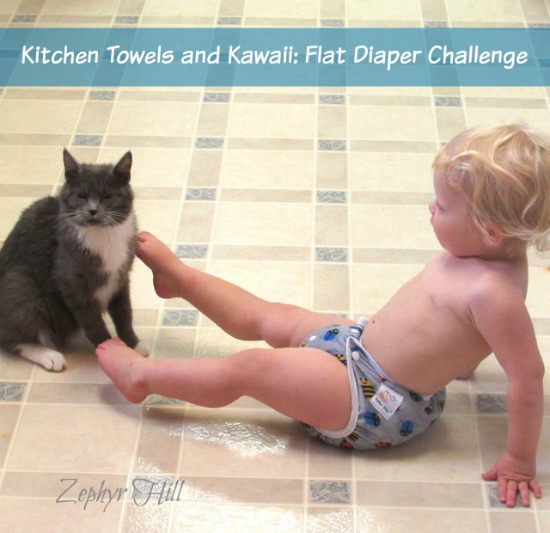
flatschallenge3

If you saw yesterday’s blog post, then you’ll know I’m taking the Flats and Handwashing Challenge this year. We’re diapering Ingrid in flats-only this week and laundering/drying them by hand.

Today I want to show you the stash I put together. My goal was to use the most affordable options I could find, without having to make or sew anything, or buy costly accessories. In this way, I felt that I could more strongly make a case for cloth diapering even if you have a tight budget.

Here are the supplies I chose for the Flats and Handwashing Challenge:

  • Six waterproof diaper covers – a mix of Kawaii covers from Nicki’s ($7.95 each), Diaper Safari and Imagine/Nicki’s brand covers ($9.95 each). No, Kawaii is not a favorite, but they fit decently and get the job done. They’ve also added a few new prints (like the insect one below).
  • Fourteen flat diapers – a mix of 10 flour sack towels ($5 for a 5-pack at Walmart) and 4 bamboo flat diapers (you can buy them individually at Nicki’s for $3.85 each). I sprung for bamboo to hopefully ensure nighttime success. We’ll see….
  • Eighteen assorted cloth wipes (cut up flannel receiving blankets, old wash clothes, etc.)
  • Plastic trash can ($4)
  • 5-gallon bucket ($3 at Lowe’s)
  • Plunger (already have)
  • Detergent (already have) and Calgon water softener ($5.61 from Walmart.com)

TOTAL:$98.30 to diaper a 22-month-old, and washing every other day

I’m really glad to have kept my “test stash” under $100, as I think this helps make investing cloth less formidable. The truth is, you can start for even less than this, as little as $50, if you were committed to washing every day and bought the diaper covers used.

flatschallenge2

Initial thoughts on our experience so far:

  • The regular “flour sack” kitchen towels don’t work for overnight, even when doubled, which I anticipated. Tonight I will try the bamboo/cotton flats instead.
  • I’m planning to launder every two days, so Wednesday (tomorrow) will be washing day.
  • To make sure everything is going to be easier to wash, I’m making sure that I “shake out” the saturated flats when I remove them (padfolded) from the cover. Otherwise, all those layers aren’t going to get very clean.
  • Mild surprise that Ingrid hasn’t had any rash or redness from the saturated cotton fibers after naps and nighttime. I’m not using any type of liner.

If you’re taking the challenge, or have any questions at this stage, let me know!

annesignature


Filed Under: Cloth Diapers Tagged With: bamboo flat diapers, best flat diapers, flats challenge, kawaii covers

SOCIAL MEDIA

Newly Published

  • The Coop Upgrade Nobody Talks About Until It’s Too Late
  • Ignore the Radio Ads About Life Insurance, But Please Read This Post
  • Do Catholic Parents Have to Choose a Saint Name for Their Baby?
  • The BEST and Most Comprehensive Baby Name Books for Parents
  • Educational Games to Enjoy With Your Children

Popular Posts

  • Stashify Bamboo Flat Diapers Review and Giveaway
  • Link City: a Cooperative Family Game
  • Super Undies Nighttime Trainers Pants Review & Giveaway
  • 5 Ways to Give Your New Pet a Healthy Start
  • 5 Things That Make Teaching SO Much Easier for Me!

Copyright © 2026 · Zephyr Hill Blog · Design by Albemarle PR

Copyright © 2026 · Albemarle PR - Hannah Template on Genesis Framework · WordPress · Log in