Have you ever heard someone say that cloth diapers really aren’t as “green” as people claim? After all, what about all the pesticides used to grow cotton? Or the water and energy it takes to get them clean?
I did a little bit of research to see if the environmental benefits of cloth outpace disposables.
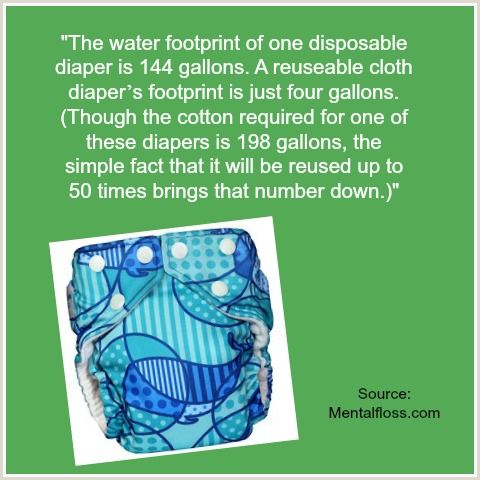
#1 Disposable diapers require more resources and energy to manufacture than cloth diapers. This is true even when you factor in the water and energy needed to grow natural fibers and produce synthetics. Disposable diapers use 20 times more raw materials, two times more water and three times more energy to make than cloth diapers.
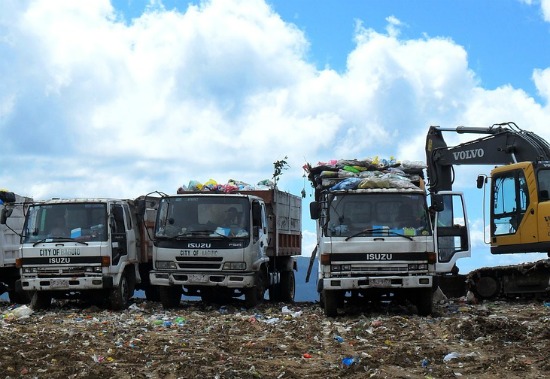
#2 Be careful when reading “studies” and what they claim to prove. Much of the research I looked at was flawed, or at the very least, suspect because: (1) They were commissioned by the plastics or paper industries, or sometimes by the disposable diaper industries themselves. Conflict of interest, perhaps? (2) They rely on outdated or inaccurate facts like “it takes 50 gallons of water to wash a load of diapers” (have they never heard of HE machines?) or that all cloth diaperers are using cotton or that every diaper change requires a toilet flush. (3) They completely leave out important factors like the water and energy used to manufacture disposable baby wipes or the environmental impact of disposing of them, the fact that water is a somewhat “renewable” resource, and the considerable cost in energy, time, manpower and fuel that it takes to haul disposables away in garbage trucks and then dump them at landfills.
#3 Water and energy usage is lower than you might think for cloth diapering families. Based on average figures, it costs about $0.39 per load to wash on hot and rinse on cold in the typical top loading machine, using a gas water heater. Using an electric water heater raises the average to about $0.50 per load. Drying averages about $0.35 cents per load. So for a family using a traditional top loader, washing and drying diapers 2 times a week costs about $1.48. This number will be LESS if you use a high-efficiency machine and a clothesline. You must also factor in things like periodic toilet flushes or diaper sprayer use throughout the week to wash away solid waste. So all things considered, the average family washing twice a week might see an increase of only $5.92 on their water/energy bill at the end of each month. If you wash more than twice a week it might be $9.00 or more. If you are seeing greater increases than this on your energy and water bills, it would pay to give your cloth diapering routine a closer look.
Try some of these tips to keep your costs down and offset your increased water/energy usage:
- Use a low flush toilet
- Opt for a gas heater over electric
- Try washing two big loads a week instead of three or more smaller ones.
- Use a high-efficiency washer (they spin more water out of your clothes which speeds up drying time, use up to 40% less water, less energy and less detergent)
- Always do cold rinses, and when possible, wash your other household laundry on cold (Tide makes a special formula just for cold washes). Save warm/hot settings for your diapers’ main wash.
- If your water is very hard (Diaper Junction sells a Water Hardness Test Strip for just 99 cents) consider adding Calgon Water Softener to your main wash so the detergent works more efficiently.
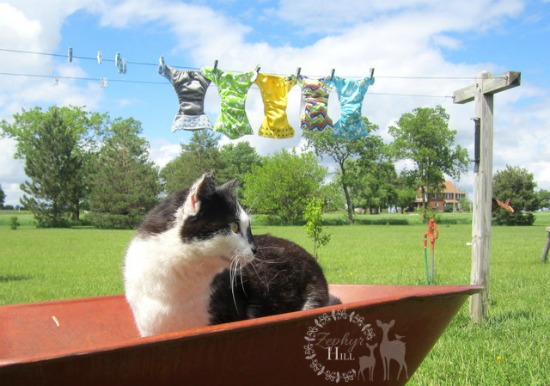
- Use a clothesline in good weather, or a drying rack inside your home or apartment.
- If possible, re-route your washing machine hoses so that rinse water drains outside to be collected and used for other purposes.
- Try to use less water in your household to offset the water you are using to wash diapers. Examples: Take one less shower or bath each week OR shorten each shower by 2 minutes. Don’t run the water while brushing your teeth or scrubbing dishes. Compost fruit and vegetable waste instead of running your garbage disposal. Wash fruits and veggies in a bowl with water and vinegar instead of under running water. Use a broom instead of a hose to clean your walkways and driveways. Invest in a rain barrel to collect extra water for all sorts of outside uses.
- Invest in diapers that are the easiest to clean and dry (like flat diapers and covers)
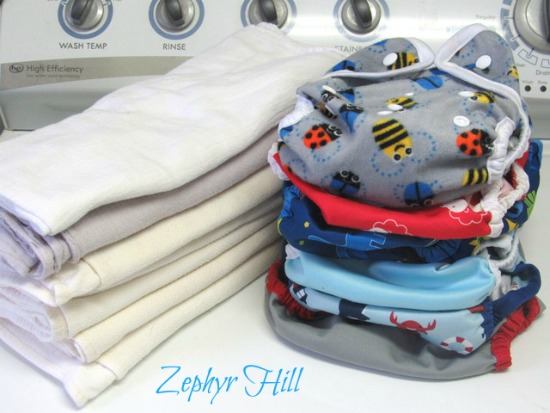
Now let me close by saying – I’m not anti-disposable diapers! My point in writing is not to make anyone feel guilty for using disposable products. We use them on occasion and appreciate the convenience they offer. In fact, that’s what makes disposable diapers so attractive – the convenience factor. We all appreciate paper napkins and paper plates on a picnic or paper towels for cleaning dog throw-up. My motivation for writing today is simply to clear up misconceptions and misinformation.
We are all called to be good steward’s of the Earth that God created. Cloth diapers are just one way to do this!