We are no stranger to little houses. As newlyweds, my husband and I rented a place with just 4 rooms. Last year, we managed to cram 8 people into a 1400 square foot farmhouse. Our dining table was so small we couldn’t eat together as a family. We even had to saw our box springs in half to fit it up the narrow little staircase. And I definitely don’t have fond memories of all six children visiting me in our sole bathroom, which was about the size of an outhouse.
What do you do when it seems like there are more people in your home than places to put them? And what about the additional furniture? Another baby means more clothing, more shoes and coats, another dresser and more toys, games and books. Here are some of my tips for maximizing space in your home or apartment, when there isn’t much of it:
1. Use the walls and ceilings. I used this tip probably to the point of overkill. I hung up shelves, racks, hooks and even organizers up on the wall whenever I could convince my husband to get out his trusty drill and wall anchors. Instead of floor lamps, opt for hanging fixtures. Hang up hampers or laundry bags on your doors (or the insides of closets) instead of having baskets on the floor. We even hung the cloth diapers up on the wall because there was no room for a changing table in our bedroom. This is actually a canvas shoe organizer turned on its side and mounted with heavy screws. The compartments are perfect for diapers, baby changing essentials and even clothes and shoes:

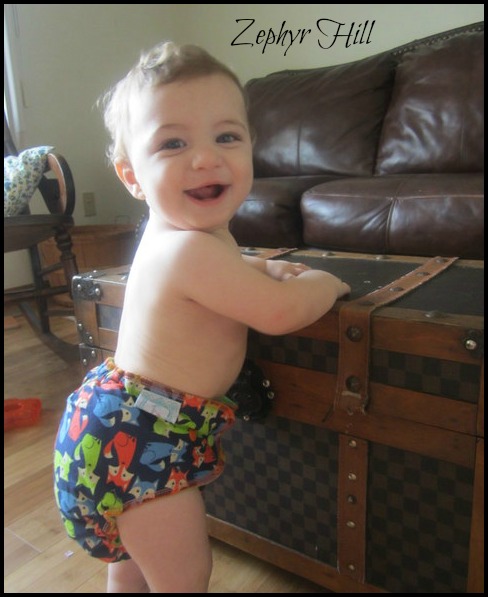
2. Make your furniture multi-task. Try to find things that serve more than one purpose. Our coffee table in the living room is a little chest that also holds books (below), since bookcases take up floor space. You can buy nursery pieces that go from crib, to toddler bed to day bed, and changing tables that double as dressers. If you buy a desk, get one that has lots of drawers. If you’re shopping for a twin bed, try to find one that will accommodate a trundle or mattress underneath for another child to use. Set your TV on a dresser with storage drawers instead of a simple table or stand.
3. Be ruthless on a regular basis! In our tiny house, I was constantly re-assessing space when circumstances changed (baby is born, toddler graduates to a bed, etc.) to see if we could eliminate or streamline the furniture. If you can get rid of two beds and switch to bunk beds, do it. If your toddler will sleep on a small mattress, sell the big crib. The same goes for clothing. Most children wear their favorites over and over again. Get by with 5 shirts each instead of 10; you’ll do half the laundry and need less storage space. I’m pretty merciless when it comes to toys; if my radar spies a toy that hasn’t been touched for 6 months or more, off to Goodwill it goes. Ninety percent of the time, they never figure out it’s gone. PURGE PURGE PURGE! Own only what you really need and your workload (and square footage needs) will both decrease dramatically.
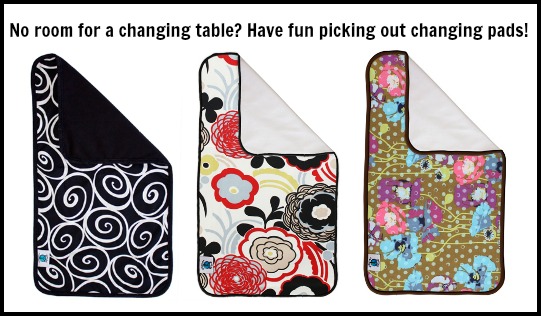
4. Cultivate a “can’t have it all” attitude: This is actually one of the best things you can do, otherwise you’ll have no peace and be doomed to discontentment. Accept the space limitations. Realize you’re not going to be able to own certain things. It’s nice to have a table for folding laundry or a table just for diaper changes, but these are extras that some tiny homes just can’t accommodate. So be content to fold clothes and change the baby on your bed. Don’t be a martyr, though. You can make streamlining your home enjoyable. Since we changed our babies on the bed, I splurged on a couple of really cute Planet Wise changing pads to protect our comforter. When there wasn’t room for much more than beds in the boys room, we still had a blast picking out posters to decorate their walls. Does your little girl only have space for a bed and dresser? Then make that dresser extra special; paint it pretty colors, add fun hardware or add stenciling.
5. Buy stuff that folds up. Nothing can be more frustrating than the feeling that there’s stuff everywhere in a very small house. Get high chairs, strollers, bouncer seats, swings and even tables that fold up easily so you can get them out of the way when they aren’t being used.
6. Go for the smallest solution possible. Need a cozy place to park a new baby? Instead of a bulky seat or swing, buy a Boppy pillow for them to relax on. Need a place to keep blocks or Legos? Buy a low-profile, flat Tupperware container that you can slide under a bed, instead of a big toy box or basket that will eat up floor space.
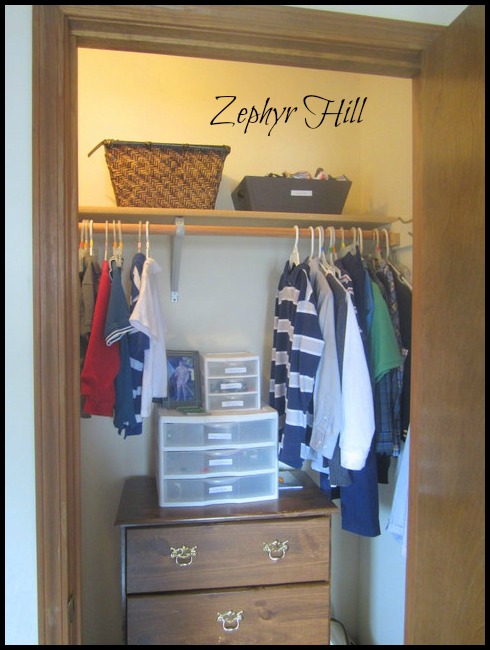
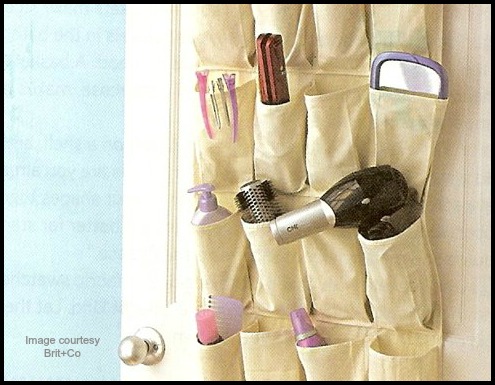
7. Re-work your closets. Our boys’ dressers are inside their closets, right under the hanging clothes. That’s two less pieces of furniture cluttering up their bedrooms. For baby clothes you can install a double set of rods in a closet since their clothes are small. You can also stick a bookshelf or stacking bins inside closets for added space. Buy over-the-door shoe organizers, hang them on the inside of your closets and use them to store art supplies, toys, scarves and mittens, etc. I’d rather have a full closet with a door or curtain you can close than a cluttered house any day.
8. Small bathroom secrets: Install an attractive over-the-toilet cabinet. Use shoe organizers on the back of the door for toiletries. Build narrow, vertical shelving on the walls made of unobtrusive glass or white wood for a low-profile, high-storage solution. Don’t just hang a mirror over the vanity; hang a mirrored cabinet with a door. Sew a skirt to cover the bottom of a pedestal sink; stick storage baskets underneath. Attach a piece of metal on the inside wall of your bathroom cabinet; tweezers, scissors and other small metal items will adhere to it. Put a Lazy Susan inside your cabinet for small toiletries.
9. Sharing is inevitable. Every available square inch is up for grabs in a small house! In an unused corner of my daughter’s bedroom, I set up my sewing table. She loved for me to come into her room and work on my projects; it’s almost like she felt very special that I was sharing her space. Parents can carve out a “baby corner” in their bedroom and section it off with a curtain or folding privacy screen. Mama and baby, husband and wife, brothers and sisters can share dressers to conserve space. Children can even share toys, and not in the traditional way that you might be thinking. Try to buy the types of toys that can be shared and don’t require “one for everybody.” A set of blocks can make 3 children happy; a Transformer is not so easy to divvy up! Each person will want one (or more). A set of Lincoln Logs pleases several boys all at once; one Game Boy will only entertain one.
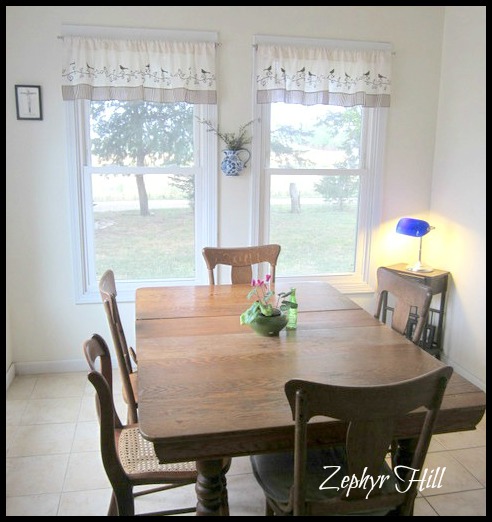
10. Use glass, metal and light colors. Heavy or dark furniture and somber colors will make a small house seem even smaller. When we moved into that small farmhouse the tiny dining room was a deep, dark red with heavy, formal drapes at the windows. We repainted it a light airy hue called Country Dairy and hung up only valances on the windows (we were in a very private country setting). The transformation was dramatic! Using glass or metal furniture also “lightens up” a home and make it feel more spacious. It may not be usable space, but the psychological effect is huge.
Ok, now I want to hear some of your ideas! What tricks have you employed to create more space and stay organized in a very small residence?